


 English
  Español
 русский
News
Content
- 1 The Origin of the Word "Tarp" and What It Has Always Meant
- 2 Types of Tarps: Poly, Canvas, Mesh, and PVC Tarpaulin Covers Compared
- 3 What Makes a PVC Tarpaulin Cover Different from Other Tarps
- 4 Where PVC Tarpaulin Covers Are Used: Industry-by-Industry Breakdown
- 5 How to Read PVC Tarpaulin Cover Specifications Without Getting Confused
- 6 How to Choose a PVC Tarpaulin Cover Supplier: What to Look for Beyond Price
- 7 How to Extend the Life of a PVC Tarpaulin Cover: Maintenance and Storage
- 8 Environmental Considerations for PVC Tarpaulin Covers
- 9 Printed PVC Tarpaulin Covers: Banners, Signage, and Custom Branding
- 10 Frequently Asked Questions About Tarps and PVC Tarpaulin Covers
Quick Answer
TARP is short for "tarpaulin" — a large sheet of strong, flexible, water-resistant or waterproof material used to protect surfaces or objects from rain, wind, sunlight, and debris. The word "tarpaulin" itself dates to the early 17th century, combining "tar" (used to waterproof early canvas sheets) and "palling" (a covering). Today, the most widely used commercial form is the PVC tarpaulin cover, which has replaced traditional canvas in nearly every outdoor, industrial, and agricultural application due to its superior durability, UV resistance, and tensile strength.
Whether you are sourcing a PVC tarpaulin cover for a construction site, a cargo truck, a greenhouse, or a temporary shelter, understanding exactly what a tarp is made of, how it differs between types, and what specifications matter will help you make a much better purchasing decision. This guide covers all of it — material science, weight ratings, real-world applications, and common questions buyers ask before ordering.
The Origin of the Word "Tarp" and What It Has Always Meant
The abbreviated form "tarp" became standard American English by the early 20th century, though sailors and dock workers had been shortening "tarpaulin" informally for much longer. In the 1600s, ships used heavy canvas sheets coated with tar to prevent seawater from penetrating cargo holds and crew quarters. The tar-soaked canvas was called a "tarpauling," later "tarpaulin," and finally shortened to "tarp" in everyday speech.
The function never changed — only the materials did. Tar-soaked canvas gave way to oiled canvas, then waxed cotton, then synthetic rubber-coated fabrics, and finally to the laminated PVC tarpaulin cover that dominates the market today. Modern PVC tarps can last 5 to 10 years in continuous outdoor use, compared to 1 to 3 years for polyethylene tarps and less than 2 years for the original canvas versions in comparable conditions.
Understanding this history explains why "tarp" carries such broad meaning in modern usage — it encompasses everything from a thin poly sheet thrown over firewood to a 900 gsm (grams per square meter) heavy-duty PVC tarpaulin cover stretched over a 40-foot flatbed trailer carrying industrial machinery across thousands of miles.
Word Timeline
1600sTar + palling = tarpauling (nautical canvas)
1700sSpelling settled as "tarpaulin"
1900s"Tarp" adopted as standard abbreviation
1950s+Synthetic materials replace canvas
TodayPVC tarpaulin cover is the industry standard
Types of Tarps: Poly, Canvas, Mesh, and PVC Tarpaulin Covers Compared
Not all tarps are created equal, and the word "tarp" covers a very wide range of products that differ dramatically in performance, weight, lifespan, and cost. The four main categories buyers encounter are polyethylene (poly), canvas or cotton, mesh, and PVC tarpaulin. Here is a direct comparison of their core properties:
| Tarp Type | Typical Weight (gsm) | Waterproof | UV Resistant | Average Lifespan | Best For |
|---|---|---|---|---|---|
| Polyethylene (Poly) | 60 – 200 | Yes | Limited | 1 – 3 years | Short-term cover, camping, tarping firewood |
| Canvas / Cotton | 300 – 600 | Water-resistant (not fully waterproof) | Moderate | 2 – 5 years | Paint drop cloths, vintage aesthetics |
| Mesh Tarp | 100 – 350 | No (allows airflow) | Yes | 3 – 6 years | Shade structures, scaffold screening, truck sides |
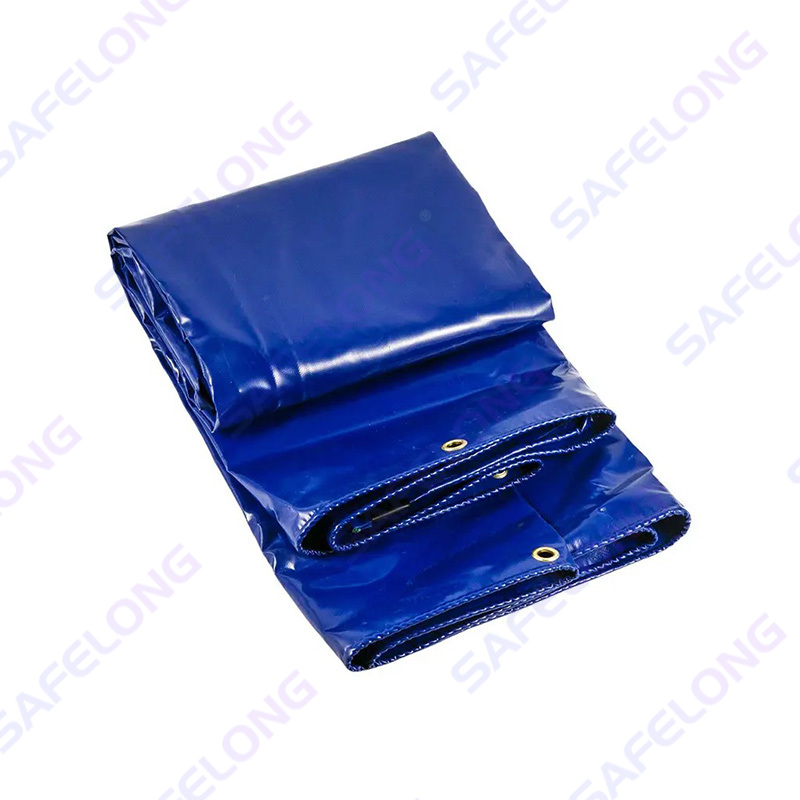
| PVC Tarpaulin Cover | 350 – 1100 | Fully Waterproof | High (UV stabilized) | 5 – 10+ years | Heavy transport, construction, industrial storage |
Polyethylene tarps dominate the consumer retail market because they are cheap — a standard 10x12-foot poly tarp might cost $8 to $20 — but their thin lamination degrades quickly under UV exposure and will crack or split at fold lines after 12 to 18 months outdoors. A quality PVC tarpaulin cover of the same dimensions typically costs $40 to $120 but will still be serviceable after 7 years of outdoor use, making the cost-per-year significantly lower.
Canvas tarps occupy a specialty niche for drop cloths in painting because they absorb rather than repel liquid (preventing paint from pooling and sliding), but they are largely irrelevant for outdoor waterproofing needs. Mesh tarps excel in applications where wind load would otherwise create dangerous sail effects — a solid tarp on a construction scaffold in high winds creates significant structural force, while a mesh tarp with 30% open area dramatically reduces that risk while still blocking debris and sunlight.
What Makes a PVC Tarpaulin Cover Different from Other Tarps
Laminated Construction
A PVC tarpaulin cover is not a single sheet of plastic. It is a woven polyester or nylon scrim (the base fabric, measured in denier) sandwiched between two layers of PVC compound. The lamination is heat-welded or calendered onto the scrim, creating a composite that combines the tensile strength of the woven base with the water and chemical resistance of PVC. High-quality PVC tarpaulin fabrics use a 1000D x 1000D polyester scrim as their core reinforcement layer.
GSM and Weight Ratings
The weight of a PVC tarpaulin cover, expressed in grams per square meter (gsm), is the primary indicator of its thickness and durability. Lightweight PVC covers run 350 to 500 gsm and suit agricultural use or temporary event tenting. Medium-weight covers of 500 to 750 gsm are the standard for truck and container transport. Heavy-duty covers at 750 to 1100 gsm are used for military, industrial, and long-term outdoor storage applications.
UV Stabilizers and Flame Retardants
Standard PVC degrades rapidly under UV light — it becomes brittle, loses flexibility, and eventually cracks. Quality PVC tarpaulin manufacturers add UV stabilizer packages to the PVC compound, typically HALS (hindered amine light stabilizers) and UV absorbers, that absorb or reflect UV radiation before it can break polymer chains. Well-stabilized PVC tarpaulin covers retain over 80% of their tensile strength after 5,000 hours of accelerated UV testing, equivalent to approximately 5 years of real-world outdoor exposure in temperate climates.
Welded Seams vs. Stitched Seams
One area where PVC tarpaulin covers outperform all other tarp types is seam integrity. Stitched seams — used on canvas and low-cost poly tarps — create needle holes that become water ingress points, especially under pooling water. PVC tarps can be hot-air or high-frequency (RF) welded, creating a seam that is as strong as or stronger than the surrounding material and completely waterproof. RF-welded PVC seams can exceed 200 kg/5 cm tensile strength, which is why this construction method is mandatory for containment ponds, biogas covers, and truck curtains where seam failure has serious consequences.
Reinforced Edges and Eyelet Spacing
The perimeter of a PVC tarpaulin cover is typically folded and heat-welded to create a reinforced hem, and brass or stainless steel eyelets are set at regular intervals — typically every 50 cm (20 inches) in standard commercial covers and every 30 cm in high-load industrial versions. The eyelet material matters: brass eyelets resist corrosion in marine and agricultural environments, while plastic eyelets fail quickly under UV and mechanical stress. Corner patches on quality PVC covers are additional PVC-coated fabric bonded over the corners before eyelet insertion, distributing load across a larger area.
Temperature Range
PVC becomes stiff and brittle at low temperatures and can soften or deform at very high temperatures. Plasticizers added during manufacturing control this flexibility range. Standard PVC tarpaulin covers are rated for use between -20°C and +70°C (-4°F to +158°F). In extremely cold environments such as northern Canada, Scandinavia, or high-altitude sites, buyers should specifically request cold-weather or arctic-grade PVC tarpaulin formulations that remain pliable down to -40°C.
Where PVC Tarpaulin Covers Are Used: Industry-by-Industry Breakdown
The PVC tarpaulin cover is not a single product — it is a platform technology that is customized for dozens of different industries. Each application places different demands on the material, and understanding those demands helps both buyers and specifiers choose the right product.
Transportation and Freight
The truck and rail freight industry is the single largest consumer of PVC tarpaulin covers globally. Flatbed trucks carrying steel, timber, machinery, or aggregates require covers that withstand constant wind buffeting at highway speeds (typically 60 to 80 mph), rain, UV, and repeated folding and unfolding cycles. A typical flatbed truck tarp is 18 feet wide by 27 feet long, weighing 60 to 100 pounds depending on GSM rating. Industry standard for flatbed truck tarps is 18-ounce PVC (approximately 610 gsm), though heavy machinery hauls often require 22-ounce material (approximately 750 gsm).
Curtain-side trailers — increasingly common in Europe and Australia — use PVC tarpaulin cover systems with aluminum sliding rails and buckle tensioners. These "tautliner" systems allow forklift loading from the side while keeping cargo fully protected, and the curtain PVC must be rated for at least 150 km/h wind loading without deformation according to EN 12641 standards widely used in European freight.
Construction Sites
Construction is one of the most demanding environments for any tarp. Debris, sharp edges, chemical spills, foot traffic (in roof and scaffolding applications), and extended outdoor exposure test every performance characteristic simultaneously. Heavy-duty PVC tarpaulin covers used on construction sites typically start at 650 gsm and go up to 900 gsm for scaffold enclosures on high-rise projects. Scaffold covers serve a dual purpose: worker safety (containing falling tools and debris) and weather protection for ongoing work beneath.
Temporary roofing during renovation projects uses PVC covers that must be anchored against wind uplift while supporting the weight of pooled rainwater. One square meter of PVC tarp can hold approximately 100 kg of standing water without failure when properly anchored at all edges — a critical specification for flat-roof applications.
Agriculture and Farming
Agricultural applications for PVC tarpaulin covers range from hay and silage protection to greenhouse cladding to biogas digester covers. Silage covers need to prevent oxygen ingress (which causes spoilage) and must lie flat without trapping air pockets. The standard for silage PVC films and covers is 200 to 300 microns thick with an oxygen permeability below 200 cc/m²/day. Greenhouse cladding PVC must achieve specific light transmission characteristics — typically 90% or above for standard growing, 70% or above for shade houses.
Event Tenting and Temporary Structures
The event industry uses PVC tarpaulin covers for everything from festival marquees to sports event tenting to disaster relief shelters. These applications demand excellent aesthetics (the PVC must be clean-looking, printable, and free of visible seams where possible) alongside structural performance. PVC tent fabrics are typically 650 gsm to 900 gsm with fire-retardant treatment that meets DIN 4102 B1 or NFPA 701 standards for public assembly events. Large-span tension structures — clear-span tents with no internal poles — can span up to 60 meters in width using PVC membrane panels under tension.
Industrial and Hazmat Containment
Spill containment berms, secondary containment liners, and industrial pond liners use specialized PVC tarpaulin covers rated for chemical resistance. The choice of plasticizer type in the PVC formulation determines chemical compatibility — standard phthalate-based PVC is not suitable for strong acids or organic solvents. Chemical-resistant PVC formulations can handle exposure to diesel fuel, motor oil, weak acids, and alkalis, making them suitable for machinery wash-down pads and temporary containment during equipment maintenance.
Military and Emergency Response
Military specifications for PVC tarpaulin covers are among the most stringent in the world. US military standard MIL-PRF-7168 for tarpaulins specifies minimum tear strength, hydrostatic resistance, and mildew resistance parameters that push manufacturers to the upper end of PVC formulation quality. Emergency response agencies — FEMA in the US, various national civil defense organizations globally — maintain stockpiles of PVC tarpaulin covers for post-disaster housing and equipment protection. FEMA's standard blue tarps distributed after hurricanes are typically 6 mil polyethylene, but longer-term recovery operations shift to PVC covers for durability.
How to Read PVC Tarpaulin Cover Specifications Without Getting Confused
Tarp specifications can be confusing because different markets use different measurement conventions. Here is a practical guide to the numbers you will encounter when sourcing a PVC tarpaulin cover.
GSM (Grams per Square Meter)
The most reliable weight specification. A higher GSM always means more material and, generally, more durability. For most commercial transport applications, 500 to 650 gsm is the appropriate range. Below 400 gsm is light-duty agricultural or temporary event use. Above 800 gsm is heavy industrial or military grade.
Ounces per Square Yard
Commonly used in North American truck tarp markets. 18-ounce PVC = approximately 610 gsm. 22-ounce = approximately 750 gsm. This measurement is weight of finished coated fabric per square yard. When comparing North American and Asian suppliers, always convert to gsm for an apples-to-apples comparison.
Denier (D)
Measures the thickness of the individual threads in the woven scrim layer. 500D x 500D is entry-level commercial; 1000D x 1000D is the standard for heavy-duty PVC tarpaulin covers. Higher denier = thicker, stronger individual yarns = better tear resistance at the base fabric level.
Tensile Strength (N/5cm)
The force required to tear the fabric in a standardized strip test. Values above 3000 N/5cm warp and weft are standard for transport-grade PVC tarpaulin covers. Values below 1500 N/5cm indicate light-duty material. Seam strength should be tested separately and should reach at least 70% of the base fabric strength.
Hydrostatic Head (mmH2O)
Measures how much water pressure the fabric resists before water passes through. Any PVC tarpaulin cover with a hydrostatic head above 3000 mmH2O is considered fully waterproof for practical purposes. High-quality PVC tarps typically test above 10,000 mmH2O. This figure is rarely the limiting factor in PVC tarps — the seams and eyelets are more likely failure points than the base material.
Thread Count (per inch)
Refers to the weave density of the scrim. A 10x10 or 14x14 thread count per inch is standard for commercial PVC tarpaulin. Higher thread count in the scrim means more even load distribution and better resistance to puncture and tear propagation.
How to Choose a PVC Tarpaulin Cover Supplier: What to Look for Beyond Price
Price per square meter or price per square yard is the most visible number when comparing PVC tarpaulin cover suppliers, but it is frequently the least reliable indicator of value. Here are the factors that experienced buyers use to evaluate suppliers:
- Third-party test reports: Reputable suppliers provide SGS, Bureau Veritas, or equivalent independent test reports for tensile strength, tear strength, UV resistance, hydrostatic head, and fire retardancy. Spec sheets produced by the manufacturer alone should be verified against independent test data before large orders.
- Sample testing: Any serious B2B buyer should request samples before ordering, then independently verify the weight (weigh a known area on a scale), thickness (use a digital micrometer), and basic waterproofing (pour water on the sample and observe) before committing to production quantities.
- Custom sizing capability: Standard PVC tarpaulin cover rolls are typically 1.8m to 3.2m wide. Complex custom sizes — for specific truck models, agricultural tunnel houses, or bespoke containment applications — require suppliers with in-house cutting, welding, and hemming capability.
- Eyelet material and placement: Ask specifically what the eyelets are made of (brass, zinc alloy, or plastic) and how they are set (hand press vs. hydraulic press). Hydraulically set brass eyelets are significantly more durable than hand-pressed zinc eyelets.
- Minimum order quantities: For custom PVC tarpaulin covers, MOQs vary from as low as 10 pieces for some manufacturers to 500 pieces or more for fully automated production runs. Understanding the production economics helps set realistic expectations for pricing at different volumes.
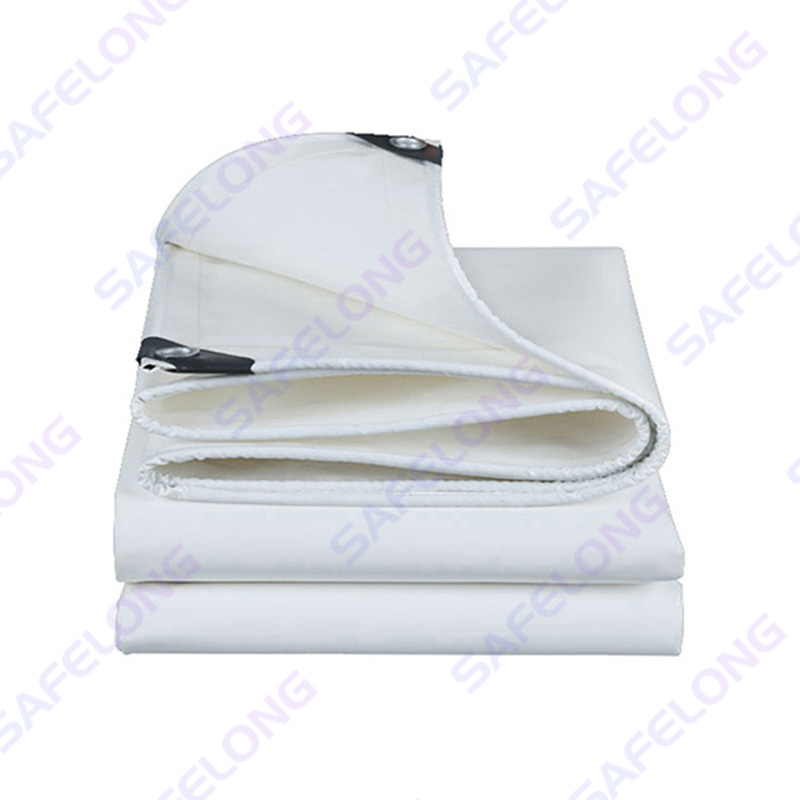
- Color consistency and availability: Standard PVC tarpaulin cover colors — blue, green, silver/grey, orange — are typically in stock at most manufacturers. Custom colors require larger MOQs because they require separate compound preparation. Color fastness (resistance to fading under UV) should be specified and tested, as cheap PVC covers can lose significant color intensity within 12 months outdoors.
China as a Major PVC Tarpaulin Manufacturing Hub
China accounts for an estimated 60 to 70% of global PVC tarpaulin cover production, with major manufacturing clusters in Zhejiang, Jiangsu, and Guangdong provinces. Chinese manufacturers range from small workshops producing low-specification poly-based products to large integrated facilities producing high-specification PVC tarpaulin for European, North American, and Australian markets under strict quality management systems. The significant price difference between Chinese-manufactured and European-manufactured PVC tarpaulin — often 40 to 60% lower ex-works from China — has driven most volume purchasing toward Chinese suppliers for commodity-grade applications, while some specialty applications (military, aerospace ground support, luxury event tenting) continue to source from European producers for quality assurance reasons.
Reputable Chinese PVC tarpaulin manufacturers publish test data compliant with EN ISO standards, allowing direct comparison with European-produced products. When evaluating Chinese suppliers on Alibaba or Made-in-China platforms, the most useful filter is to look for suppliers with verifiable audit reports from recognized inspection agencies rather than relying on platform badges alone.
How to Extend the Life of a PVC Tarpaulin Cover: Maintenance and Storage
1
Clean Regularly
PVC tarpaulin covers should be cleaned with mild soap and water — not solvents, which can extract plasticizers from the PVC compound and cause premature embrittlement. A soft brush removes accumulated dirt and biological growth (algae, mold) that retains moisture and accelerates UV degradation. Clean at least twice a year on tarps in continuous outdoor use.
2
Avoid Sharp Edges and Abrasion Points
The most common cause of PVC tarpaulin cover failure in transport applications is chafing against sharp cargo edges — bolts, steel angle iron, wooden corner guards. Use rubber or foam padding at contact points, and inspect the tarp after each load for new abrasion zones. Catching a worn spot early allows patch repair; ignoring it leads to full panel replacement.
3
Store Properly When Not in Use
Never store a PVC tarpaulin cover while wet or dirty. Moisture trapped in folds promotes mold growth and accelerates eyelet corrosion. Roll rather than fold where possible — fold lines become stress concentrations that eventually crack. Store in a cool, dry location out of direct sunlight. If storage is outdoors, use a breathable outer cover bag rather than a sealed plastic bag.
4
Repair Small Damage Promptly
PVC tarpaulin covers are repairable using PVC repair tape (self-adhesive, compatible PVC film tape) for small cuts and punctures, or hot-air welded patches for larger damage. PVC repair tape rated for outdoor use can extend the service life of a tarp significantly at very low cost. A repair tape patch applied within the first week of damage, before the cut edges begin to peel or delaminate, is significantly more durable than a patch applied after deterioration has progressed.
5
Tension Evenly and Check Bungees
Uneven tensioning concentrates stress at specific eyelets, causing accelerated eyelet wear and fabric distortion. When securing a PVC tarpaulin cover, work from the center outward, tensioning equally on both sides. Replace bungee cords annually on tarps in regular use — stretched or cracked bungees allow tarps to flutter and flap under wind, which creates fatigue damage at the eyelets and hem far faster than steady tension does.
Environmental Considerations for PVC Tarpaulin Covers
PVC is not a neutral material from an environmental standpoint, and buyers with sustainability mandates should understand the trade-offs involved. The plasticizers used in PVC — historically phthalates such as DEHP — have been classified as endocrine disruptors and are restricted or banned in many product categories in the EU under REACH regulations. Most quality PVC tarpaulin cover manufacturers have transitioned to non-phthalate plasticizers (DINP, DIDP, or bio-based alternatives) in response to these restrictions, and buyers targeting European markets should confirm plasticizer compliance in their supplier specifications.
End-of-life disposal is a more complex challenge. PVC tarpaulin cannot be recycled through standard municipal recycling streams due to the laminated composite construction and the wide variety of additives present. Some specialized PVC recyclers process post-industrial and post-consumer PVC tarpaulin into secondary materials — carpet backing, traffic cones, and pipe compounds. The most environmentally responsible approach is to maximize service life through proper maintenance, repair rather than replace where possible, and return end-of-life tarps to manufacturers or distributors who have established take-back and recycling programs.
It is also worth noting that the long service life of PVC tarpaulin covers relative to polyethylene alternatives actually works in their environmental favor on a lifecycle basis. A PVC tarpaulin cover used for 8 years before disposal generates significantly less plastic waste per year of service than three or four polyethylene tarps replaced over the same period, even accounting for PVC's higher material weight.
Printed PVC Tarpaulin Covers: Banners, Signage, and Custom Branding
One of the less obvious applications of PVC tarpaulin covers is as a substrate for large-format printed graphics. Frontlit banner PVC — typically 440 gsm to 510 gsm, white-coated on one face — is the standard material for outdoor advertising banners, construction hoarding graphics, and event signage. The PVC provides the structural durability and weather resistance, while the coated white surface provides the print receptivity needed for sharp, vibrant graphics using solvent, eco-solvent, or UV-cure wide-format inkjet printers.
Backlit PVC tarpaulin — used for illuminated billboard inserts and lightbox displays — is formulated to transmit light evenly while still providing structural strength. Standard backlit PVC banner material is 440 to 510 gsm with a translucency rating of 12% to 20%, which allows internal illumination to create the glowing effect required in illuminated signage applications.
For construction site hoarding, printed PVC tarpaulin covers serve a dual purpose: they protect the public from construction activity and provide advertising or project information space. Many city authorities now require hoarding materials to meet specific fire retardancy standards — the most common being Class B-s1, d0 under EN 13501-1 in Europe — which means the PVC must be certified fire-retardant before being used on hoardings in regulated urban areas.
Digital Printing Process on PVC Tarpaulin
The process for producing a printed PVC tarpaulin cover graphic involves several steps that affect the final quality:
- File preparation at 1:1 scale (for large formats, typically 72 to 100 DPI resolution is sufficient due to typical viewing distances).
- Wide-format inkjet printing using solvent or UV-cure inks that bond to the PVC coating surface.
- Lamination with a clear UV-protective overlaminate film, which extends color life from approximately 1 to 2 years to 3 to 5 years outdoors.
- Hemming and eyelet installation to create the finished banner or cover product.
- Welded pockets or rope channels added for large-span installations where the weight of the printed panel creates significant edge-loading.
Frequently Asked Questions About Tarps and PVC Tarpaulin Covers
What is tarp short for?
Tarp is short for "tarpaulin," a word that dates to the 17th century and originally described tar-coated canvas used aboard ships to protect cargo. Today, the term covers all types of protective sheeting, with the PVC tarpaulin cover being the most durable and widely used form in commercial and industrial applications.
Is a PVC tarpaulin cover the same as a poly tarp?
No. A poly tarp (polyethylene tarp) is made from polyethylene plastic film, usually with a woven polyethylene core laminated between two polyethylene film layers. A PVC tarpaulin cover uses a woven polyester or nylon scrim laminated between two layers of PVC compound. PVC tarps are generally significantly heavier, stronger, more durable, more flexible at low temperatures, and more resistant to UV degradation than comparable polyethylene tarps. PVC tarps also cost more upfront, but their longer service life typically makes them cheaper on a cost-per-year basis for regular use.
What does gsm mean on a tarp?
GSM stands for grams per square meter and is the standard measurement of fabric weight used for tarps, canvas, and other industrial textiles. A higher gsm number means the fabric is heavier and thicker. For PVC tarpaulin covers, the useful range is approximately 350 gsm (lightweight, temporary use) to 1100 gsm (heavy industrial and military grade). For most commercial transport and construction applications, 500 to 750 gsm is appropriate.
How long does a PVC tarpaulin cover last?
A quality PVC tarpaulin cover used in commercial outdoor applications typically lasts 5 to 10 years with proper care. Lifespan depends significantly on UV intensity (tarps used in tropical or desert environments degrade faster), frequency of folding and unfolding cycles, exposure to chemical contamination, and how well the tarp is maintained. Poly tarps used in the same conditions typically last 1 to 3 years, making PVC the economically superior choice for ongoing applications.
Can PVC tarpaulin covers be repaired?
Yes. Small cuts and punctures can be repaired using self-adhesive PVC repair tape, which is widely available from tarp and industrial supply companies. Larger damage — torn seams, ripped eyelets, or delamination areas larger than a handprint — can be professionally repaired by tarp specialists using hot-air welding equipment to apply PVC patch material. The key to a successful repair is addressing damage early, before the edges begin to peel or delaminate.
What colors are available for PVC tarpaulin covers?
Standard stock colors for PVC tarpaulin covers are blue, green, grey/silver, orange, and white. Black PVC tarpaulin is also widely available and is commonly used for light-blocking applications in photography, film production, and blackout tent systems. Custom colors can be produced by most manufacturers in minimum order quantities typically starting at 500 to 1000 square meters of material.
Are PVC tarpaulin covers fire resistant?
Standard PVC tarpaulin covers are self-extinguishing — PVC does not support combustion well on its own because chlorine atoms in the polymer release HCl gas during combustion, which interrupts the flame chain reaction. However, "self-extinguishing" is not the same as "fire retardant" in a regulatory sense. For applications requiring certified fire retardancy (public events, construction hoarding, scaffold enclosures in urban areas), buyers must specify FR-grade PVC tarpaulin that has been tested and certified to the relevant standard — most commonly DIN 4102 B1 in Germany, M2 in France, or NFPA 701 in the US.
What is the difference between frontlit and backlit PVC tarpaulin banner material?
Frontlit PVC banner tarpaulin is opaque or near-opaque, designed to be illuminated from the front (by ambient light or directed spotlights) and is used for outdoor advertising banners and construction hoarding graphics. Backlit PVC banner tarpaulin is formulated to be translucent (typically 12% to 20% light transmission), allowing internal lighting to illuminate the graphic from behind — used in lightbox displays and illuminated billboard inserts. The base material construction is similar; the difference is in the opacity of the PVC compound and the color of the coating layer.
How do I calculate how much tarp I need to cover something?
Measure the length, width, and height of the object to be covered. For a simple cover draped over the top and sides: add twice the height to both the length and the width to get the tarp dimensions needed at minimum. Add an additional 12 to 18 inches (30 to 45 cm) on each side as an overlap allowance that can be secured to the ground or anchored under the load. For vehicle tarps that must remain secure at highway speeds, professional sizing calculations account for aerodynamic lift forces and should match the tarp to the specific trailer or flatbed dimensions exactly.
What is the difference between heat-welded and stitched seams on a tarp?
Stitched seams are created by sewing panels together with thread. They are the standard construction for canvas and low-cost poly tarps, but the needle holes created during stitching are permanent water ingress points — especially where water can pool. Heat-welded seams (hot-air or high-frequency RF welding) fuse PVC panels together by melting the PVC at the joint, creating a bond that is as strong as or stronger than the surrounding material and completely watertight. Quality PVC tarpaulin covers use welded seams for all structural panel joins, with stitching used only for secondary items such as rope channels and reinforcement patches that are then additionally sealed.
 Previous


