


 English
  Español
 русский
News
Content
- 1 What Is Polyurethane Fabric — The Short Answer
- 2 How Polyurethane Fabric Is Made
- 3 Key Physical and Performance Properties
- 4 Common Types of Polyurethane Fabric
- 5 Polyurethane Fabric vs PVC Coated Fabrics — A Detailed Comparison
- 6 Where Polyurethane Fabric Is Used — Industry by Industry
- 7 Sustainability and the Future of Polyurethane Fabric
- 8 How to Identify and Evaluate Polyurethane Fabric Quality
- 9 Choosing Between Polyurethane Fabric and PVC Coated Fabrics
What Is Polyurethane Fabric — The Short Answer
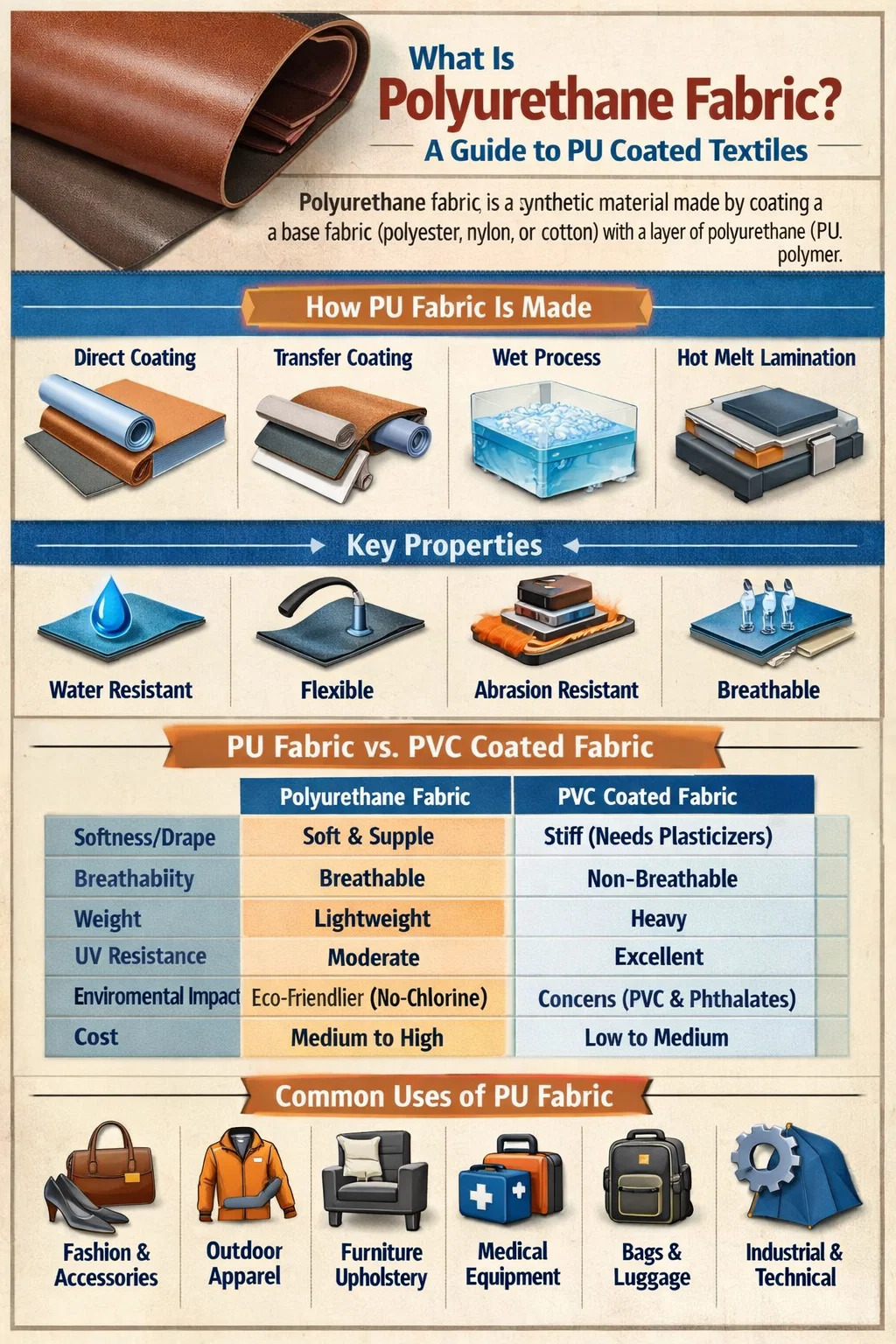
Polyurethane fabric is a synthetic textile material made by coating or laminating a base fabric — typically polyester, nylon, or cotton — with a layer of polyurethane (PU) polymer. The result is a material that looks and feels similar to leather or rubber, yet remains lightweight, flexible, and far more affordable than natural alternatives. It is widely used in fashion, upholstery, sportswear, outdoor gear, medical equipment, and industrial applications.
Unlike woven or knitted fabrics, polyurethane fabric gets its defining characteristics from the PU coating itself, which can be engineered for specific performance traits: water resistance, breathability, softness, or rigidity. The PU coating typically accounts for 15–60% of the total material weight, depending on the intended end use.
It is important not to confuse polyurethane fabric with PVC coated fabrics. While both belong to the broader category of coated technical textiles, they differ significantly in composition, performance, environmental profile, and application suitability — a distinction explored in detail throughout this article.
How Polyurethane Fabric Is Made
The manufacturing process for polyurethane fabric involves several distinct techniques, each producing a material with slightly different physical characteristics. Understanding the production method helps explain why PU fabrics from different manufacturers can feel and perform so differently from one another.
Direct Coating
In direct coating, a liquid PU compound is applied directly onto the base fabric using a knife-over-roll or comma coater system. The fabric passes through a coating head, where the PU is spread at a precise thickness — often between 0.1 mm and 1.5 mm. The coated material then moves through a curing oven at temperatures ranging from 120°C to 180°C, where the polymer solidifies and bonds to the substrate. This method is cost-effective and produces smooth, uniform surfaces suited for fashion leather goods and upholstery.
Transfer Coating (Release Paper Method)
Transfer coating creates a more refined surface finish. The PU layer is first applied to a release paper with a textured or smooth pattern, partially cured, and then laminated to the base fabric using adhesive. After full curing, the release paper is peeled away, leaving the PU surface with the exact pattern from the paper. This method is preferred for high-end imitation leather in luxury handbags, car interiors, and premium shoe uppers, where surface aesthetics are critical.
Wet Process (Wet Coagulation)
The wet process immerses the PU-coated fabric in a water bath, causing the polymer to coagulate into a microporous structure. This creates a fabric with thousands of tiny pores that allow moisture vapor to escape while blocking liquid water — making it breathable. Wet-process PU fabrics achieve moisture vapor transmission rates (MVTR) of 3,000 to 10,000 g/m²/24h, making them suitable for sports apparel and outdoor jackets.
Hot Melt Lamination
In hot melt lamination, a thermoplastic PU film is bonded to a fabric substrate under heat and pressure. No solvent is involved, which makes this a cleaner process with lower VOC emissions. Hot melt laminated PU fabrics are common in medical textiles, protective workwear, and waterproof membranes used in footwear.
Key Physical and Performance Properties
Polyurethane fabric's popularity across so many industries is driven by a combination of mechanical, chemical, and aesthetic properties that few other materials can match at a comparable price point.
- Water resistance: PU-coated fabrics achieve hydrostatic head ratings of 1,500 mm to over 20,000 mm, depending on coating thickness and application method. A rating above 1,500 mm is considered waterproof for most outdoor applications.
- Flexibility: PU remains flexible at temperatures as low as -30°C, unlike many rigid coatings that crack in cold conditions. This elasticity is measured by elongation at break, which for PU fabrics typically ranges from 300% to 600%.
- Tensile strength: Depending on the base fabric and coating weight, PU fabrics have tensile strength between 20 MPa and 60 MPa, sufficient for demanding applications including luggage, furniture covers, and industrial curtains.
- Abrasion resistance: PU coatings significantly improve abrasion resistance. Testing per the Martindale or Wyzenbeek method can show 50,000 to 100,000+ double rubs before surface degradation, suitable for contract upholstery.
- UV stability: Standard PU fabrics show moderate UV resistance. With added UV stabilizers or aliphatic PU formulations, outdoor-rated products can maintain color and integrity for 3–7 years of direct sun exposure.
- Chemical resistance: PU fabrics resist dilute acids, oils, and common cleaning agents, making them practical for healthcare and food service environments.
- Breathability: Microporous and hydrophilic PU membranes allow moisture vapor transmission, a feature unavailable in most standard PVC coated fabrics.
Common Types of Polyurethane Fabric
Not all polyurethane fabrics are the same. The term covers a broad family of materials distinguished by their base substrate, coating structure, and intended performance profile.
| Type | Base Fabric | Key Feature | Typical Applications |
|---|---|---|---|
| PU Leather (Faux Leather) | Polyester / Split leather | Leather-like appearance | Shoes, bags, furniture |
| Breathable PU Membrane | Nylon / Polyester | High MVTR, waterproof | Rain jackets, activewear |
| PU Oxford Fabric | Oxford weave polyester | Durable, water-repellent | Bags, tents, tarps |
| PU Stretch Fabric | Spandex / Lycra blend | High elasticity | Sportswear, swimwear |
| Medical-Grade PU | Non-woven / Polyester | Biocompatible, fluid-resistant | Hospital bedding, prosthetics |
| Industrial PU Coated | Heavy-duty polyester | Heavy-duty, tear-resistant | Truck covers, conveyor belts |
Polyurethane Fabric vs PVC Coated Fabrics — A Detailed Comparison
When selecting a coated technical textile, the most frequent decision buyers face is choosing between polyurethane fabric and PVC coated fabrics. Both are polymer-coated substrates used across industrial, commercial, and consumer markets — but they differ in ways that matter enormously depending on the application.
PVC coated fabrics use polyvinyl chloride as the coating polymer, applied over woven polyester or glass fiber substrates. They are among the most widely deployed technical fabrics globally, found in truck tarpaulins, inflatable structures, banners, awnings, and pool liners. The global PVC coated fabrics market was valued at over USD 19 billion in 2023, underscoring the material's industrial importance.
Flexibility and Feel
Polyurethane fabric is naturally more supple and soft than PVC coated fabrics. PVC requires plasticizers (typically phthalates) to achieve flexibility, and these additives can migrate out of the material over time, causing the surface to stiffen, crack, or become tacky. PU fabric retains its flexibility without plasticizers, maintaining consistent drape and softness throughout its service life. This is why PU is overwhelmingly preferred for fashion and wearable applications, while PVC coated fabrics dominate heavy industrial uses where tactile softness is irrelevant.
Breathability
This is one of the clearest differentiators. Microporous PU fabrics allow moisture vapor to pass through, making them suitable for outerwear, sports gear, and medical garments where skin comfort matters. PVC coated fabrics are inherently non-breathable — they form a complete barrier to both liquid and vapor. This makes PVC coated fabrics excellent for watertight enclosures, tarps, and chemical protective suits, but unsuitable for any application requiring comfort against the skin.
Weight and Thickness
PVC coated fabrics are generally heavier. A standard 650 g/m² PVC truck tarpaulin fabric is among the lighter grades; heavy-duty PVC coated fabrics used in inflatable buildings or industrial curtains can reach 1,200–2,000 g/m². Equivalent PU coated fabrics for comparable uses are typically 30–50% lighter. For applications like backpacks, wearables, or portable shelters, this weight difference is significant.
Environmental and Health Profile
PVC coated fabrics raise environmental concerns primarily due to chlorine content and the potential release of dioxins during incineration. The plasticizers used in flexible PVC, including DEHP and other phthalates, are classified as endocrine disruptors and are restricted under REACH regulations in the European Union. PU fabric does not contain chlorine or phthalates, making it more compatible with stringent sustainability standards. Many major brands now specify PU over PVC for products targeting eco-conscious markets or carrying certifications like OEKO-TEX Standard 100.
That said, solvent-based PU production involves DMF (dimethylformamide), a toxic solvent regulated in the EU and under scrutiny in other regions. Water-based PU formulations address this issue, and the industry has been shifting steadily toward solvent-free manufacturing processes since the early 2010s.
Durability and UV Resistance
PVC coated fabrics generally offer superior long-term UV resistance in harsh outdoor environments. Industrial-grade PVC tarpaulins and architectural membranes can last 10–20 years outdoors. Standard PU fabrics are more vulnerable to UV degradation — hydrolysis of the PU polymer accelerates in humid UV-exposed conditions. However, aliphatic PU coatings with UV absorbers can match PVC performance for many outdoor uses. For permanent outdoor structures, PVC coated fabrics remain the industry default; for seasonal or portable equipment, high-performance PU is increasingly competitive.
Cost
PVC coated fabrics are typically cheaper to produce, largely because PVC resin is less expensive than PU polymer and the manufacturing process is simpler. For large-volume commodity applications — truck covers, agricultural films, temporary shelters — PVC coated fabrics offer a hard-to-beat cost-to-performance ratio. PU fabric commands a premium justified by its superior feel, breathability, and environmental profile, making the cost trade-off acceptable in fashion, sportswear, and medical markets.
| Criteria | Polyurethane Fabric | PVC Coated Fabrics |
|---|---|---|
| Softness / Drape | Excellent | Moderate (requires plasticizers) |
| Breathability | Available (microporous types) | None |
| Weight | Light to medium | Medium to heavy |
| Outdoor UV Resistance | Moderate (aliphatic: good) | Excellent |
| Environmental Profile | Better (no chlorine/phthalates) | Concerns with PVC/plasticizers |
| Cost | Medium to high | Low to medium |
| Typical Service Life (outdoor) | 3–7 years | 10–20 years |
| Weldability (HF welding) | Limited | Excellent |
Where Polyurethane Fabric Is Used — Industry by Industry
The versatility of polyurethane fabric means it appears in markets that rarely overlap. Here is a breakdown of the major application sectors, with specifics on why PU is chosen over alternatives including PVC coated fabrics in each context.
Fashion and Accessories
PU leather dominates the vegan and affordable fashion market. Global production of PU synthetic leather exceeded 1.5 million tons annually as of recent estimates, with applications spanning shoes, handbags, belts, wallets, and jackets. Brands from fast fashion to luxury segments use PU leather because it can be produced in virtually any color, texture, or finish — from smooth patent to pebbled grain — with consistent quality across large production runs. It is also easier to clean than genuine leather and does not require animal-based raw materials.
Outdoor and Performance Apparel
Breathable PU membranes are the backbone of waterproof-breathable outerwear. Products like rain jackets, ski pants, and hiking gear rely on thin PU laminates bonded to woven or knitted face fabrics. The membrane blocks rain while allowing sweat vapor to escape, keeping the wearer dry from both inside and out. Industry benchmarks for performance outerwear typically require waterproof ratings above 10,000 mm hydrostatic head and MVTR above 5,000 g/m²/24h — targets that high-performance PU membranes consistently meet.
Furniture and Automotive Upholstery
PU upholstery fabric is used extensively in residential furniture, commercial seating, and vehicle interiors. In automotive applications, PU seat covers and door panel materials must pass rigorous tests including Martindale abrasion (minimum 50,000 cycles for passenger cars), light fastness (minimum grade 5 on a 1–8 scale under the ISO 105-B02 standard), and cold flex testing at -20°C. PU consistently meets these benchmarks while offering a tactile quality that PVC coated fabrics — which feel stiffer and can become uncomfortable in extreme temperatures — cannot replicate.
Medical and Healthcare
Medical-grade PU fabrics are used in wound dressings, pressure relief mattress covers, surgical drapes, prosthetic liners, and hospital bedding. The material's biocompatibility — confirmed by ISO 10993 testing — and its resistance to body fluids, disinfectants, and steam sterilization make it indispensable in clinical settings. Unlike PVC, medical PU does not require phthalate plasticizers, eliminating concerns about chemical leaching into patients. The global medical textiles market, in which PU fabrics play a growing role, is projected to reach USD 30 billion by 2030.
Industrial and Technical Applications
Industrial-grade PU coated fabrics are used in conveyor belt covers, protective curtains, inflatable boats (in lighter applications), and containment liners. In contexts where both PU and PVC coated fabrics are viable — such as flexible hose coverings or cargo curtain systems — procurement decisions hinge on factors like operating temperature range, chemical exposure, required flexibility, and budget. PU typically wins where flexibility at low temperatures is critical; PVC coated fabrics win where cost and UV longevity matter most.
Bags, Luggage, and Gear
PU Oxford fabric — a polyester Oxford weave with a PU coating — is one of the most common materials in backpacks, duffel bags, and budget luggage. The PU coating provides water repellency and tear resistance while keeping the overall product weight low. A typical 420D PU Oxford fabric weighs around 120–150 g/m², making it suitable for travel products where weight matters. This is a segment where PVC coated fabrics could technically perform but are rarely used due to their heavier weight and stiffer hand feel.
Sustainability and the Future of Polyurethane Fabric
Sustainability concerns are reshaping how polyurethane fabric is formulated, manufactured, and positioned relative to alternatives like PVC coated fabrics. Several shifts are already underway in the industry.
Water-Based PU Formulations
The transition from solvent-based to water-based PU systems is the most significant sustainability development in the sector. Water-based PU dispersions eliminate or drastically reduce DMF content in the finished fabric. China, the world's largest producer of PU synthetic leather, implemented stricter DMF restrictions starting around 2015, accelerating the shift. By 2024, most major PU leather manufacturers in Europe and increasingly in Asia had converted their primary lines to water-based production. The water-based products are comparable in performance for most fashion applications, though some industrial grades still rely on solvent systems for specific adhesion requirements.
Bio-Based Polyurethane
Research and commercial development of bio-based PU is growing. Polyols derived from castor oil, corn, soy, and sugarcane can replace petroleum-derived polyols in PU polymer production. Products using 20–60% bio-based content are now commercially available from several European and North American suppliers, offering a reduced carbon footprint compared to fully petroleum-derived PU. This is a competitive differentiator over PVC coated fabrics, for which no comparable bio-based pathway currently exists at scale.
Recyclability Challenges
Both PU fabrics and PVC coated fabrics face end-of-life recyclability challenges because they are composite materials — polymer coatings bonded to textile substrates. Separating the coating from the fabric for recycling is technically difficult and rarely economically viable at current recycling infrastructure scales. Mechanical recycling of PU fabric scraps into foam or padding is practiced in furniture and automotive sectors. Chemical recycling methods capable of recovering polyurethane oligomers from mixed textile composites are in development but not yet mainstream.
Regulatory Landscape
PU fabric is better positioned than PVC coated fabrics under current and emerging European chemical regulations. REACH restrictions on phthalates directly affect flexible PVC formulations. The EU's Green Deal and upcoming textile sustainability regulations are expected to favor materials with lower toxic content across the value chain — a relative advantage for PU over PVC. Brands targeting EU markets or sustainability certifications (bluesign, OEKO-TEX, Cradle to Cradle) are increasingly specifying PU over PVC coated fabrics for this reason.
How to Identify and Evaluate Polyurethane Fabric Quality
For buyers sourcing PU fabric — whether for product development, manufacturing, or procurement — several practical criteria determine quality and suitability.
- Coating weight (g/m²): Higher coating weight generally means greater durability and water resistance but also higher cost and weight. Specify coating weight based on the application's mechanical demands.
- Hydrostatic head test result: For waterproof applications, demand test data. A value of 3,000 mm is suitable for light rain; 10,000 mm+ is needed for heavy outdoor exposure.
- DMF content: Request test reports confirming DMF levels below EU limits (maximum 1 mg/kg in consumer goods under EU Directive 2009/251/EC). Confirm whether solvent-based or water-based PU production was used.
- Hydrolysis resistance: For products exposed to humidity or sweat, ask for hydrolysis aging test results. Quality PU fabrics should show no cracking or delamination after 70°C/95% RH aging tests of 7–14 days.
- Abrasion resistance: For upholstery or luggage, Martindale or Taber abrasion test data should be provided. Specify minimum cycle counts based on the end use environment.
- Certifications: OEKO-TEX Standard 100, REACH compliance documentation, and bluesign approval are meaningful indicators of chemical safety and environmental management in PU fabric production.
Distinguishing between PU fabric and PVC coated fabrics when physical samples are not labeled can sometimes be done by feel — PU is softer and lighter — or by a basic burn test: PVC releases a sharp chlorine smell and produces black smoke, while PU burns more cleanly without the chlorine odor. For reliable verification, X-ray fluorescence (XRF) analysis or infrared spectroscopy (FTIR) can definitively identify the polymer type.
Choosing Between Polyurethane Fabric and PVC Coated Fabrics
There is no universal answer. The right choice depends entirely on the application requirements, budget, environmental priorities, and performance targets. The following framework helps narrow the decision:
- Choose polyurethane fabric when: skin contact is involved, breathability is required, weight is a constraint, softness and drape are important, or sustainability certifications are needed.
- Choose PVC coated fabrics when: the application requires long-term outdoor UV exposure, high-frequency welding is the joining method, maximum water impermeability is needed without breathability trade-offs, or cost minimization is the primary objective at large scale.
- Consider both: In segments like protective workwear, portable shelters, and boat covers, both materials have established track records. A detailed performance specification — listing waterproof rating, weight limit, operating temperature range, and service life expectation — should drive the final material selection rather than material preference alone.
As formulation technology advances, the performance gap between premium PU and PVC coated fabrics continues to narrow in areas where PVC once held a clear lead — particularly outdoor durability. At the same time, PU's advantages in softness, breathability, and regulatory compliance are structural and unlikely to erode. The long-term market trajectory favors polyurethane fabric in applications where end-user experience and sustainability standards drive purchasing decisions.
 Previous


