


 English
  Español
 русский
News
Content
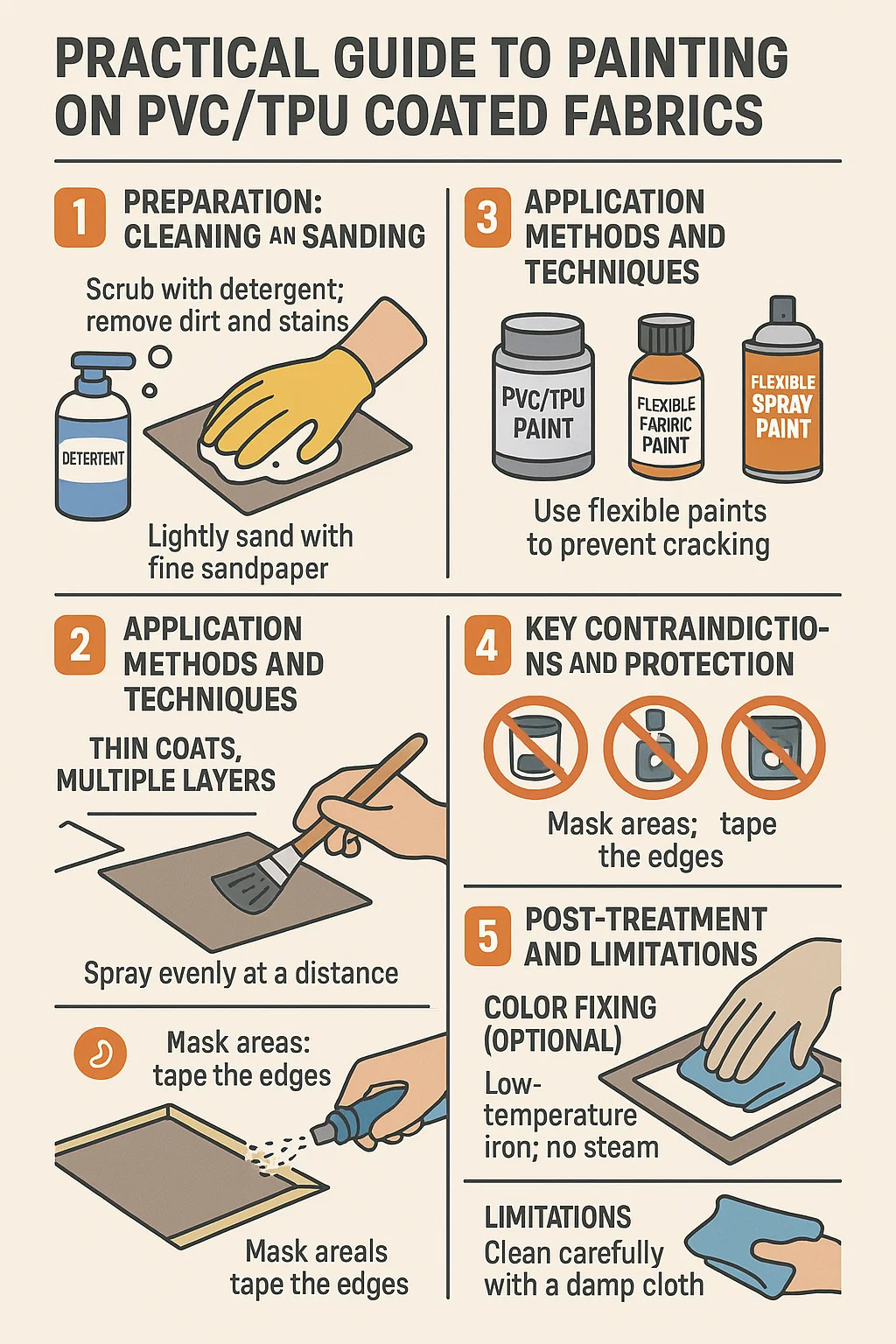
Here is a practical guide to painting on PVC coated fabrics and TPU coated fabrics, incorporating common operating experience and precautions:
1. Preparation: Cleaning and Sanding
• Thoroughly clean the surface: Scrub the fabric with warm water and a small amount of neutral detergent (such as dish soap) to remove dust and oil stains. Stubborn stains can be gently wiped with alcohol wipes, and finally rinsed with water and allowed to dry completely.
• Light sanding (optional): If the coating is very smooth, lightly sand the surface with fine sandpaper (600 grit or higher) to enhance paint adhesion. Clean again after sanding to avoid leaving debris.
2. Choosing Specialized Paints
• Flexible paints are key: Ordinary acrylic paints or spray paints are prone to cracking and peeling; flexible paints must be used, such as:
• PVC/TPU-specific paints (such as Polymarine Superflex), which can bend with the fabric without cracking.
• Fabric paints: Acrylic fabric paints labeled "Flexible" or "Stretchable" are suitable for synthetic materials.
• Flexible Spray Paint: Some spray cans are labeled "Vinyl/Fabric Use," allowing for more even application.
• Color Selection: Light-colored base fabrics (such as white) are easier to cover; dark-colored base fabrics require multiple coats.
3. Application Methods and Techniques
• Thin Coats, Multiple Layers: Use a soft-bristled brush or sponge to apply a small amount of paint in thin, even layers. Avoid applying thick coats at once, as this can cause caking and cracking.
Let each coat dry before applying the next (usually 1-2 hours). 2-3 coats are typically sufficient for a full color.
• Spraying Precautions: Keep the spray can about 20 cm away from the surface and move it at a steady pace to prevent paint buildup.
Work in a well-ventilated area and wear a mask for protection.
4. Key Contraindications and Protection
• Avoid Using: Ordinary spray paint, nail polish, solvents (such as acetone), and cleaners containing bleach—these can corrode the coating or cause cracking.
High-temperature ironing or drying—may melt the coating.
• Protective Measures: Mask areas that do not need painting and secure the edges with tape.
After application, place in a cool, well-ventilated area to air dry naturally, avoiding direct sunlight or humid environments.
5. Post-treatment and Limitations
Color Fixing Treatment (Optional): 24 hours after application, you can lightly iron with a low-temperature iron (no steam) through a cloth to enhance adhesion (test a corner first).
•Usage and Cleaning: Avoid frequent folding of the painted area to prevent cracking of the paint film.
Clean with a damp cloth; do not scrub vigorously.
•Note on Limitations: The abrasion resistance of the painted layer is lower than that of the original coating; long-term friction may cause localized peeling.
For large-area color changes or frequently used items (such as backpacks and tents), it is recommended to replace the original color fabric for greater durability.
 Previous


