


 English
  Español
 русский
News
Home / News / Industry News / Rain Fly Camping Guide: When to Use It, Tarp Setups and Fabric Facts for Dry Nights
Content
Camping forums keep asking the same question: does the rain fly have to go on every night, or only when rain is in the forecast? Here is the direct answer: for the vast majority of three-season trips, leave the rain fly on every night. The real exceptions are limited to extreme heat in a desert, an intentionally ventilated single-wall shelter, or a stretch of weather that is guaranteed dry for 24 hours with no chance of dew.
What campers often miss is that a rain fly is not just a lid. It is also a dew shield, a frost barrier, and the second roof that absorbs the impact of a storm arriving at 2 a.m. A typical inner tent is made of breathable nylon or polyester that shrugs off light drizzle but saturates quickly in steady rain. The fly is the only layer that keeps the inner tent bone dry, so leaving it behind for a better view of the stars is a trade, not a free win.
Here is the number that explains most wet-inside mysteries: a sleeping adult exhales approximately one liter of moisture per night, according to physiological figures widely used in outdoor equipment testing. Add ground moisture that rises as the air cools, and a bare inner tent gathers water on every wall. With the fly correctly pitched, most of that moisture condenses on the cooler fly instead of on your hood.
Understanding what a rain fly does will change how you pitch it every time. It manages three separate problems that campers often confuse: precipitation, microclimate moisture, and UV damage. Each one puts different demands on the fabric and the way you set it up.
A fly rated for a 1,500 mm hydrostatic head will handle normal rain; 3,000 mm is the standard for serious all-weather tents, based on specifications commonly published by tent fabric suppliers. What many campers overlook is wind-blown mist, which can enter through an unsealed seam or through a gap between the fly and the inner tent. The fix is tension: a stretched fly sheds water as beads, while a sagging fly lets water pool in the low spots and push through the coating.
The fly creates a double-wall microclimate. Warm, humid air rising from your body hits the cool fly, condenses, and runs down the inside of the fly instead of soaking the inner tent. The key is ventilation: a good fly has a top vent that stays open in humid weather, and enough space between fly and inner tent for air to circulate. If you wake to a wet inner tent after a rain-free night, it is almost always condensation rather than a leak.
UV light degrades nylon and polyester coatings over time, so the fly also works as sunscreen for the inner tent. A fly can extend the usable life of the tent by several seasons and reduce the need for reproofing. Heavy-duty shelter makers now lean on PVC-coated polyester for this reason: it holds up to sun exposure far better than plain PU-coated nylon.
| Threat | What happens without a fly | The fix |
|---|---|---|
| Rain and wind-blown mist | Inner tent wets out; drips appear at sewn seams | Fly pitched low; seams sealed or welded |
| Condensation and dew | Moisture beads on inner walls; sleeping bag feels damp | Air gap under fly; top vent left open |
| UV radiation | Coating cracks; stitching weakens; leaks develop later | UV-resistant fly material; shade when possible |
Campers often ask whether a generic tarp can replace a rain fly, or whether a fly is just a tent-shaped tarp. The practical answer is that a rain fly is a site-specific tarp with seams and guy points tuned to the geometry of your tent. A flat tarp can replace a missing fly in an emergency, but the two behave differently in wind, rain, and humidity.
| Feature | Tent-specific rain fly | Flat tarp used as a fly |
|---|---|---|
| Typical weight | 0.4 to 1.2 kg for a two-person tent | 0.5 to 2.5 kg depending on fabric |
| Waterproof rating | Listed in mm hydrostatic head; normally 1,200 to 5,000 mm | Often unrated; basic tarps are water-resistant only |
| Fit and coverage | Matches tent shape; integrated vestibule | Square or rectangular; needs a careful ridge pitch |
| Wind performance | Engineered low profile with reinforced corners | Can flap and pool if not tensioned well |
| Setup time | 5 to 12 minutes as part of the tent | 10 to 20 minutes when pitched over a tent |
When does the tarp win? Three situations come up often: using a tarp as a ground protector under the inner tent, stringing a tarp above a hammock, or creating a dry kitchen next to the tent. For those jobs, a coated PVC tarp is more durable and genuinely waterproof, unlike the light polyethylene sheets that simply shed water for a season or two. If you want to compare options, the introduction to PVC tarpaulin covers on this site explains the difference between film tarps and coated tarps in plain language.
The fabric of a rain fly decides three things: how much weight you carry, how long the waterproof coating survives, and whether the seams stay sealed in freezing rain or strong sun. Here is what the numbers on a specification sheet actually mean, with the reference values that fabric suppliers and tent makers use.
Polyester holds its shape when wet, which makes it the usual choice for three-season rain flies. Nylon is stronger for its weight, but it sags when it absorbs moisture unless it is pre-stretched or coated with polyurethane. Ultralight backpacking flies use 10D to 30D nylon with silicone coatings; family tent flies use 68D to 190D polyester that resists punctures and stays taut in wind.
The coating does the waterproofing. Polyurethane (PU) coatings are affordable and common; silicone coatings are lighter and more UV-resistant but harder to seam-tape; PVC coatings are heavier and very durable, and PVC seams are welded rather than taped. As a guide, a hydrostatic head of 1,000 to 1,500 mm is entry level, 2,000 to 3,000 mm is the comfortable zone for all-season camping, and 5,000 mm or more covers wind-driven storms on exposed sites.
Heavy-duty shelters increasingly use PVC-coated polyester tarpaulin or TPU-coated fabric. These materials are laminated rather than simply coated, which means the waterproof layer is bonded into the structure of the fabric. Seams are welded with heat or high-frequency machinery instead of sewn, which removes the needle holes that cause most tent leaks over time. For brands sourcing fly material, or for campers who want a near-indestructible replacement shelter, PVC tent fabric is the practical choice. A separate article on this site goes deeper into the full buyer's guide to PVC tensile fabric, including weights, lamination methods, and what drives the price.
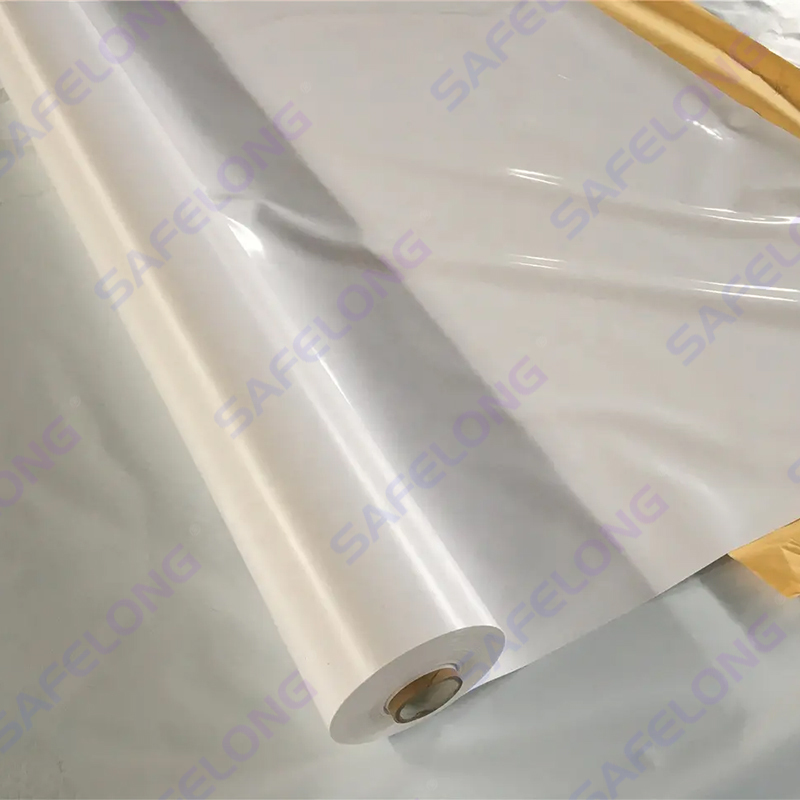 Wholesale PVC Tent Fabric Suppliers, Factory - Jiangsu Sulong Eco-Technologies CJiangsu Sulong Eco-Technologies Co., Ltd is a China PVC Tent Fabric suppliers and factory, We specialize in wholesale PVC Tent Fabric sal...View Product →
| Fabric | Typical weight | Common coating | Hydrostatic head | UV resistance |
|---|---|---|---|---|
| Polyester | 68D to 190D; 80 to 240 gsm | PU or PE | 1,500 to 5,000 mm | Moderate to good |
| Nylon | 10D to 70D; 50 to 100 gsm | Silicone or PU | 1,200 to 3,000 mm | Poor to moderate |
| PVC-coated polyester | 400 to 900 gsm; 18 to 28 oz | PVC laminate | 8,000 to 20,000 mm | Excellent |
| TPU-coated fabric | 200 to 600 gsm | TPU film | 5,000 to 15,000 mm | Good |
When your rain fly is damaged, lost, or simply too small for a group shelter, a tarp is the classic backup. The trick is sizing and geometry. As a working rule, the tarp should overlap the tent footprint by at least 30 cm on every side; a 3 by 3 m tarp covers most two-person tents comfortably, while a 3 by 4 m or 4 by 4 m tarp suits a family tent or a group kitchen.
For an emergency fly that has to survive a full season of weekend trips, use a coated fabric with welded, reinforced corners rather than a cheap poly sheet. A standard 18 to 22 oz knife-scraped PVC tarpaulin resists punctures, stays flexible in cold weather, and holds its tension overnight, which makes it the most dependable tarp-based rain fly for car camping and base camps.
A lean-to is faster for a solo camper who only needs to protect the head end of the tent. The tarp slopes from a high line on the windward side down to low stakes on the other side. A diamond pitch rotates a square tarp 45 degrees so one corner becomes the high point and all four edges shed water outward; it handles heavy rain better than a flat pitch because every side drains away from the center. All of these configurations are more about tension than about knots; a tight fabric sheds water, while a loose one pools and pushes moisture through the weakest point.
Most wet-inside mornings come from a handful of fixable errors, not from a defective tent. Run through this checklist after you pitch the fly, and again before you crawl into the bag.
Inflatable tents replace fiberglass or aluminum poles with air beams made from coated fabric. Because the beams are inflated rather than assembled, the fly is often integrated into the shelter; there is no separate flapping fly to lose, mix up, or pitch wrong in the dark. For campers who regularly set up in wind or rain, this removes the two biggest failure points: pole assembly and fly alignment.
The covering layer of these air beams is a drop-stitch inflatable fabric, coated so the structure holds pressurized air inside without slow leaks. A companion article on this site provides a comprehensive overview of inflatable fabric construction, including how beam channels are sealed and why the base fabric choice matters for cold-weather flexibility.
The trade-offs are measurable. Inflatable designs generally weigh more and pack larger than pole tents, but setup from the bag to a taut shelter often takes four to six minutes with just a pump. The structural beams carry pressures that vary by design, commonly in the range of 5 to 12 psi for drop-stitch units, and the inflated ribs keep the fly drum-tight. That tautness is the real benefit on a wet campsite: less flutter, fewer pooling spots, and no torn pole sleeves. For car camping, family base camps, and group events, inflatable tent designs are worth a serious look before you buy another pole shelter.
 Wholesale Inflatable Tent Suppliers, Factory - Jiangsu Sulong Eco-Technologies CJiangsu Sulong Eco-Technologies Co., Ltd is a China Inflatable Tent suppliers and factory, We specialize in wholesale Inflatable Tent sal...View Product →
No. Where the fly and inner tent make contact, condensation wicks through the inner fabric and creates a wet patch on your sleeping bag. Keep a clearance of at least 5 to 10 cm between the two layers, using the fly tensioners, pole clips, or a small trekking pole prop under the peak.
Yes, for a temporary camp, if the tarp overlaps the tent by at least 30 cm on every side and is pitched with a strong slope. Two points to manage: basic poly tarps are water-resistant rather than fully waterproof, and a flat tarp must be tensioned tightly or it will pool water around the tent corners. A PVC-coated tarp performs noticeably better in this role.
In most cases it is condensation, not leakage. One person exhales roughly a liter of moisture overnight, and that humidity condenses on the cooler fly or inner walls. Open the top vent, increase the gap between fly and inner tent, and confirm that the fly does not touch the inner fabric. If water drips from a specific point on the fly, check that seam tape or the stitching around the vent.
It means the fabric can hold a 3-meter column of water before the first drop passes through, which is roughly one-third of atmospheric pressure. In practical terms, 1,500 mm handles normal rain, 3,000 mm is comfortable for most three- and four-season camping, and 5,000 mm or more is used for heavy wind-driven conditions where water is forced against the fabric.
Never dry a synthetic fly over a campfire or on a hot surface. Wipe the inner side with a microfiber cloth, drape the fly over a fence, tree branch, or the tent ridge line in the shade, and let air move under it. A fly should never be packed away damp; even one night in a stuff sack with trapped moisture can start mildew that is hard to remove.
Test it after a dry spell by sprinkling water on the surface. If it beads and rolls off, the coating is fine. If it soaks in slowly, re-treat the fly with a spray-on or wash-in waterproofing product. Most PU-coated polyester flies benefit from reproofing every two to three seasons; PVC-coated and TPU-coated fabrics rarely need it because their waterproof layer is part of the laminate rather than a surface treatment.
If you have any questions, please fill out the contact form at the bottom of the page and contact us.
You agree to Sulong Terms and Privacy Policy.

No.9 Filter Material Industry Park, Funing, China (Factory)
Unit 2, 15#-405, Kuanglu Community, Gulou District, Nanjing, China (Office)

+86 15724842588

+86-0515-68589566

+86-0515-68589566

info@safelong.net
 Previous