


 English
 Español
 русский

News
Home / News / Industry News / How to Put a Tarp Over a Tent Without Trees: 7 Field-Ready No-Tree Methods
Content
Yes, you can put a tarp over a tent without trees. The reliable way is to replace tree branches with two support points and a set of solid ground anchors. Trekking poles, a pole kit, your vehicle, or even a large rock can do the job. Once you understand these methods, a treeless camp is not a problem; it is often a more controlled setup than working around uneven branch heights.
This guide covers the practical no-tree methods, the tarp and anchor choices that make them work, and the field numbers that help you set the tarp at the correct height and angle on the first attempt.
A tarp adds a protective layer between the tent and the outside world. It gives you four practical benefits:
The main point is that a tarp should never touch the tent. When it touches, you lose the air gap that prevents condensation, and the flapping fabric can wear through the tent fly over time.
Five setups work well without trees. Choose the one that uses the fewest extra pieces and matches the ground you are standing on.
| Method | Support point | Best for | Minimum anchor kit |
|---|---|---|---|
| Trekking-pole ridge | Two trekking poles plus a ridge line | Backpacking, alpine, gravel sites | 4 stakes + 4 guylines |
| Two-pole A-frame | Two upright poles at both ends | Open meadows, campsite pads | 4 stakes + 4 guylines |
| Vehicle-assisted | Roof rack, bumper, door handle | Road camping, vehicle travel | One vehicle + 2 stakes |
| Rock and terrain | Boulder, log, dirt mound | Rocky canyons, desert, riverbeds | 2 large rocks + 2 guylines |
| Snow stake and sandbag | Buried stakes or fillable bags | Snowfields, beaches, soft sand | 4 buried anchors + guylines |
Set two trekking poles about 3 to 4 meters apart, extend them to roughly 1.8 meters, and run a ridge line between their top baskets. Drape the tarp over the line and stake each corner so the tarp forms a simple A-frame. This is the lightest no-tree method because your walking poles do double duty.
If your tent has a center ridge around 1.2 meters, use two poles at the ends of the tent. The pole height has to be at least tent ridge height plus 30 centimeters. Thread a ridge line through the tarp loops or use two corner tie-outs on each side to create a wide A-frame.
A roof rack is almost as good as a branch. Tie one end of the ridge line to the roof rack or door handle, then pull the tarp away from the vehicle and anchor the opposite side with stakes. Keep the tarp away from the exhaust pipe, and never let the fabric touch a hot muffler. On a windy day, add a second guyline from the center of the tarp to a stake or a heavy rock.
A large rock does not need a stake hole. Loop a wide strap or piece of webbing around the rock, then attach your ridge line to the strap. Use a padded stuff sack or a folded shirt under the strap to keep the line from sawing against sharp edges. This method is ideal in places where you are not allowed to dig.
In snow, bury a snow stake horizontally at least 20 centimeters deep and attach the guyline to the buried shaft. On sand, fill a stuff sack with sand, bury it, and use the sack as a deadman anchor. Angle the anchor away from the tarp so the load pulls against the buried material instead of straight up.
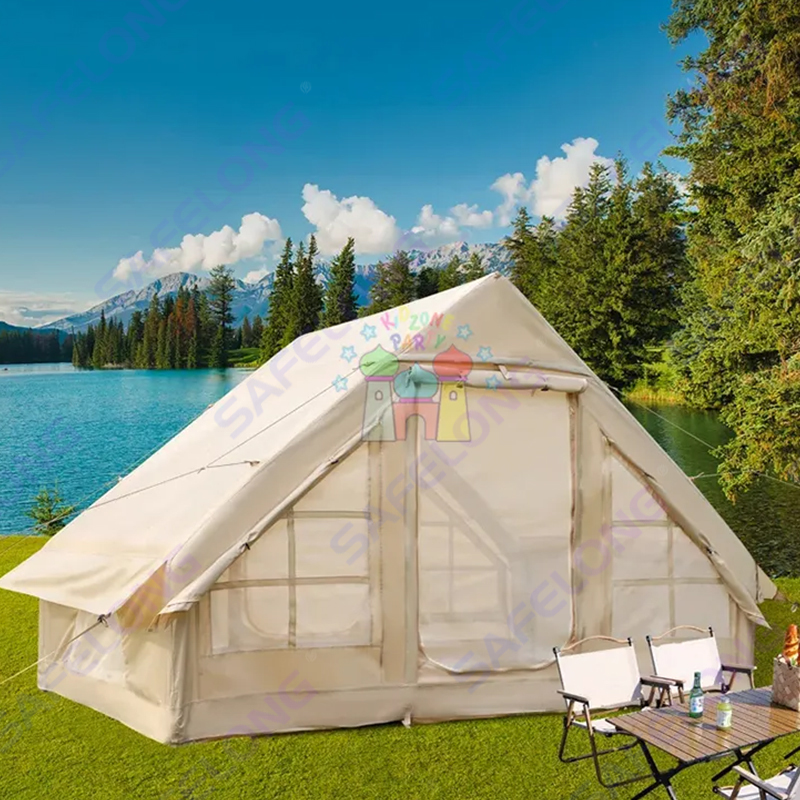 Inflatable Tent with PVC Frame for Rocky GroundThis inflatable tent offers a pole-free setup ideal for rocky or sandy terrain where stakes struggle. Its lightweight, quick-inflating PVC structure provides wind resistance up to level 8 and easy portability, making it a practical alternative to traditional tarps.View Product →
If you do not want to carry poles for a tarp, a free-standing inflatable tent is a genuinely practical alternative. Inflatable beam tents use air chambers instead of tree branches or pole structures. They are especially useful on rocky soil where trekking poles are hard to place securely.
The tarp should be larger than the tent by at least 60 centimeters on every side. For a common two-person tent with a footprint around 2.2 by 2.2 meters, a 3 by 3 meter tarp is the minimum. A 3 by 4 meter tarp is better because it gives you more overhang for a vestibule and lowers the risk of rain blowing sideways into the tent.
Not all tarps handle open-air wind the same way. A thin polyethylene tarp is cheap, but it tends to stretch, flap loudly, and degrade faster under strong UV. PVC-coated tarpaulin is heavier and more durable, which is why it is common on longer camps. You can read more in the introduction to PVC tarpaulin covers before choosing a fabric.
| Material | Typical weight | Strength | Best use |
|---|---|---|---|
| Polyethylene film | 90 to 120 g per sq m | Low | Emergency cover, ground cloth |
| PVC film tarpaulin | 300 to 500 g per sq m | Good | General camp shade and rain cover |
| Knife-scraped PVC | 500 to 900 g per sq m | High | Basecamp, rough ground, long-term camps |
| Polyester TPU | 150 to 300 g per sq m | High | Custom ultralight covers, cold-weather use |
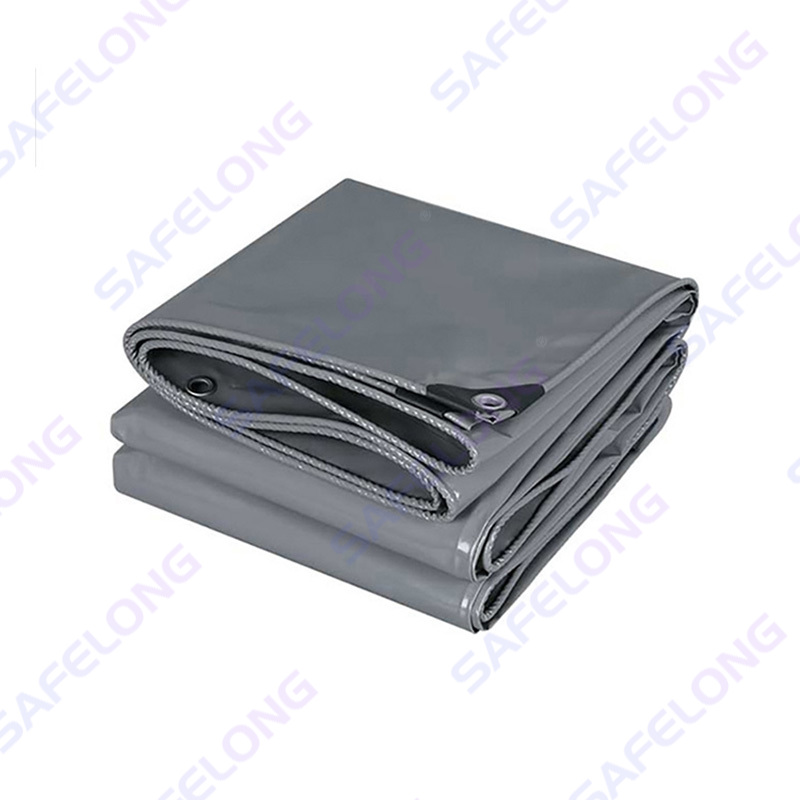 Knife-Scraped PVC Tarpaulin for Extreme WeatherCompared to cheaper polyethylene alternatives, this knife-scraped tarpaulin delivers superior tear resistance and zero permeability. It withstands UV exposure for over five years and passes a 5000Pa water pressure test, making it a durable choice for long-term outdoor protection.View Product →
Anchor choice matters as much as the fabric. Use the right stake for the ground:
Follow this sequence on any open site. It takes longer to explain than to do, and after two or three setups it becomes automatic.
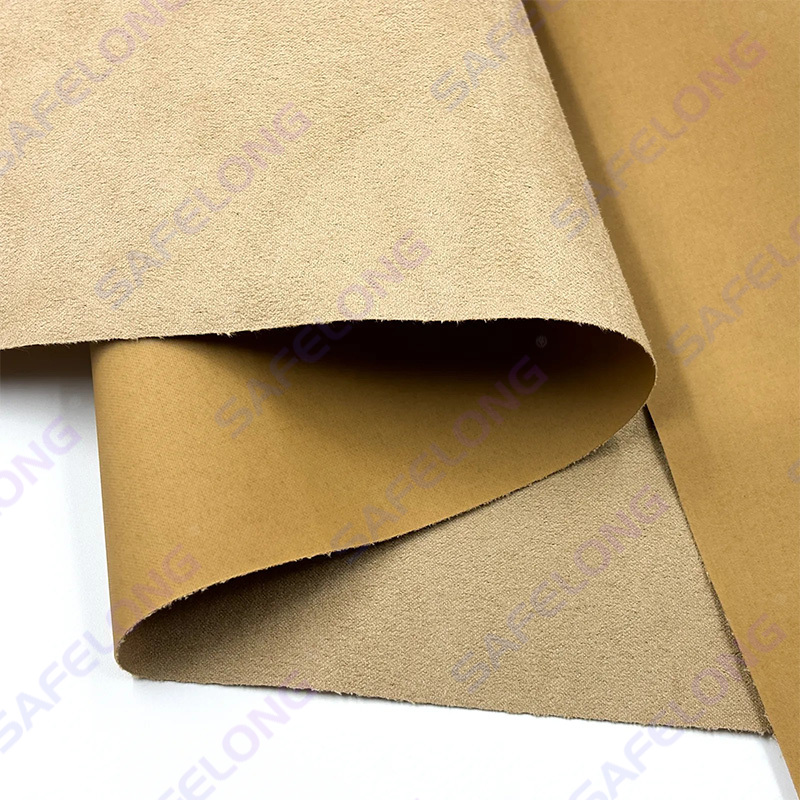 Polyester Thermoplastic Polyurethane FabricThis polyester TPU fabric combines hydrolysis resistance and low-temperature flexibility, remaining elastic below -30°C. It suits custom tarps or tents needing high mechanical strength and moisture permeability, especially in humid or cold environments.View Product →
If you are ordering a custom tarp for a tent without trees, ask about the tie-out pattern before production. Most manufacturers, including Sulong's product range, can adjust dimensions, reinforcement patches, and edge loops to match a no-pole setup.
A nearly flat tarp can catch water in the center. For rain, give the lower side a 15 to 20 degree slope and let the far edge extend well beyond the tent footprint. In strong wind, lower the whole pitch to reduce surface area.
| Condition | Ridge height | Pitch shape | Anchor advice |
|---|---|---|---|
| Clear night | 1.8 to 2.0 m | Open A-frame | 4 anchors with normal tension |
| Rain | 1.4 to 1.6 m | Steep side with drip edge | 4 anchors plus drip loops on tie-outs |
| Strong wind | 1.2 to 1.4 m | Low wedge | 6 anchors, reinforce the leeward side |
| Hot sun | 1.9 to 2.1 m | High shade panel | 4 anchors, keep guylines slightly loose |
Use a simple rule for guylines: the angle between the guyline and the ground should be about 45 degrees. A shallower angle puts more load on the stake; a steeper angle lifts the stake out. In very sandy or snowy ground, lower the ridge height and add more stakes rather than trying to pull the tarp tighter.
Answer: Yes. Use one high pole at one end and tie the opposite end of the ridge line to a rock, vehicle, or heavy anchor. This creates a sloped half-tarp rather than a symmetric A-frame. It works well for a small one-person tent or when you only need to protect the entrance.
Answer: The strongest anchor is usually a buried deadman system: a stuff sack, stake, or gear bag buried at least 20 to 25 centimeters deep at a 45 degree angle away from the tarp. In solid soil, a screw-in ground anchor with two or three full turns gives similar pullout resistance.
Answer: No. Keep at least 15 to 20 centimeters of space between the tarp and the tent fly. This gap allows air to move, prevents condensation, and reduces wear from fabric rubbing together in the wind.
Answer: Add mid-panel guylines, lower the tarp, and make sure every corner has a stake. A flapping tarp usually means the fabric is either too loose or too tight. Adjust the tension gradually and add extra guylines on the side facing the wind.
Answer: A 3 by 3 meter tarp is the minimum. A 3 by 4 meter tarp is more practical because it leaves room to create a covered entrance. If the tent is taller than average, choose a longer tarp so the overhang still reaches near the ground.
Answer: For campers who carry enough gear and want fast setup, yes. Inflatable beam tents remove the need for poles and separate tarp supports, so they work well on rocky or compacted ground where stakes are difficult to place. Their main trade-off is added weight and the need to protect the fabric from punctures.
If you have any questions, please fill out the contact form at the bottom of the page and contact us.
You agree to Sulong Terms and Privacy Policy.

No.9 Filter Material Industry Park, Funing, China (Factory)
Unit 2, 15#-405, Kuanglu Community, Gulou District, Nanjing, China (Office)

+86 15724842588

+86-0515-68589566

+86-0515-68589566

info@safelong.net

