


 English
  Español
 русский
News
Home / News / Industry News / Emergency Tarps: How to Choose the Right Material, Size, and Strength for Severe Weather
Content
When a storm warning interrupts an evening forecast, a bargain-bin polyethylene tarp is not an emergency plan. It is a liability. The clearest conclusion from field testing and material data is direct: a PVC-coated polyester tarp with reinforced hems, a base weight of at least 600 GSM, and grommets spaced no more than 60 centimeters apart will outperform ordinary polyethylene in nearly every emergency exposure, from wind-driven rain to weeks of direct sunlight.
This guide gives you concrete specification targets for material, construction, size, and upkeep. Choose before you need it, because during a real emergency you will not have time to compare coatings or count grommets.
Retail tarps fall into two groups: disposable covers and reusable protective equipment. Emergency use demands the second group. The difference appears in five concrete areas:
If you are stacking an emergency kit or comparing supplier quotes, these two materials settle the debate with numbers. PVC-coated polyester is heavier, packs slightly bulkier, and costs more. It also survives abrasion, cold cracking, and UV exposure far better. Polyethylene wins on price and pack weight, but its useful life under emergency conditions is short. The table below compares the properties that matter when a storm is already moving in.
| Property | PVC-Coated Polyester | Polyethylene Laminated |
|---|---|---|
| Typical weight | 550 to 800 GSM | 90 to 180 GSM |
| Tear resistance | High, woven base stops rips | Low, once a tear starts it runs |
| UV lifespan | 5 to 8 years | 6 to 18 months |
| Cold flexibility | Down to minus 30 degrees C | Cracks below minus 10 degrees C |
| Puncture resistance | Moderate to high | Low |
| Pack volume | Larger and heavier | Compact and light |
| Typical price | Higher | Low |
For a deeper look at how tarpaulin covers are manufactured and graded, see this introduction to PVC tarpaulin covers. It explains the coating tolerances and factory tests that separate rated tarps from unmarked film.
Two coating methods define most PVC tarpaulin products, and understanding the difference will change how you read product sheets.
Knife-scraped, sometimes called knife-coated, tarpaulins spread a thick PVC paste across woven polyester and then scrape it to an even thickness. The result is a dense, airtight membrane strongly bonded to every strand of the weave. This construction handles repeated folding and resists delamination. It is the right choice for emergency shelters, truck covers, and any application involving wind flapping. A representative product in this category is the knife-scraped tarpaulin used for heavy-duty covering work.
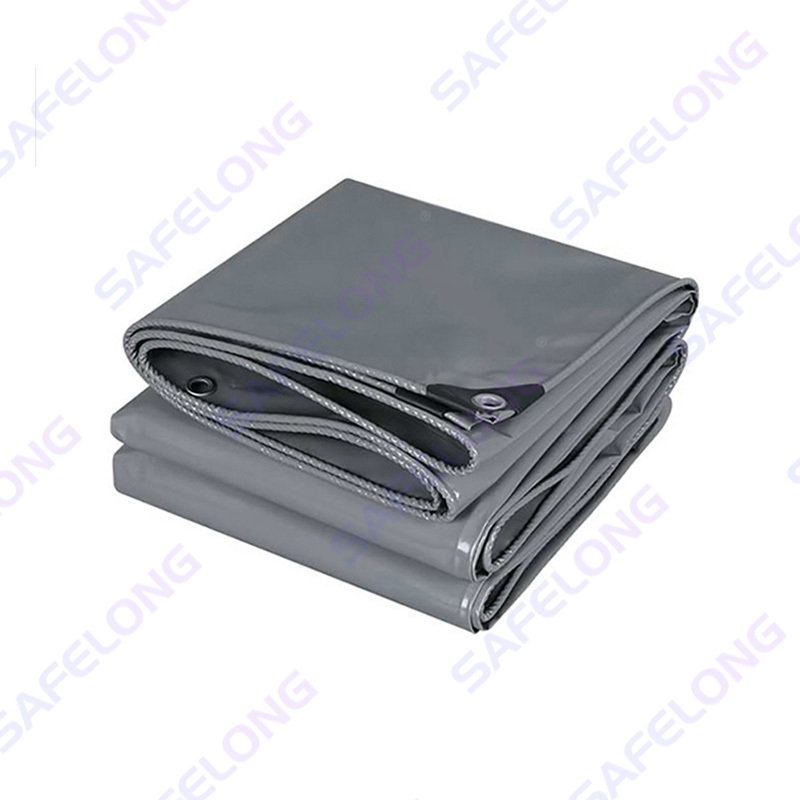 Knife-Scraped PVC Tarpaulin for Heavy-Duty CoveringThis knife-scraped construction bonds a thick PVC paste to the weave, creating a dense, airtight membrane that resists delamination and repeated folding. Ideal for truck covers, emergency shelters, and wind-prone applications.View Product →
Film tarpaulins bond a pre-made PVC film to the fabric with heat and pressure. They are lighter and more economical, with a smooth surface that sheds water. For stationary covering jobs, such as protecting pallets or machinery from rain, film construction gives you the waterproof performance at a lower weight. The film tarpaulin option is a common pick for warehouse and logistics use.
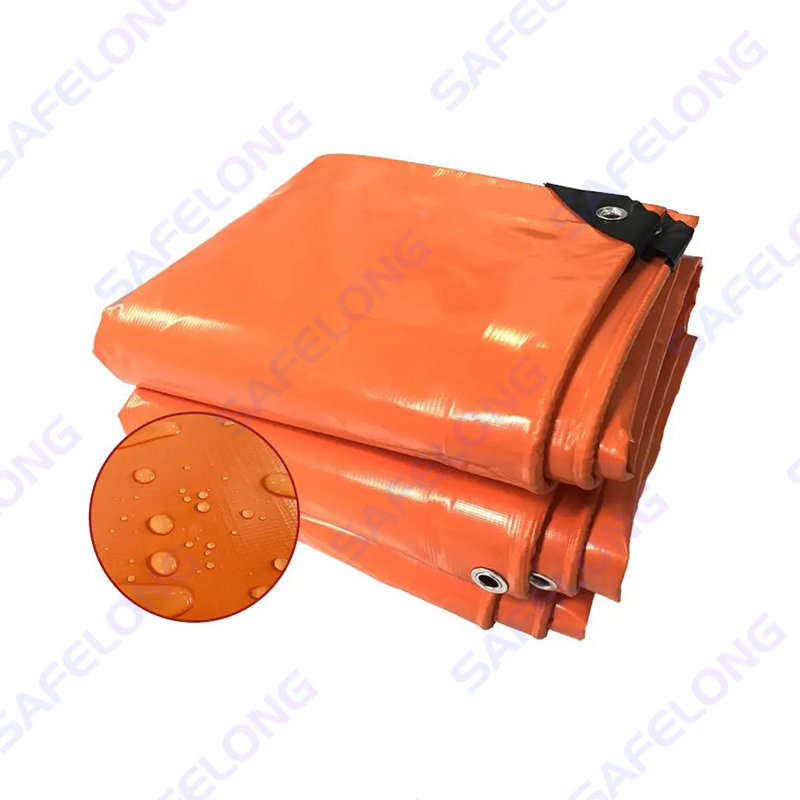 Lightweight Film Laminated PVC TarpaulinMade by bonding a pre-made PVC film to polyester fabric, this tarpaulin is lighter and more economical. Its smooth surface sheds water effectively, making it a practical choice for stationary covering jobs in warehouses or logistics.View Product →
If you are buying for a vehicle kit or a storm-response trailer, choose knife-scraped, because it tolerates constant folding and shifting loads. For permanent or semi-permanent covering with minimal handling, film tarpaulin is enough. A related reference on fabric behavior can be found in the buyer's guide to PVC tensile fabric, which compares coated fabrics across different use cases.
Size is the most misunderstood specification. People buy small tarps because they underestimate how much overhang and slope a shelter needs. For a two-person emergency shelter, 2.4 by 3.0 meters, or 8 by 10 feet, is the minimum usable size for a low A-frame. A 3.0 by 4.5 meter, or 10 by 15 foot, tarp gives enough fabric for a ridge line with folded walls. For roof damage, measure the repair surface and add at least 60 centimeters on every side, because the tarp must wrap over the ridge or tuck under flashing. For equipment protection, the tarp needs full drape plus a tie-down margin of 45 centimeters.
| Scenario | Recommended Size | Why |
|---|---|---|
| Vehicle emergency kit | 2.4 by 3.0 m | Two-person shelter and windbreak |
| Family shelter or group camp | 3.0 by 4.5 m | Ridge line with wall flaps |
| Roof patch | Measure plus 60 cm per side | Overlap and anchorage margin |
| Equipment cover | Unit width plus 90 cm | Full drape with no snow pooling |
| Ground moisture barrier | 1.8 by 2.4 m | Sleep area and dry gear storage |
Grommets fail before fabric does in most wind events. The standard spacing on cheap tarps is 90 to 120 centimeters, which creates large unsupported spans that flap violently in wind until the grommet tears through the hem. Follow these rules when inspecting a tarp:
Emergency tarps solve concrete problems. The scenarios below repeat in flood response, storm recovery, and off-grid field operations:
For field tasks where concealment or visual separation is important, a camouflage waterproof cloth combines the same PVC-coated durability with a pattern suited to outdoor and tactical use.
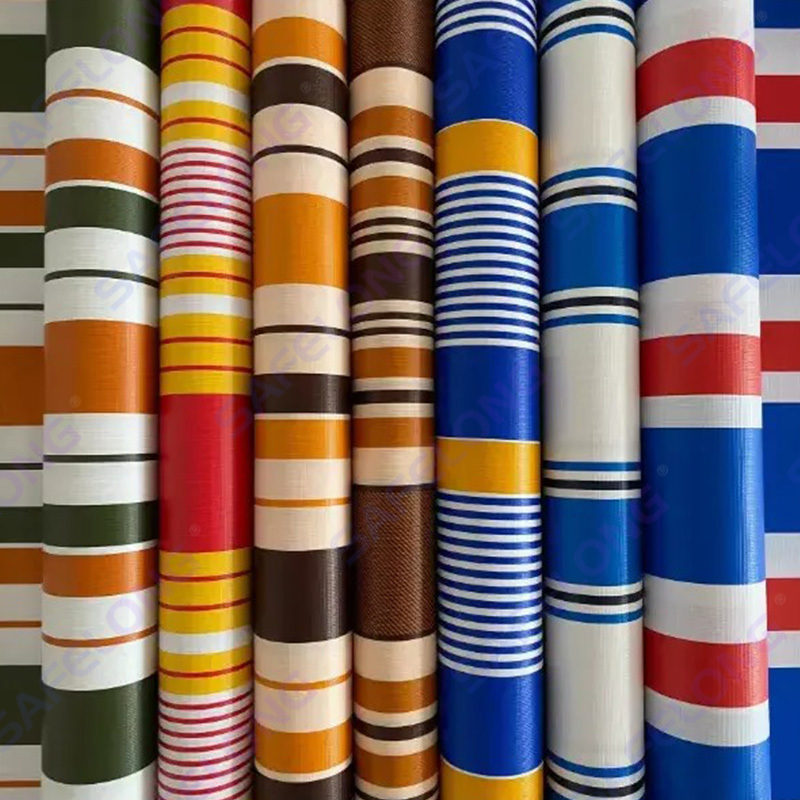 Camouflage Waterproof Cloth for Outdoor ConcealmentThis PVC-coated cloth features a digital camouflage pattern on a 450D Oxford base, offering concealment and IPX5 waterproofing. It suits military tents, hunting blinds, and outdoor photography where visual separation is needed.View Product →
A tarp stored damp or folded carelessly ages faster than one used daily. Follow these rules to extend its life between emergencies:
A 600 GSM PVC-coated polyester tarp stored indoors maintains its rated strength for more than seven years. The same tarp stored outdoors in full sun lasts roughly half that time.
A 2.4 by 3.0 meter, or 8 by 10 foot, tarp covers a two-person shelter and fits into a duffel bag. For family kits, step up to a 3.0 by 4.5 meter version so you have enough fabric for wall flaps and a ridgeline.
A laminated polyethylene tarp is acceptable as a temporary ground sheet or a short-term rain cover. It is not strong enough for repeated wind exposure or shelter use. For emergency kits, upgrade to PVC-coated polyester at 600 GSM or higher.
With UV stabilizers and proper tensioning, a knife-scraped PVC tarp lasts five to eight years in intermittent outdoor use. Continuous full-sun exposure shortens that to roughly three to four years.
Yes. Use a repair patch with a new grommet kit: clean the area, apply adhesive, press the patch, then punch and set the new grommet. The fix holds as long as the surrounding hem is still intact.
GSM means grams per square meter, which measures the density of the coated fabric. Emergency-grade tarps start around 600 GSM. Anything below 400 GSM is a dust or drop cloth, not a storm cover.
Waterproof means liquid water cannot pass through the membrane under pressure. Water-repellent means the surface beads water but may soak through under prolonged contact. For emergency use, require waterproof construction with seam-sealed joins.
If you have any questions, please fill out the contact form at the bottom of the page and contact us.
You agree to Sulong Terms and Privacy Policy.

No.9 Filter Material Industry Park, Funing, China (Factory)
Unit 2, 15#-405, Kuanglu Community, Gulou District, Nanjing, China (Office)

+86 15724842588

+86-0515-68589566

+86-0515-68589566

info@safelong.net

