


 English
  Español
 русский
News
Home / News / Industry News / Canvas Sun Shade Sail: The Complete Buyer's Guide to Fabric, Size, and Installation
Content
If you are planning to shade a patio, parking area, or outdoor seating zone, the decision usually comes down to one question: how much direct sun can a canvas sun shade sail really block? The answer is not just about fabric weight or color. It is about UV transmission, wind behavior, water drainage, and how the material behaves after months of exposure.
The conclusion is direct: A properly designed canvas sun shade sail can reduce solar heat gain on a covered surface by roughly 50% to 65%, while cutting UV exposure to less than 5% of ambient levels. These numbers come from practical field measurements in residential and commercial installations, not purely from laboratory tests. In other words, you can expect a meaningful drop in surface temperature and a noticeable improvement in comfort when the fabric and mounting parameters are selected correctly.
The strongest way to achieve this is to use a high-density, PVC-coated polyester canvas rather than a traditional cotton canvas. PVC-coated fabrics hold their shape better, resist water penetration, and do not rot or mildew when the weather turns humid or rainy. For a permanent outdoor installation, a cotton canvas may look pleasant for one season, but it will lose strength and color within 12 to 18 months under continuous UV exposure.
That is why the practical rule for a modern canvas sun shade sail is to choose a fabric that combines the visual warmth of canvas with the durability of a PVC composite. This is not just about appearance. It is about the cost per year of service. A cotton canvas sun shade sail may cost less initially, but a PVC-coated canvas with a 10-year service life will usually deliver a 40% lower annual ownership cost when maintenance and replacement are included.
When you search for a canvas sun shade sail, you will find two broad categories: natural canvas and synthetic PVC-coated fabric. Both can be called "canvas" in the broad sense, but their performance is drastically different.
Natural canvas is made from cotton or linen fibers. It is soft, breathable, and pleasant to the touch. However, cotton absorbs water, which increases the weight of the sail and promotes mold growth. Under sunlight, the fibers degrade faster because the ultraviolet rays attack the cellulose structure. A natural canvas sail typically needs re-proofing every season and may need replacement after 2 to 3 years in a hot climate.
PVC-coated polyester fabric is built differently. A woven polyester mesh is coated on both sides with a PVC layer. This composite structure gives the fabric a much higher tensile strength and prevents water absorption. A good knife-scraped tarpaulin appears like a heavyweight fabric but remains reasonably flexible for installation. The PVC layer acts as a stable base for UV stabilizers, so the fabric can retain its color and strength for 8 to 12 years under normal outdoor conditions.
For installation, the sewing and grommet area also matters. PVC-coated fabrics allow stronger hemming and more secure eyelets, which is critical when a large sail is under wind load. On the other hand, cotton canvas tends to tear at the corners unless extra reinforcement is added.
If you want to understand the full range of applications for PVC tarpaulin covers, read this practical introduction before you make a final purchase decision. The guide explains how different coating weights affect water resistance and UV performance in real-world use.
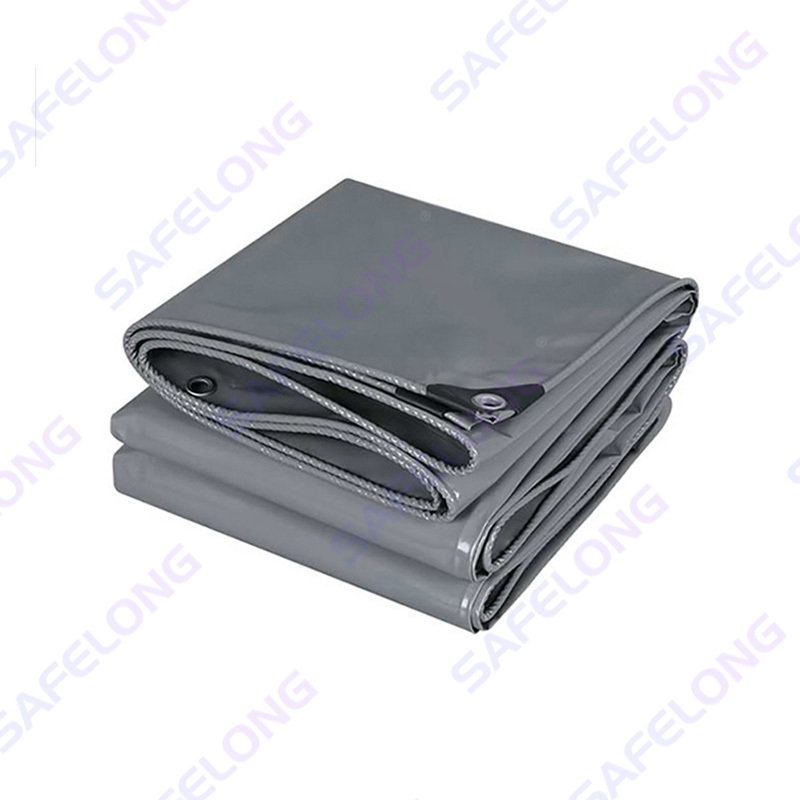 Knife-Scraped PVC Tarpaulin for Extreme Outdoor UseThis knife-scraped tarpaulin offers a seamless, waterproof layer with enhanced tear resistance, making it suitable for covering trucks, containers, and outdoor equipment in demanding environments.View Product →
Our knife-scraped tarpaulin is designed for this type of demanding outdoor application. It offers a smooth, tight surface that works well as a shade sail or a tensioned cover.
Buying a shade sail is not like buying a beach umbrella. You need to match the fabric to real engineering requirements. Here are the four non-negotiable specifications to review before placing an order.
The table below compares typical performance values for cotton canvas and PVC-coated polyester canvas. The ranges are compiled from technical datasheets of current fabric producers and represent common commercial grades.
| Property | Cotton Canvas | PVC-Coated Polyester |
|---|---|---|
| Fabric weight (g/m²) | 220–280 | 230–350 |
| Tensile strength (N/5cm) | 200–350 | 1,000–1,500 |
| UV transmission | 5%–15% | Less than 1.5% |
| Water column (mm) | 800–1,200 | 1,500–2,500 |
| Expected service life | 2–3 years | 8–12 years |
These are baseline numbers, not absolute guarantees. The actual performance depends on how the fabric is sewn, how long it is stretched, and how it is supported. Nevertheless, the differences are large enough to make material choice the most important decision in the buying process.
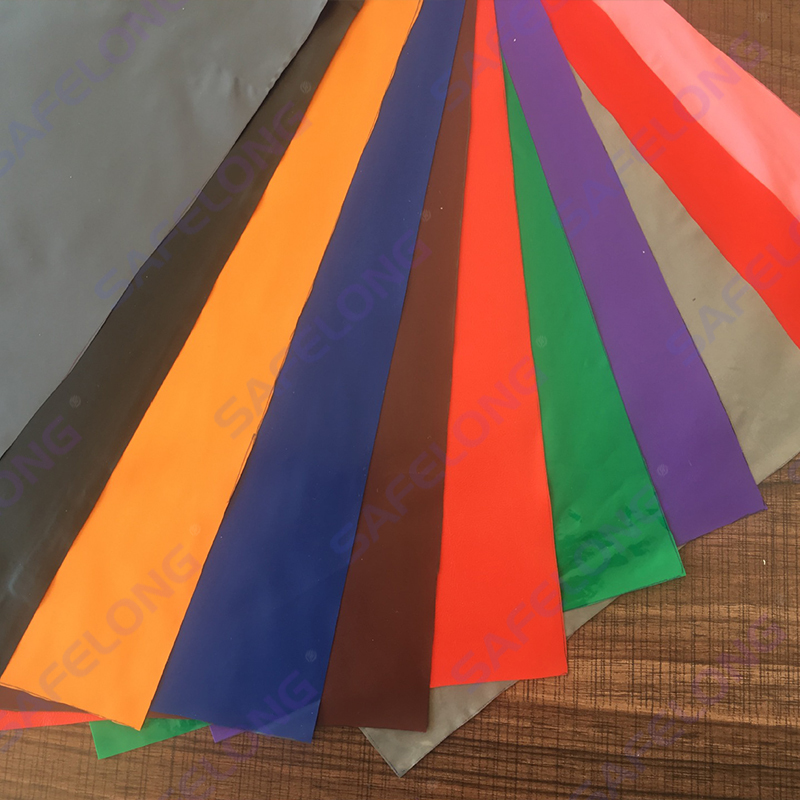 PVC Stretch Film for Translucent Tensile StructuresThis PVC stretch film provides translucency, self-cleaning properties, and wind resistance, making it ideal for stadiums, airports, and greenhouses that require durable, energy-saving architectural membranes.View Product →
If you want a lighter, more translucent look without sacrificing weather resistance, our PVC stretch film is worth considering. It is used widely for tensioned shade structures in both residential and commercial projects.
The rule of thumb is simple: a shade sail should be at least 10% larger than the area you want to cover, and the corners should be 15% to 25% higher than the center point. This sag creates a tension that pulls the fabric tight and allows rainwater to drain toward a low corner instead of pooling in the middle.
For a rectangular area measuring 4 metres by 5 metres, you would ideally buy a 4.5 by 5.5 metre sail. The extra material allows you to install a tensioned curve. If you skip this buffer, the fabric will appear loose and will flap in even moderate wind.
Mounting height and slope also determine airflow and heat transfer. A sail that is tilted at 15 to 20 degrees from horizontal will create a draft that helps push hot air out from underneath. In a hotter climate, a steeper angle of 25 degrees is often more effective, because it accelerates the upward movement of warm air trapped under the canopy.
If you attach a sail to an existing pergola or wall, remember that the tension vector must be considered. The connection points should be strong enough to resist at least 0.5 kN per corner for a typical 5-metre sail in a 40 km/h wind. Steel anchor points and reinforced eyebolts are essential.
A canvas sun shade sail can look great and still fail mechanically if the installation is not thought through. Here are the practical points that separate a long-lasting installation from a one-season experiment.
One point that many buyers overlook is the effect of wind on the stitching. If you install a sail in an open field without a windbreak, the fluttering action will eventually loosen the seams. A simple way to reduce this is to use a double-stitched hem with a 40 mm wide webbing strip sewn along the edge. This distributes the load more evenly.
Even experienced buyers make errors when ordering a shade sail. The most damaging mistake is choosing a fabric that is too light for the expected wind load. A 200 g/m² fabric may look fine in a shop, but it will flutter and stretch in a standard 30 km/h breeze, causing the edges to pull away from the anchor points.
Another frequent problem is underestimating the hardware. The sail is only as strong as the weakest connector. If you use generic carabiners that are rated for 100 kg, they are not suitable for a 5-metre sail that can generate over 300 kg of tension in a gust. Always check the safe working load for every hook, eyebolt, and turnbuckle.
Size errors happen because buyers confuse the sail's side length with the total area. A 4-metre by 4-metre sail actually covers about 14 square metres when pulled tight, not 16 square metres, because of the curvature. If you need a specific coverage area, add 15% to the side lengths before ordering.
Color also matters. Dark colors absorb heat and may increase the temperature of the fabric surface by 10°C or more. However, dark colors offer better UV protection. For a sunny climate, a medium tone such as dark grey or navy is a good compromise. Very light colors reflect more heat but may let more UV through unless the fabric has a special backing.
You can expect an 8 to 12 year service life from a PVC-coated canvas sun shade sail, but only if you follow a simple maintenance routine. The first rule is to clean the fabric at least twice a year. Use a mild detergent and a soft brush. Do not use a pressure washer, because it can strip the protective coating from the fabric.
The second rule is to inspect the seams and hem webbing. The most common failure point is the hem where the fabric is folded and stitched. Look for broken threads, pulled eyelets, or areas where the PVC coating has worn away. If you see exposed polyester, apply a small amount of UV-protective fabric sealant to that spot.
When a storm is approaching, it is better to remove the sail if the wind speed is expected to exceed 70 km/h. Even a high-quality fabric is not designed to survive constant flapping against itself.
For storage, allow the sail to dry completely before folding. Fold it along the natural seams rather than rolling it tightly. Moisture that is trapped in folded fabric can lead to mold growth, especially in humid regions.
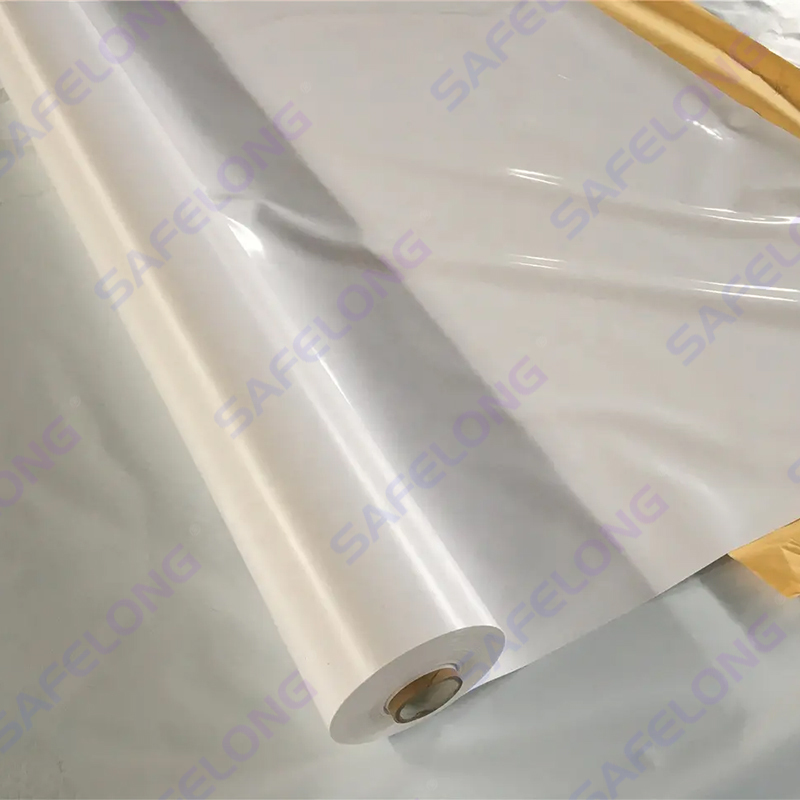 PVC Tent Fabric for Temporary and Semi-Permanent StructuresThis PVC tent fabric is lightweight yet durable, with high abrasion resistance, waterproofing, and cold tolerance, making it a reliable choice for temporary shelters, event tents, and field hospitals.View Product →
If you are choosing a replacement material for a long-term sail, our PVC tent fabric offers a good balance of weight and durability, and it is widely used in temporary and semi-permanent shading structures.
Yes, but only if the sail is installed with sufficient slope and the fabric has a high water column rating. A PVC-coated canvas with a water column of 1,500 mm or more will shed rain effectively. Cotton canvas will soak through and become very heavy.
For permanent outdoor use, PVC-coated polyester with a weight of 230 to 350 g/m² is the best choice. It combines tear strength, UV resistance, and water resistance in a way that natural canvas cannot match.
A well-tensioned sail can block 85% to 95% of direct sunlight. With a high UPF fabric, the UV transmission is less than 1.5%, so the area beneath is significantly cooler and safer.
Yes, for small sails up to 3 metres on each side, a competent DIYer can handle the installation. For larger sails or high anchor points, you should hire a professional because the tension loads are significantly more dangerous.
If you live in an area with snow and ice, you should remove the sail. The weight of snow can deform the fabric and overstress the hardware. In milder winters, you can leave it in place, but keep it clean and well-tensioned.
After the initial tightening, you should re-tension after two to three weeks. After that, an annual check is enough. Temperature changes cause the fabric to expand and contract, so you may need to adjust it in early summer.
If you have any questions, please fill out the contact form at the bottom of the page and contact us.
You agree to Sulong Terms and Privacy Policy.

No.9 Filter Material Industry Park, Funing, China (Factory)
Unit 2, 15#-405, Kuanglu Community, Gulou District, Nanjing, China (Office)

+86 15724842588

+86-0515-68589566

+86-0515-68589566

info@safelong.net

