


 English
  Español
 русский
News
Home / News / Industry News / Common Tarp Sizes: A Practical Guide to Standard Dimensions and Selection
Content
If you need a tarp right now, the answer is simple: most standard PVC tarps come in sizes from 6x8 feet (1.8 x 2.4 m) to 20x30 feet (6 x 9 m), with the most common sizes being 8x10, 10x12, and 12x16 feet. Smaller sheets like 4x6 feet are used for quick repairs, while large 20x30 tarps are common for construction and industrial covers.
The exact size you choose depends on what you need to cover, how much overlap you want, and how the tarp will be secured. In practice, adding a 6–12 inch overlap on every side is the rule of thumb for wind and rain protection. The following list shows the most frequently purchased standard sizes across manufacturers:
These sizes apply to standard rectangular tarps. Many suppliers, including our in-depth guide on PVC tarpaulin covers, note that custom sizes are always available, but the standard sizes above offer the best balance of price and readiness.
Choosing the correct tarp size is not just about coverage. It affects how well you can tie it down, how much weight it adds, and whether wind will lift it. Here are the real-world impacts of getting the size right:
A tarp that is too small saves money but leaves voids. A tarp that is too big costs more and creates extra fabric that can flap in the wind. For example, an 8x10 tarp has a total area of 80 square feet. If you use it to cover a 6x8 foot area, you get about 7 inches of overlap on each side, which is enough for securing with grommets. But if you need to wrap a 10x12 foot stack, an 8x10 tarp will leave gaps, so you would need a 12x16 tarp instead.
Size also determines how many grommets and edge reinforcements are available. Standard tarps have grommets every 2 to 3 feet along the reinforced hem. Larger tarps have more grommets, allowing for more tie-down points and greater stability in high winds. This is why construction contracts often specify exact dimensions to prevent liability from a tarp that lifts off.
In addition, the size you choose affects the weight of the tarp. A typical 8x10 ft PVC tarp with 250 g/m² fabric weighs about 6.5 kg. A 16x20 ft tarp of the same material weighs around 24 kg. If the tarp is to be lifted by hand, weight matters more than size alone. So always consider both dimensions and weight when planning your purchase.
Because tarps are manufactured in both inches/feet and centimeters/meters, it is helpful to see the common sizes side by side. The table below lists the most common rectangular tarp sizes, their surface areas, and the typical overlap you can expect when covering an object of the next smaller size.
| Imperial Size | Metric Size (approx.) | Area (sq ft) | Best Overlap Usable |
|---|---|---|---|
| 4x6 ft | 1.2 x 1.8 m | 24 | Covers 3x5 ft with 6 in overlap |
| 6x8 ft | 1.8 x 2.4 m | 48 | Covers 5x7 ft with 6 in overlap |
| 8x10 ft | 2.4 x 3.0 m | 80 | Covers 7x9 ft with 6 in overlap |
| 10x12 ft | 3.0 x 3.6 m | 120 | Covers 9x11 ft with 6 in overlap |
| 12x16 ft | 3.6 x 4.8 m | 192 | Covers 11x15 ft with 6 in overlap |
| 16x20 ft | 4.8 x 6.0 m | 320 | Covers 15x19 ft with 6 in overlap |
| 20x30 ft | 6.0 x 9.0 m | 600 | Covers 19x29 ft with 6 in overlap |
Notice that the metric sizes are approximate because most manufacturers use imperial cutting tables and then convert. If you are ordering for a specific metric dimension, always ask for the exact cut size in centimetric units, as rounding can cause a 1–2 inch difference.
Beyond the width and length, two parameters define how a tarp behaves: GSM (grams per square meter) and thickness (in mm). Lower GSM tarps are light and easy to handle, while higher GSM tarps are stronger and more abrasion-resistant. Common PVC tarpaulin weights range from 180 g/m² for disposable covers to 550 g/m² for heavy-duty industrial tarps.
As the tarp gets larger, the total weight increases quickly. For example, a 10x12 ft tarp at 250 g/m² weighs roughly 7.5 kg, whereas the same size at 550 g/m² weighs about 16.5 kg. This matters if the tarp will be moved manually. A 20x30 ft heavy tarp can easily exceed 100 kg, so you will need mechanical lifting or a tailored rigging plan.
There are two common PVC tarp constructions that buyers encounter:
Choosing between these types affects the maximum practical size. Heavy knifescraped tarps are available in large sizes but are harder to fold and store. Film tarpaulins are easier to fold and suitable for larger flat covers where weight must remain low.
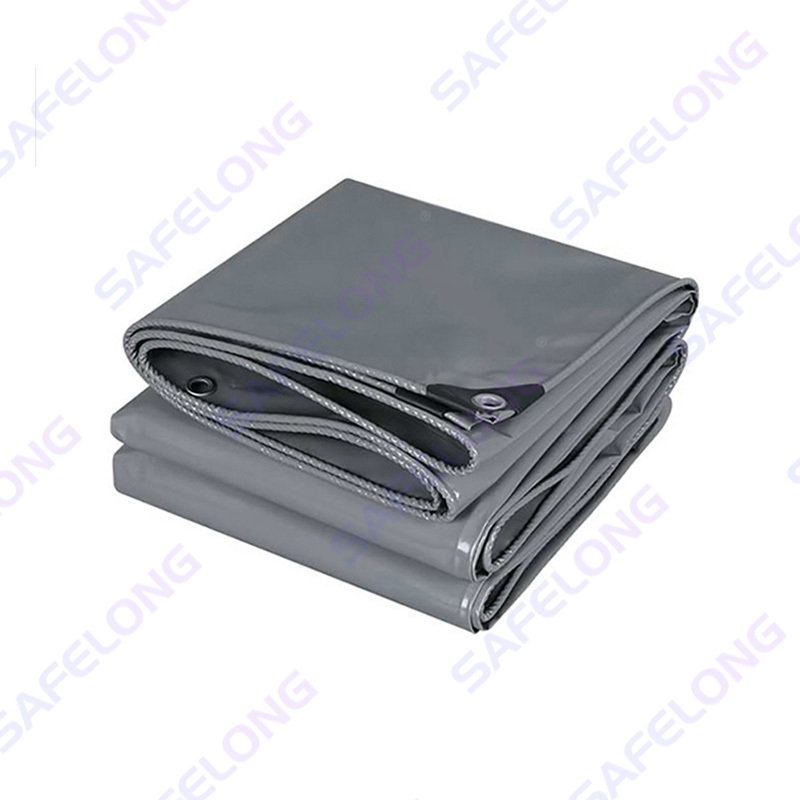 Heavy-Duty Knife-Scraped PVC Tarpaulin for Extreme EnvironmentsThis knife-scraped tarpaulin offers high tear resistance and zero permeability, making it ideal for long-term outdoor protection. Its durable construction suits heavy transport and industrial storage, despite being harder to fold and store.View Product →
To pick a tarp size accurately, start by measuring the object or area you need to protect. Use a tape measure and record the longest length and widest width in both feet and meters. Then add the overlap you need.
The general rule is to add at least 12 inches (30 cm) to both the length and width. If you want to secure the tarp with ropes or bungees, you need to allow for the loops and grommets. For a rectangular object like a car, add 12–18 inches of overlap on each side so the tarp can drape over the corners.
Here is a simple calculation: Tarp width = object width + 2 x overlap; Tarp length = object length + 2 x overlap. For a 6x8 ft vehicle, with a 1-ft overlap, the minimum tarp size is 8x10 ft. If the object has slanted sides, you may need a larger tarp to cover the entire profile, so it is common to move up one full standard size.
Also consider the grommet spacing. Standard PVC tarps have grommets about 2 ft apart along the hem. An 8x10 tarp might have 14 to 18 grommets, while a 16x20 tarp can have more than 30. If your application requires frequent tie-downs, choose a tarp with enough grommet density or ask the manufacturer for reinforced hems with extra grommets.
Different jobs require different tarp sizes. Here is a practical breakdown based on common scenarios:
| Application | Typical Tarp Size | Recommended Weight |
|---|---|---|
| Car cover (sedan) | 12x16 ft | 180–220 g/m² |
| Truck bed cover | 10x12 ft or 12x16 ft | 250–300 g/m² |
| Construction material cover | 16x20 ft or 20x30 ft | 350–550 g/m² |
| Firewood / garden tool stack | 8x10 ft | 180–230 g/m² |
| Event canopy / shelter | 16x20 ft | 250–350 g/m² |
| Agricultural ground cover | 20x30 ft | 200–250 g/m² |
For temporary outdoor events, choose a film tarpaulin because it is lightweight and easy to handle.
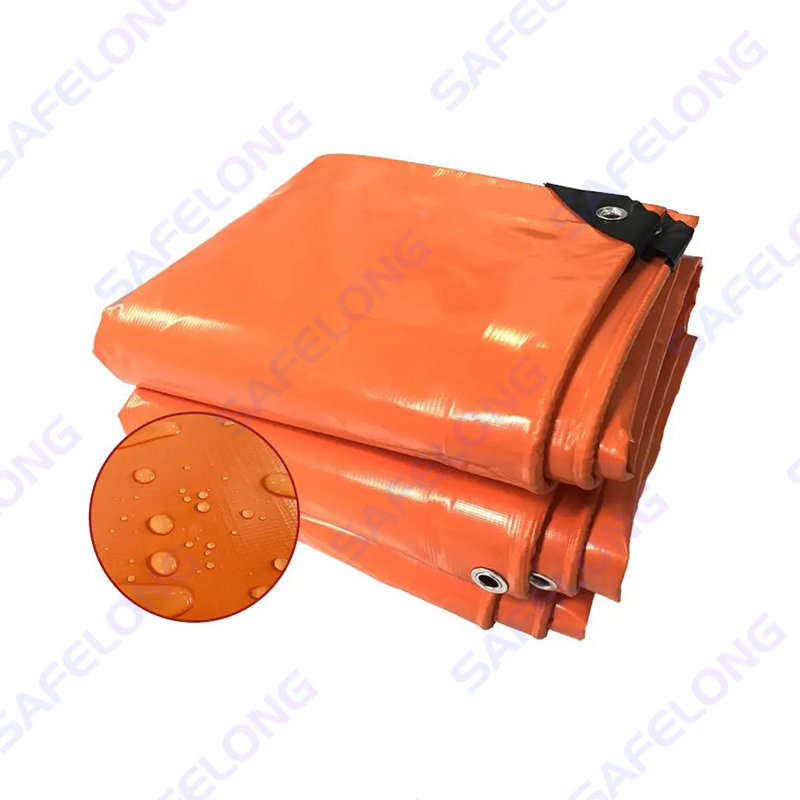 Lightweight Film Tarpaulin for Temporary and Flexible UseThis film tarpaulin is 25% lighter and easy to handle, with adjustable light transmission. It excels in temporary outdoor events and agricultural covers, providing convenience and versatility without compromising durability.View Product →
For construction and industrial work, the knife-scraped tarpaulin is generally more durable, but you can also request a heavier film in a smaller size.
If the standard sizes do not fit your project, custom manufacturing is the answer. Many tarp suppliers can produce any length and width within their production capacity. At Jiangsu Sulong Eco-Technologies, for instance, our production line supports custom cuts for PVC tarpaulins, and we can also customize the edge reinforcement and grommet spacing.
When requesting a custom size, always provide the exact width and length in both imperial and metric units. Include the allowance for overlap, the required weight (GSM), and the number and positioning of grommets. It is also helpful to specify whether you need hemmed edges, reinforced corners, or tie-down loops.
For large custom orders, ask about the maximum roll width. Most tarpaulin production lines have a maximum width of around 2.0 to 2.5 meters. To make a wider tarp, manufacturers must seam two panels together, which adds a welded or stitched seam. Seam placement can affect the tarp's strength and water tightness, so plan your layout accordingly.
Buyers often make the mistake of choosing a tarp that is too small. A 10x12 ft tarp seems large, but when you add a 12-inch overlap, it only covers a 9x11 ft object. This leaves only a few inches of extra material on each side, which is not enough to tie off securely.
The most common error is ignoring the size tolerance of the tarp. Industrial tarps usually have a cutting tolerance of about ±2% on length and width. On a 16-ft length, that is a difference of about 4 inches. If you need a precise fit, order a size larger or ask the manufacturer to confirm the actual cut size.
Another frequent issue is choosing the wrong weight for the expected load. A 180 g/m² film tarp will tear easily if used to cover sharp edges or heavy construction materials. Always match the fabric weight to the application, and when in doubt, go one step heavier.
Finally, consider UV exposure. PVC tarpaulins degrade over time when exposed to direct sunlight, but the exact lifespan depends on the UV stabilizers in the coating. A thicker tarp with a UV-stabilized coating will last longer. For permanent outdoor use, choose a minimum thickness of 0.45 mm and check the manufacturer's product specification before ordering.
The most common tarp size is 8x10 feet (2.4 x 3.0 m). It is versatile, affordable, and suitable for covering cars, firewood piles, small equipment, and temporary ground protection.
Add at least 12 inches (30 cm) of overlap on each side for standard tie-downs. For large structural covers or harsh weather conditions, increase the overlap to 18–24 inches.
Yes. Most PVC tarpaulin manufacturers, including our own production line, can produce custom sizes. You will need to provide the exact width and length, the desired weight, and the grommet layout. Custom orders may have a minimum quantity depending on the manufacturing process.
The largest commonly stocked rectangular tarp size is 20x30 feet (6.0 x 9.0 m). Larger sizes such as 30x40 or 40x60 feet are usually custom-made because they require seaming multiple panels together.
Manufacturing tolerance varies, but most industrial tarps have a ±2% tolerance on length and width. On a 20-ft tarp, that could mean a difference of up to 5 inches. If you need a precise fit, ask for a confirmation of the finished size and tolerance before ordering.
If you have any questions, please fill out the contact form at the bottom of the page and contact us.
You agree to Sulong Terms and Privacy Policy.

No.9 Filter Material Industry Park, Funing, China (Factory)
Unit 2, 15#-405, Kuanglu Community, Gulou District, Nanjing, China (Office)

+86 15724842588

+86-0515-68589566

+86-0515-68589566

info@safelong.net

