


 English
  Español
 русский
News
Home / News / Industry News / Are All Tarps Waterproof? Understanding Tarp Types and Water Resistance
Content
The question "Are all tarps waterproof?" has a straightforward answer: No. A tarp is a sheet of flexible material, but whether it resists water depends entirely on its base polymer, coating, thickness, and how the seams are treated. A standard woven polyethylene tarp, for example, can shed light rain for a season, but the same material with punctures or unsealed seams will leak quickly. In contrast, a PVC-coated polyester fabric with a complete knife-coating layer can withstand continuous water exposure for years. So the answer is not a simple yes or no; it is a matter of matching the tarp to your actual exposure conditions.
Many users assume that if a tarp looks heavy and shiny, it must be waterproof. But appearance alone is not a reliable indicator. The most common failure points are micro-sized pores in the base fabric, uneven coating layers, and poorly welded or sewn seams. By understanding these variables, you can avoid spending money on a cover that starts leaking after the first downpour.
Waterproofing is not a single property; it is the result of several engineering decisions. The four key factors are:
When a tarp is described as "waterproof" by an engineer, they usually refer to a specific hydrostatic head value. For example, a typical PVC tarpaulin used in truck covers may have a hydrostatic pressure resistance of 1,000 mm to 2,000 mm water column. This means that the fabric will not leak until a column of water that tall presses on it. For heavy-industrial applications, higher values are specified.
The table below compares the water-resistance characteristics of the most widely available tarp materials. Use this as a quick reference when you are deciding between a polyethylene tarp, a PVC knife-coated tarp, a film tarp, and a TPU fabric.
| Material Type | Coating | Typical Hydrostatic Head | Best Use Case |
|---|---|---|---|
| Polyethylene (PE) | LDPE laminate or none | Low (300–700 mm) | Light-duty tarps, temporary covers |
| Film PVC | PVC film cast on fabric | Medium (800–1,500 mm) | Roofing covers, warehouse protection |
| Knife-Coated PVC | PVC paste knife-coated, high coverage | High (1,000–3,000 mm) | Truck tarps, industrial covers, long-term use |
| Polyester TPU | Thermoplastic polyurethane coated | Very high (2,000–5,000 mm) | Outdoor tents, inflatable structures, premium equipment |
Notice that the highest water resistance comes from materials with a thick, uniform thermoplastic coating. This is why TPU fabrics are often specified for products that must remain dry in extreme weather, while cheaper PE tarps are recommended only for short-term shelter.
PVC tarpaulins are the workhorse of the waterproof cover industry. However, not all PVC tarps are made the same way. The two dominant manufacturing processes are film casting and knife coating.
A film tarpaulin is made by bonding a pre-made PVC film onto a polyester base fabric. This process is faster and less expensive, but the film may not fully penetrate the fabric weave, leaving micro-openings after elongation or flexing. A comprehensive buyer's guide to PVC tarpaulin covers explains that film tarps are usually lighter and more economical, making them a practical choice for temporary construction enclosures.
Knife-coated tarpaulins use a doctor blade to spread a PVC paste onto the fabric at a controlled thickness. The paste is then fused with the fibers in an oven, producing a continuous, embedded waterproof layer. This construction gives the tarp a higher resistance to peeling, abrasion, and puncture, as well as a higher hydrostatic head. If your project requires reliable water tightness over many cycles of folding and stretching, a knife-coated PVC tarp is the safer investment.
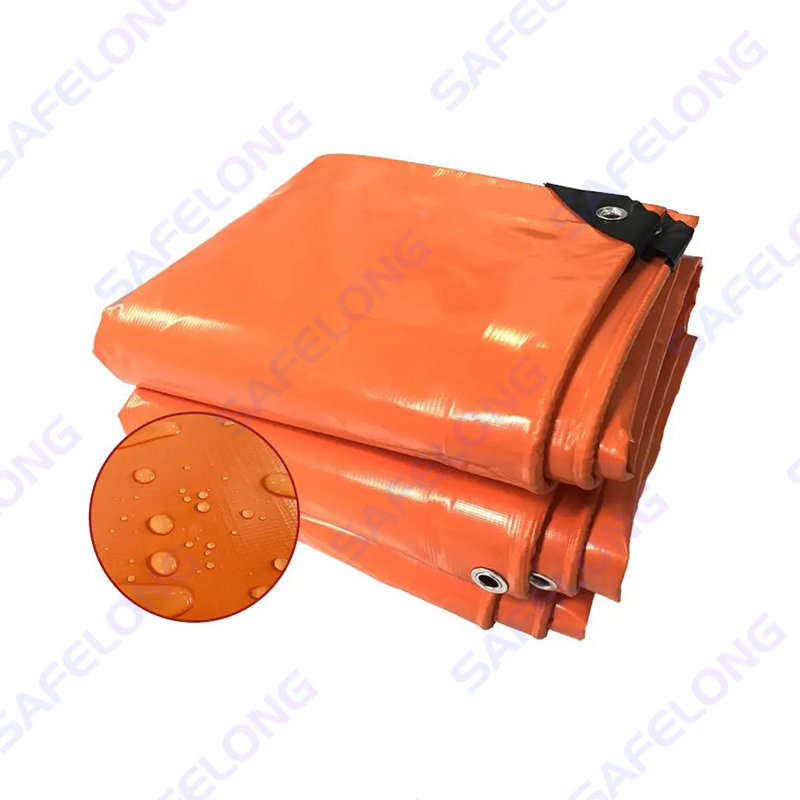 Lightweight PVC Film Tarpaulin with Adjustable Light TransmittanceThis film tarpaulin uses micron-level lamination for a smooth waterproof layer while reducing weight by 25%. Its adjustable 10-70% light transmittance suits agricultural and temporary construction uses, and the antibacterial option adds value for dynamic applications.View Product →
 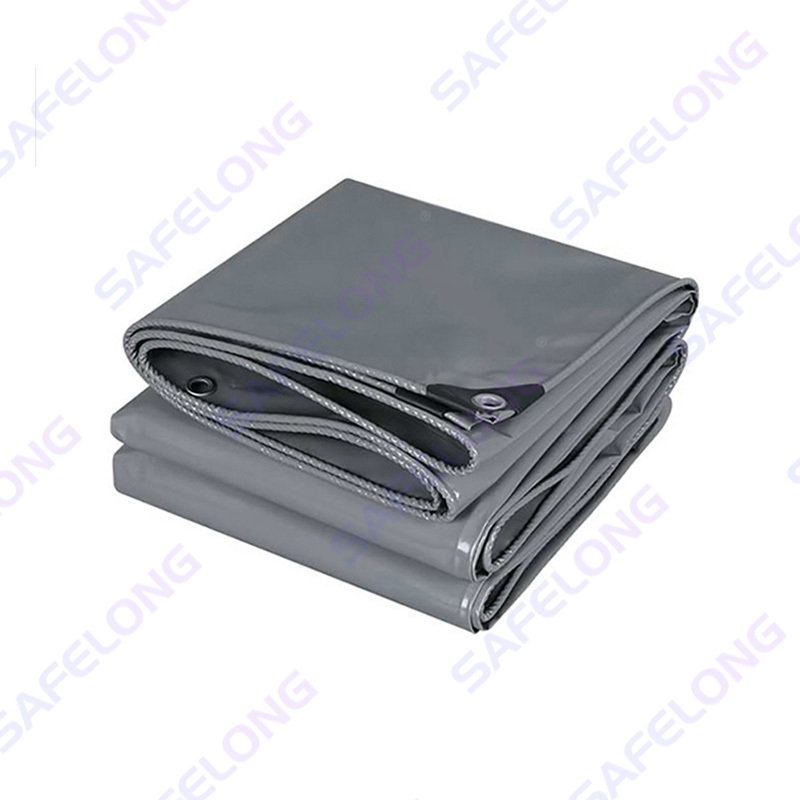 Heavy-Duty Knife-Coated PVC Tarpaulin for Extreme EnvironmentsFeaturing multi-layer scraping and seamless molding, this tarpaulin offers over 40% higher tear resistance and zero permeability at 5000Pa. With UV stabilizers for 5+ years, it is ideal for transport covers and outdoor industrial protection.View Product →
When a standard PVC tarp is not enough, thermoplastic polyurethane (TPU) fabrics offer a higher level of waterproofness, flexibility, and environmental resistance. TPU is a polymer that can be coated onto polyester or polyether bases, creating a seamless laminate that is often used for inflatable tents, kayaks, temporary shelters, and even medical-grade products.
Polyester TPU is the more common variant, offering good tensile strength and a high level of resistance to UV and hydrolysis. It is often specified for structural waterproof products that must hold pressure, such as inflatable tents and flexible water tanks. Polyether TPU, on the other hand, has a superior resistance to microbial attack and hydrolysis, which makes it suitable for high-humidity environments or applications where the fabric will be in constant contact with water.
Although TPU fabrics cost more per square meter than PVC, their longer service life and lighter weight can reduce the total cost of ownership for equipment that is used daily. For professional users, the maintenance of a TPU waterproof fabric is simpler: the surface is smooth, so dirt does not stick as easily, and cleaning with mild soap is sufficient.
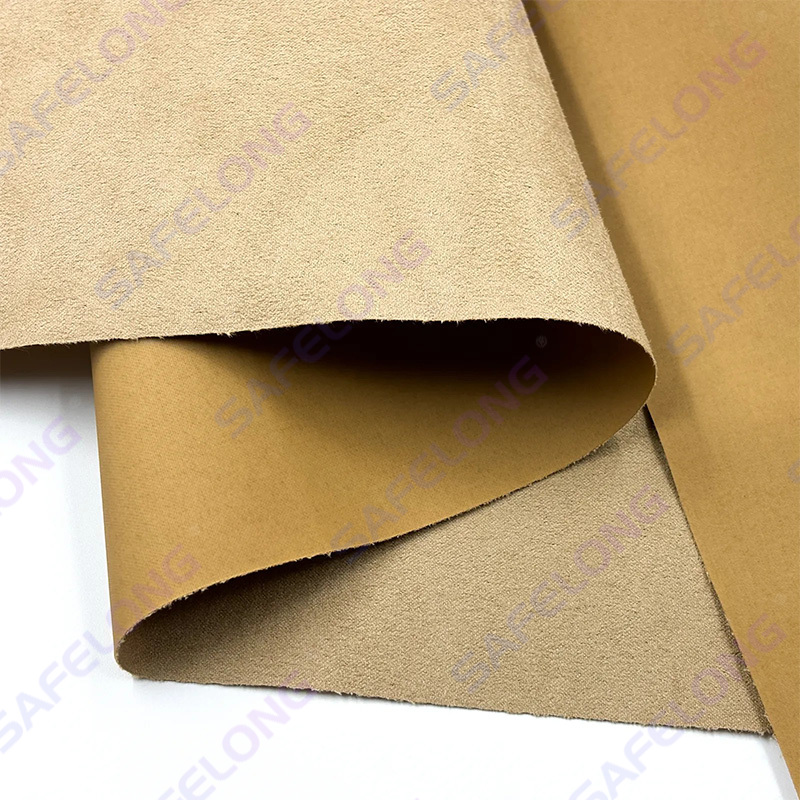 Polyester TPU Fabric for Industrial and Medical ApplicationsThis polyester TPU fabric provides high mechanical strength and hydrolysis resistance with low-temperature flexibility. Certified biocompatible and moisture-permeable, it is cost-effective for conveyor belts, shoe components, and medical textiles, and can be modified for flame retardancy.View Product →
The correct tarp for your application depends on the amount of exposure to rain or standing water, the required durability, and the budget. Here are the three most common usage scenarios:
In every case, check that the grommets are reinforced and that the seams are welded rather than stitched. Overlooking these details can turn a nominally waterproof tarp into a leaker within weeks.
When you purchase a tarp, you can do a simple field test to verify its water resistance. Place a piece of the tarp over a bucket, press it down gently to create a slight bowl, pour 500 ml of water into the bowl, and wait for 10 minutes. If no water bleeds through the underside, the fabric is likely to hold up to light rain. But this test only checks at zero pressure. For a better estimate, ask the supplier for the hydrostatic pressure test value, usually measured in millimeters of water column. A value above 1,000 mm means the tarp is suitable for heavy rain. Values above 2,000 mm are common in professional waterproof fabrics.
Also inspect the coating visually. Lay the tarp flat and angle it toward the light. If you can see a woven grid pattern clearly, the coating may be too thin or uneven. A good waterproof coating will appear smooth and glossy on the surface, with a slight back-coat that protects the base fabric from moisture at the bottom side.
No. Tarps without a continuous coating, or with stitched seams, will leak in sustained rain. Look for coated materials with welded seams and a published hydrostatic head value.
In engineering terms, every fabric has a limit. A knife-coated PVC tarp or TPU fabric can resist water under high pressure, but puncture holes will leak. "Waterproof" always refers to a specific pressure threshold and physical condition.
With proper storage and no abrasion, a 610 g/m² knife-coated PVC tarp can last 5 to 7 years outdoors in moderate climates. Film PVC tarps typically last 2 to 4 years.
PE tarps are cheaper and easier to fold, but their water resistance is lower (often under 700 mm). PVC tarps have a denser coating and can achieve hydrostatic heads of 1,500 mm or more, making them significantly more reliable.
Remove all dirt and moisture before folding. Store the tarp in a dry, shaded area away from UV light. Avoid folding along the same crease repeatedly, as this can micro-crack the coating and allow water ingress.
Choosing the right tarp does not have to be guesswork. Start by determining the worst weather conditions your tarp will face. For light, short-term shelter, a film PVC tarp offers an affordable compromise. For industrial covers that must remain watertight for years, a knife-coated PVC tarp is the standard choice. If you are building inflatable structures or equipment that needs to fold and pack easily, a polyester TPU fabric delivers the best balance of waterproofness and flexibility.
Remember to ask your supplier for the hydrostatic pressure test result, the fabric weight, and the seam construction method. These three numbers tell you more about waterproofness than any marketing label. With the right material and a well-made seam, a tarp will perform exactly as intended.
If you have any questions, please fill out the contact form at the bottom of the page and contact us.
You agree to Sulong Terms and Privacy Policy.

No.9 Filter Material Industry Park, Funing, China (Factory)
Unit 2, 15#-405, Kuanglu Community, Gulou District, Nanjing, China (Office)

+86 15724842588

+86-0515-68589566

+86-0515-68589566

info@safelong.net

