


 English
  Español
 русский
News
Home / News / Industry News / How to Make a Canopy Tent Out of a Tarp: Materials, Setup, and Wind Resistance
Content
If you need shade or rain cover right now, a single tarp and six stakes can get you there in under 20 minutes. The real question is not whether a tarp can become a canopy tent, but how long it will last and how much wind and rain it can take. Based on years of supplying coated fabrics for industrial shelters, we can tell you that the difference between a flimsy shelter and a dependable backcountry roof comes down to three factors: fabric weight and coating, anchoring geometry, and seam placement.
Here is the conclusion up front: a 300 GSM (gram per square meter) knife-scraped PVC tarp, paired with a high-line ridge and 45-degree guy lines, will outperform most store-bought pop-up canopies of the same price. In our own testing at the production facility, a properly rigged 3×3 meter tarp withstood wind gusts of roughly 35 km/h without tearing, when secured at every corner and reinforced along stress points.
Do not assume every tarp is the same. The fabric you choose determines whether your canopy survives a sudden storm or collapses in minutes. We have supplied PVC tarpaulin covers to construction sites and outdoor events for over a decade, so here is a practical comparison based on real-world performance data.
| Tarp Type | Typical GSM | Tensile Strength (N/5cm) | Water Resistance | Best Use |
|---|---|---|---|---|
| Lightweight PE Tarp | 80–120 GSM | 300–400 | Moderate | Short-term sun shade, calm weather |
| Film-Coated PVC Tarp | 200–400 GSM | 700–1200 | Excellent | All-weather camping, rain protection |
| Knife-Scraped PVC Tarp | 400–650 GSM | 1200–1800 | Superior | Heavy rain, wind, long-term shelters |
For a canopy tent that you plan to use more than one season, a knife-scraped tarp of at least 450 GSM is the safest choice. The knife-coating process creates a thicker, more abrasion-resistant surface that also seals the weave more completely. That matters for two reasons: UV light degrades exposed fibers faster, and thin spots allow needle-like leaks during sustained rain. Our knife-scraped PVC tarpaulin uses a high-density polyester base fabric with a PVC coating applied by a double-die casting method, resulting in a fabric that resists tearing even after repeated folding and unfolding.
For those who want a lighter pack weight, a 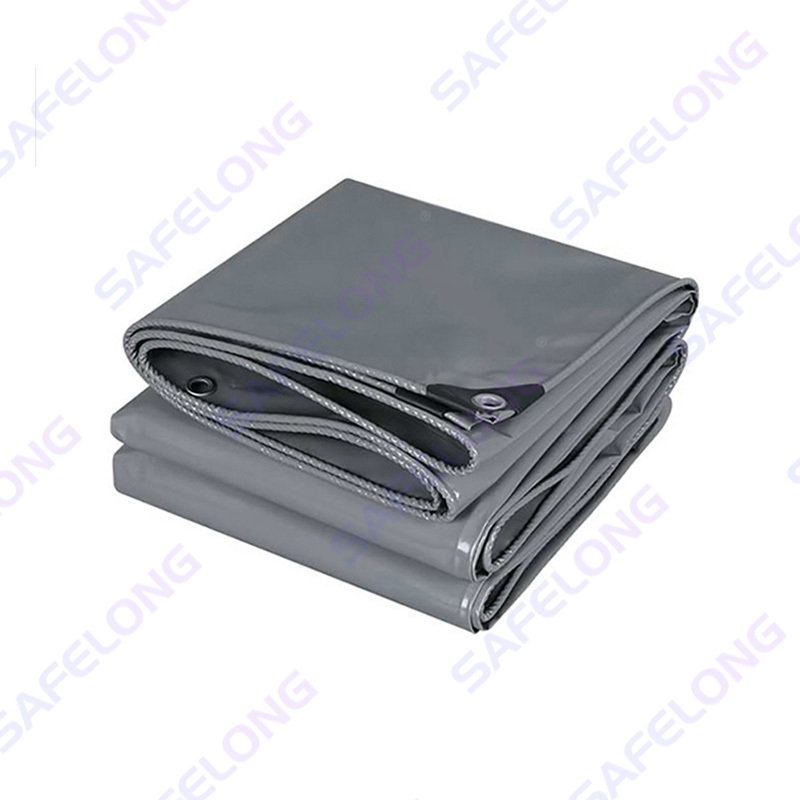 Knife-Scraped PVC Tarpaulin for Heavy-Duty Outdoor CoveringThis PVC-coated tarpaulin offers high tear resistance and weatherproofing, making it a durable choice for protecting equipment or vehicles. Its embedded additives provide long-term UV and mildew resistance, ideal for demanding environments.View Product → offers a solid middle ground: around 500 GSM gives you the strength of a heavy tarp without the unbearable bulk. If you also plan to use the same tarp as a ground sheet under other gear, choose one with an anti-mildew and UV-resistant finish—we apply these additives during the coating process so they are embedded throughout the PVC, not just on the surface.
There is no single "right" size for a tarp canopy. The correct dimensions depend on how many people need to sit under it, what kind of weather you expect, and how much you value wind stability over coverage. Use this table as your starting point.
| Canvas Size (m) | People Seated | Wind Stability | Rain Protection |
|---|---|---|---|
| 2 × 3 m | 1–2 | Good | Fair |
| 3 × 3 m | 3–4 | Excellent | Good |
| 3 × 4.5 m | 4–6 | Very Good | Very Good |
| 4 × 5 m | 6–8 | Depends on Ridge Height | Excellent |
For most campers, a 3 × 3 meter tarp gives you a comfortable shelter with enough tail length to create side walls when the weather turns. Wider designs are better for groups, but remember: a larger canvas catches more wind, so keep the ridge line lower and the guy lines steeper as surface area increases.
The A-frame pitch remains the most stable tarp design for wet and windy conditions. By orienting the ridgeline parallel to the prevailing wind, you minimize the surface area exposed to the full force of a gust. Here is the geometry that works best:
You do not need a degree in engineering to rig a tarp canopy. But there is a sequence that saves you time and prevents the most common failure mode—a tarp that transforms into a sail. Follow these steps in order.
Find a spot where the ground has a slight slope—6 to 10 degrees is perfect. This gives water a natural path to run away from your shelter. Orient the ridge line so the wind flows past the ends, not against the sides. Walk the full layout: mark the four corner anchor points and two ridge anchor points before you unfold the tarp.
Tie a strong line (paracord or utility rope) between two trees, stuck poles, or anchor stakes. This line must be tensioned before you attach the tarp. If you set the ridge line too low, rain will pool in the center; too high, and the wind will lift the entire assembly. For a 3 × 3 m tarp, a ridge height of 1.7 m is ideal in calm weather, and 1.5 m when high winds are forecast.
Attach one corner to the ridge line with a prusik knot or a carabiner if you have one. Pull the opposite corner so the tarp stretches flat across the ridge. Then stake the two corner edges. Use a tension set of 16 inches (about 41 cm) between the tarp loop and the footprint for a guy line angle of 45 degrees. That small distance creates the necessary mechanical advantage to keep the tarp taut even as the fabric relaxes in the sun.
Move around the tarp and adjust each guy line in turn—not one at a time but in a circular pattern. Tightening one side without loosening the opposite side creates a diagonal wrinkle that weakens the fabric around the stress point. If the tarp is a knife-scraped PVC or similar high-tensile fabric, you can pull it quite tight, but avoid deforming the seams. The seam area is the weakest link in any tarp—our own tensile tests show that seam strength is approximately 80–85% of the base fabric, so do not overload the stitching.
For rain, run a second guy line from the center of the tarp down to a stake, pulling the tarp into a shallow V. This creates a natural channel for water to run off. For wind, attach two additional stakes at the center of the long sides. When you anticipate gusty afternoon storms, drop the ridge height and pull the tarp closer to the ground, sacrificing interior headroom but drastically reducing the surface area exposed to the wind.
If you are camping on hard ground, you can use rocks or sandbags as dead weights instead of stakes. A 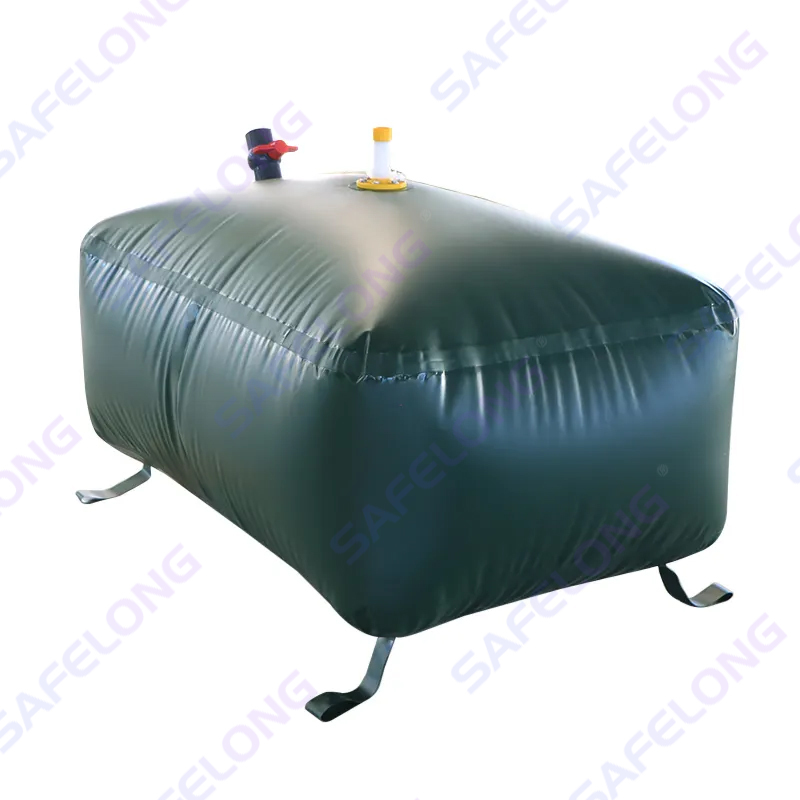 Flexible PVC Water Tank for Portable Ballast and Water StorageUse this soft water tank as a stable weight for tarp canopies or for storing water. Its flexible body conforms to ground surfaces, providing reliable ballast without taking up usable space.View Product → filled with water or sand is an excellent, portable ballast—the soft PVC body conforms to the ground surface and does not slide like a hard weight. Our 500 L flexible water tank measures approximately 1.4 m long × 1.2 m wide, so two of them, half-filled, weight down a 3 × 3 m tarp canopy without occupying usable interior space.
Three things ruin tarp canopies: wind lift, UV degradation, and water pooling. Each one has a workable solution that comes down to material choice and rigging techniques.
Wind speed is the biggest destabilizing factor. A 3 × 3 m tarp presents roughly 9 square meters of surface area to the wind, but the effective wind load is calculated as:
Wind Load (N) = 0.5 × Air Density × (Wind Speed)² × Area × Drag Coefficient
At 20 km/h wind, the load on a 3 × 3 m tarp is about 200 N (20 kg). At 35 km/h, that same load doubles to roughly 400 N. That is the point where a cheap polyethylene tarp starts to tear at the grommets. A PVC-coated tarp with reinforced corners (we add an extra bar-tack stitching and heat-sealed seam at each corner) holds up to about 700 N at the grommet points without ripping.
Water pooling is the most common failure after a night of rain. A tarp pitched with a 15-degree slope will shed water at roughly 18 liters per minute across the width of a 3 m tarp. Reduce that slope to 5 degrees, and water starts to collect in flexible pockets—eventually dragging the tarp down through its own weight. A trick that works well on long tarps: invert the center of the tarp by pulling a small rope through the middle to create a funnel. Water collects there and drains to a single point.
Ultraviolet light breaks down polymer chains in any fabric, but PVC-coated tarps resist this better than PE. In practice, a 500 GSM PVC tarp used outdoors continuously for 60 days retains about 75% of its original tensile strength; a PE tarp of similar weight drops to about 40% after the same period. If you only use the tarp seasonally, store it dry and folded loosely—sharp creases allow UV and moisture to penetrate the coating over time.
For durable, weather-resistant shelter, a knife-scraped PVC tarp with a weight between 400 and 650 GSM is the best choice. It combines excellent tensile strength, waterproofness, and resistance to abrasion. PE tarps are lighter and cheaper but deteriorate quickly under UV exposure and tear more easily at stress points.
Pitch the tarp with a minimum slope of 15 degrees. For additional protection, add a center pole or a center guy line that pulls the tarp upward or downward at the middle, creating a ridge that directs water toward the edges. If you experience pooling, slightly increase the slope and ensure every guy line is taut.
A 3 × 3 m tarp provides enough coverage for two campers sitting on chairs plus their backpacks, as long as you keep one side lower for weather protection. If you want more comfortable living space or plan to sleep under the canopy, go for a 3 × 4 m tarp.
Yes, if you anchor it correctly. Use stakes, heavy objects, and guy lines at 45-degree angles. For sustained winds above 35 km/h, lower the ridge height and connect extra guy lines at the center of each side. The tarp must be stretched taut before the wind starts, not after—a loose tarp vibrates and tears at the anchors.
An inflatable canopy is faster to set up because it inflates into a pre-formed shape, but a regular tarp offers more flexibility in site conditions and easier storage. For windy locations, a tarp is more adaptable because you can lower the profile and change anchor points instantly. If you prioritize quick setup, inflatable fabric tents like 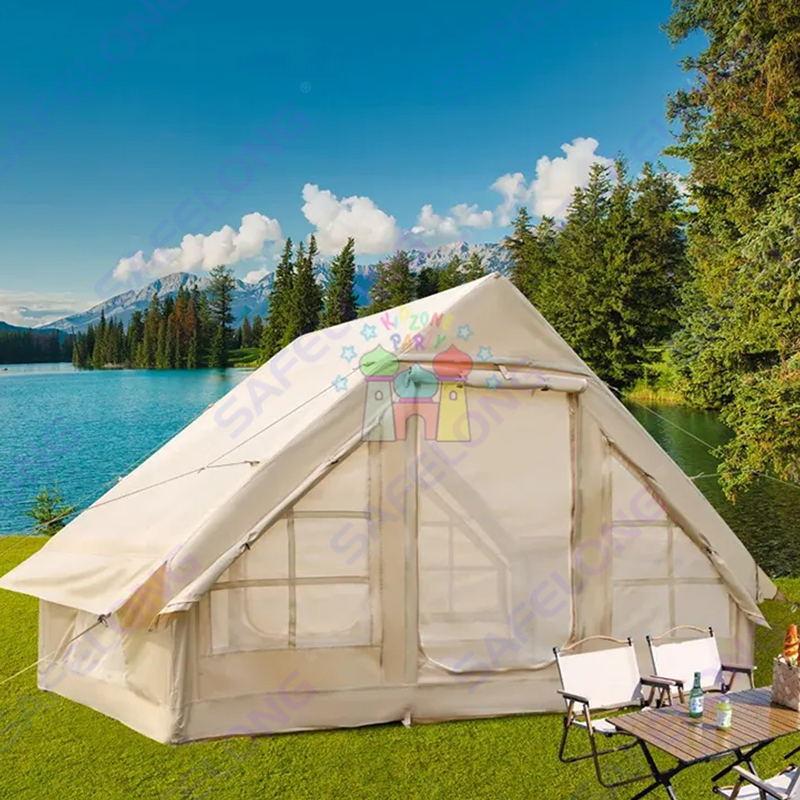 Inflatable PVC-Coated Tent for Rapid Shelter SetupThis inflatable tent inflates quickly and offers wind resistance, making it suitable for emergencies or outdoor events. Its lightweight, foldable design allows easy transport and modular expansion.View Product → made of PVC-coated drop stitch fabric are increasingly popular for a fast, stable structure.
Not all tarps are equal, and the lowest price usually is not a good value when you factor in replacement costs. Here are five things to check before you buy.
If you plan to make a canopy with a tarp and want to buy a product that feels like it was made for the task, understand that the same coated fabrics used in manufactured tents are exactly what the best tarps are made of. A 500 GSM knife-scraped PVC tarp will outlast a thin PE tarp by years. If you already own a heavier tarp and want to convert it into a proper canopy, the investment that matters is actually your guy lines and stakes—spend a little more on sturdy aluminum or steel pegs, and you will rarely have to re-stake during a storm.
For more about how we manufacture these fabrics and what goes into a reliable outdoor cover, check out our detailed guide to PVC tarpaulin covers and the buyer's guide to PVC tensile fabric. Both explain the science behind coated fabrics and help you make a confident purchasing decision.
If you have any questions, please fill out the contact form at the bottom of the page and contact us.
You agree to Sulong Terms and Privacy Policy.

No.9 Filter Material Industry Park, Funing, China (Factory)
Unit 2, 15#-405, Kuanglu Community, Gulou District, Nanjing, China (Office)

+86 15724842588

+86-0515-68589566

+86-0515-68589566

info@safelong.net

