


 English
  Español
 русский
News
Home / News / Industry News / Tarp and Tent: Materials, Durability, and Choosing the Right Shelter Solution
Content
A tarp is not a tent, and a tent is not a tarp. But the two overlap far more than most buyers expect. The real decision is not the shape of the shelter. It is the material, the deployment time, and the conditions the product must survive. For most industrial, commercial, and outdoor uses, PVC coated fabrics sit at the intersection of both categories, and once you understand fabric grades, the tarp-versus-tent question becomes much simpler.
If your project needs a ground cover, cargo weatherproofing, or a temporary roof, a PVC tarp is usually the lower-cost and more flexible answer. If you need a walk-in shelter that can be deployed quickly and moved between sites, a tent made from coated fabric — particularly an inflatable structure — is the stronger option. The category name matters less than the specification: base fabric construction, coating weight, tear strength, and seam quality determine how long the product lasts and how well it performs in wind, rain, and sunlight.
This guide compares tarp and tent products at the material level, explains the practical differences between common PVC tarpaulin grades, and gives you a decision framework you can apply to real purchasing situations. For a broader look at tarp categories, our introduction to PVC tarpaulin covers covers film, woven, and coated options in more detail.
A tarp is a single sheet of flexible material used for covering, shading, or ground protection. A tent is a structural enclosure that provides weatherproof space for people or equipment. That sounds clear on paper, but in practice the two categories bleed into each other. A large tarp can be pitched as a roof. A tent can be made from tarpaulin-grade fabric. The material, not the label, defines performance.
| Comparison Point | Tarp (Tarpaulin) | Tent (Fabric Structure) |
|---|---|---|
| Primary function | Covering, shading, ground protection | Enclosed shelter, temporary workspace, storage |
| Weight per square meter | 300–900 g/m² typical | 450–1,100 g/m² for industrial fabric |
| Wind resistance | Depends on anchoring; no frame | Frame or air pressure provides structural stability |
| Deployment time | Minutes, with ropes and stakes | 10 minutes to 2 hours depending on frame type |
| Typical lifespan outdoors | 2–5 years for coated PVC with UV protection | 3–8 years for industrial grade coated fabric |
The practical takeaway: tarps give you maximum flexibility at minimum cost, while tents give you a controlled environment. When the need is a dry, protected interior space — for equipment, staff, storage, or events — a tent structure is worth the extra investment. When the need is simply to keep rain and sun off something, a tarp does the job at a fraction of the price.
The fastest way to choose between a tarp and a tent is to ask four questions in order. Answer them honestly, and the product category selects itself.
Warehouses and distribution yards, for example, rely on tarps for truck covers and pallet protection. Construction sites use both: tarpaulins to protect materials, and tent structures for site offices or workshop space. Emergency response teams prefer inflatable tents because they deploy faster than any pole-based shelter and can be packed back into a compact bag. Each application maps to a different product, and the material spec then determines whether that product performs.
When buyers search for "tarp and tent," they often assume the difference is structural. In reality, the structural difference is trivial compared to the material difference. A thin film tarp and a heavy-duty knifescraped tarp are both called tarps, but they behave like entirely different products. The same is true for tent fabrics: a camping-grade polyester tent and an industrial PVC tent fabric share almost nothing in common except the word "tent."
Film tarpaulin is made by laminating or coating a PVC layer onto a scrim or woven base. It is lighter, more flexible, and cheaper to produce. Typical film tarpaulins range from 300 to 500 g/m² and are suitable for short-term covering, dust protection, and indoor applications. The material has good waterproofing but lower tear resistance at the edges and eyelets.
Knifescraped tarpaulin, by contrast, is produced by spreading and scraping PVC paste directly onto a high-tenacity polyester scrim, then fusing it in layers. This creates a denser, more homogeneous membrane with better interlayer adhesion. Weight typically runs from 500 to 900 g/m², and the product resists punctures, abrasion, and UV degradation more effectively. For long-term outdoor use on trucks, buildings, or agricultural covers, the knifescraped construction is the safer specification. See our knifescraped tarpaulin product page for the full specification range.
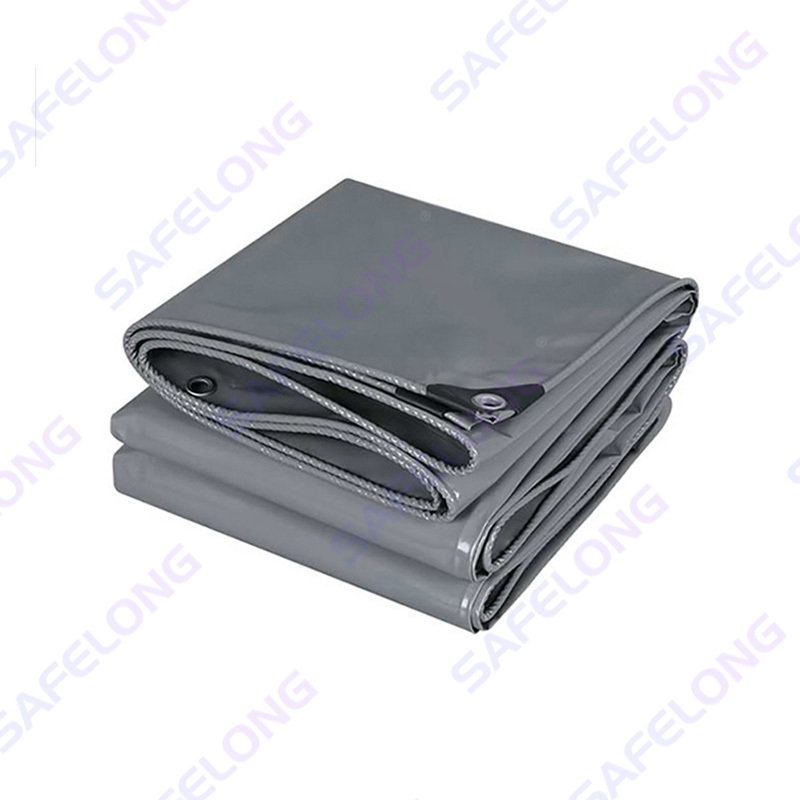 Wholesale Knife-scraped tarpaulin Suppliers, Factory - Jiangsu Sulong Eco-TechnoJiangsu Sulong Eco-Technologies Co., Ltd is a China Knife-scraped tarpaulin suppliers and factory, We specialize in wholesale Knife-scrap...View Product →
A tent is only as good as its fabric system: base weave, coating, and seam construction. For industrial and commercial tents, PVC coated polyester is the dominant material because it combines high tensile strength, waterproofing, and resistance to mildew. The base polyester scrim provides dimensional stability and tear resistance. The PVC coating provides the waterproof barrier and the surface that can be welded or glued at seams.
Fabric weight is the first specification to check. A tent fabric of 450–550 g/m² is adequate for moderate, seasonal use such as event shelters or field storage. For permanent or semi-permanent installations — large tents, workshops, or structures exposed to strong weather — 650 g/m² or higher is the practical minimum. Our PVC tent fabric product line gives you an example of how the same material family supports different weight and performance grades. For a more complete comparison of PVC tensile fabric options, the buyer’s guide to PVC tensile fabric explains the differences between woven, membrane, and coated constructions.
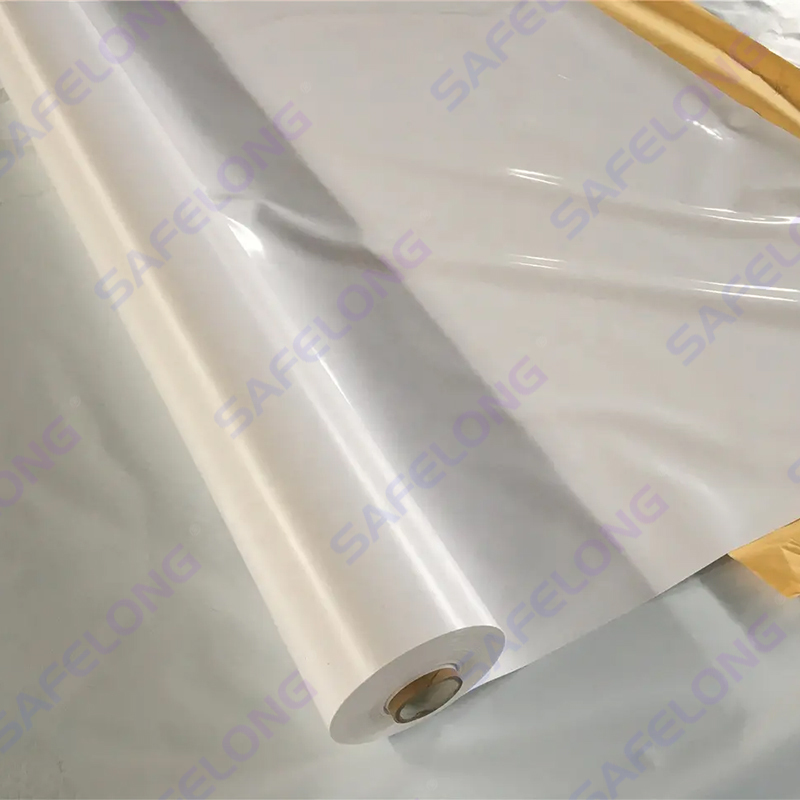 Wholesale PVC Tent Fabric Suppliers, Factory - Jiangsu Sulong Eco-Technologies CJiangsu Sulong Eco-Technologies Co., Ltd is a China PVC Tent Fabric suppliers and factory, We specialize in wholesale PVC Tent Fabric sal...View Product →
| Fabric Grade | Weight Range | Best Application | Expected Durability |
|---|---|---|---|
| Film tarpaulin | 300–500 g/m² | Short-term covering, dust protection | 1–2 years |
| Knifescraped tarpaulin | 500–900 g/m² | Truck covers, long-term outdoor covers | 3–5 years |
| PVC tent fabric | 450–1,100 g/m² | Tents, temporary buildings, inflatable structures | 3–8 years |
Inflatable tents occupy the space between a tarp and a traditional framed tent. The fabric is an air-tight coated textile — usually PVC or TPU coated polyester — and the structure is held up by pressurized beams or chambers instead of poles. This design gives you the enclosure of a tent with the quick deployment of a tarp. Setup time for a medium-sized inflatable tent is typically under ten minutes with a blower or hand pump. No frame assembly, no pole sleeves, no alignment issues.
The air-beam construction also changes how the structure behaves in wind. A pole tent resists wind by transferring force to the frame. An inflatable tent requires the beams to remain pressurized; the fabric flexes under load and returns to shape once the gust passes. That flexibility reduces stress concentrations at connection points, which is why inflatable structures are widely used in emergency shelters, military tents, and event roofing. The trade-off is a higher demand on fabric quality: the base fabric must have low air permeability, high weld strength at the seams, and sufficient dimensional stability to keep the tunnel shape.
For a practical example, take the inflatable tent models offered in our product range. These use drop-stitch or coated woven fabric with sealed air beams, and they are designed for quick repeated setup in outdoor conditions. The overview of inflatable fabric technology explains the role of base yarn, coating, and seam welding in keeping these structures reliable over time.
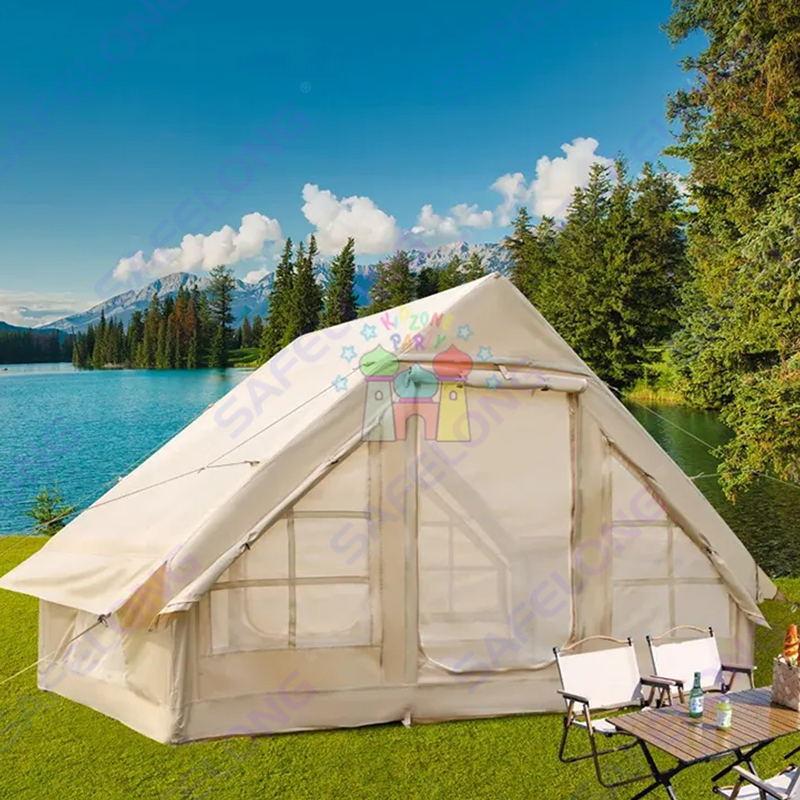 Wholesale Inflatable Tent Suppliers, Factory - Jiangsu Sulong Eco-Technologies CJiangsu Sulong Eco-Technologies Co., Ltd is a China Inflatable Tent suppliers and factory, We specialize in wholesale Inflatable Tent sal...View Product →
Once you have settled on a tarp or a tent, the next step is verifying the specification. These five criteria apply to both categories and directly affect the service life of the product.
A common mistake is buying on price per square meter without comparing coating type. Two fabrics with the same weight can have very different lifetimes if one uses a plasticizer-heavy coating and the other uses a UV-stabilized, low-migration PVC system. Low-cost film tarps with high plasticizer content will stiffen, crack, and lose flexibility after repeated sun exposure. For any application that extends beyond one season, request a sample, flex the material, and check how the fabric behaves at the edges.
Yes, but only in the form of a tarp tent, which is a hybrid structure where the tarp forms the roof and walls and a separate mosquito net provides insect protection. This works well for ultralight camping and short-term field use. For winter conditions or long-term shelter, a proper tent with a sealed floor and insect netting is a better choice.
Industrial-grade PVC tarpaulin is strong enough for installations that stay outdoors for several years, provided the fabric is UV-stabilized and the coating weight matches the local climate. A 650–900 g/m² knifescraped tarpaulin will typically last 3–5 years in direct sun, and longer in shaded or temperate conditions. When the tarp is used as a structural cover rather than a flat sheet, the engineering of the anchoring system matters just as much as the fabric.
Film tarpaulin has a thin PVC layer laminated onto a scrim base; it is lightweight, flexible, and budget-friendly but has lower tear resistance. Knifescraped tarpaulin is built by spreading PVC paste onto a high-tenacity polyester scrim with a scraping process, which creates a denser membrane with better layer adhesion. For long-term outdoor covering, knifescraped tarpaulin is the more durable construction.
Inflatable tents are not universally better, but they have clear advantages in deployment speed, pack size, and wind behavior. They are a good choice for emergency response, field operations, and repeated relocation. Framed tents may be preferable for very large permanent structures where beam strength and the ability to hang heavy interior loads matter more than setup speed.
For seasonal recreational use, 450–550 g/m² coated polyester is enough. For industrial tents, emergency shelters, or any structure that stays up for months at a time, choose 650 g/m² or higher. Weight should be considered together with tensile strength and coating quality, since a lower-weight fabric with a dense weave can outperform a heavier fabric with weak coating adhesion.
If you have any questions, please fill out the contact form at the bottom of the page and contact us.
You agree to Sulong Terms and Privacy Policy.

No.9 Filter Material Industry Park, Funing, China (Factory)
Unit 2, 15#-405, Kuanglu Community, Gulou District, Nanjing, China (Office)

+86 15724842588

+86-0515-68589566

+86-0515-68589566

info@safelong.net

