


 English
  Español
 русский
News
Home / News / Industry News / What Is a Rain Fly on a Tent? What It Does, Materials, and Buying Guide
Content
A rain fly is a separate waterproof sheet that drapes over the top of a tent and shields the inner sleeping area from rain, snow, wind-blown moisture, and condensation. In a typical double-wall camping tent, the inner body is made largely of breathable mesh and thin treated polyester, so it is not built to take direct rain. The rain fly is the real weatherproof roof and walls that keep water out.
Here is the short answer: if you camp in anything other than a perfectly clear forecast, the rain fly is the single most important weatherproofing component of your shelter. Fabric specification sheets used by outdoor textile suppliers typically rate fair-weather flies around 800-1,200 mm hydrostatic head, while storm-worthy tent flies are rated 2,000-3,000 mm or higher. That difference separates a tent that handles an all-night downpour from one you will be mopping out at 2 a.m.
A rain fly does much more than block raindrops. Its main job is to complete the double-wall system: the inner tent manages condensation, and the fly manages weather. Remove the fly and you lose the layer that does the heavy lifting in wind, rain, and cold.
Condensation is the reason the air gap matters so much. Sleep physiology estimates that an adult releases roughly 400-800 ml of water vapor each night through breathing and skin. With a rain fly, that vapor moves out through the vent openings; what does condense runs down the inside of the fly toward the ground instead of dripping onto your sleeping bag.
Rain flies come in two coverage levels. Full-coverage flies extend to within 5-20 cm of the ground; partial flies stop somewhere between the mid-wall and the top of the tent. The choice changes how the tent handles wind-driven rain, splash-up, condensation, and packed weight.
| Feature | Full-coverage fly | Partial-coverage fly |
|---|---|---|
| Extends to | Within 5-20 cm of the ground | Stops at or above the mid-wall |
| Storm protection | Blocks wind-driven rain and ground splash | Leaves lower walls exposed to side rain |
| Condensation management | Requires venting; more trapped warm air | More airflow, fewer condensation problems |
| Weight and packed size | Heavier and bulkier | Lighter and more compact |
| Typical use | 3-season and 4-season camping, exposed terrain | Fair-weather backpacking, budget tents |
The most common "water got in" complaints at campgrounds come from tents with partial flies pitched in an open field. Rain falling at an angle soaks the lower walls, and water pools where the fly sags onto the inner mesh. On calm nights a partial fly is fine, but if your site has no trees or windbreak, those extra centimeters of exposed inner wall can be the difference between dry and soaked.
A rain fly's performance is decided by three things: the base fabric, the coating, and the seams. Polyester and nylon dominate mainstream camping; PVC and TPU coated fabrics appear on heavy-duty, industrial, and inflatable tent shells.
Water resistance is expressed as hydrostatic head, the height of a water column a fabric can withstand before a drop passes through. Per the test method used in textile laboratories worldwide, 1,000 mm handles light rain, 2,000-3,000 mm is accepted for normal camping storms, and 5,000 mm or more appears on expedition tents and industrial PVC/TPU shelters.
| Fabric and coating | Typical rating | Strengths | Weaknesses | Typical use |
|---|---|---|---|---|
| Polyester with PU coating | 1,500-3,000 mm | Affordable, good UV resistance, does not stretch when wet | Heavier than silicone nylon | Mid-priced camping tents |
| Nylon with silicone coating | 2,000-5,000 mm | Strong for its weight, packs very small | Seams must be sealed manually | Lightweight backpacking tents |
| Nylon ripstop with PU coating | 2,000-4,000 mm | Tough, factory seam taping possible | Heavier, less packable | Budget and mid-range tents |
| Polyester with PVC coating | 3,000-10,000 mm | Very durable, abrasion resistant, long service life | Heavy and bulky | Car camping, tarpaulins, commercial shelters |
| TPU coated fabric | 5,000-10,000 mm+ | Flexible in cold, weldable seams, highly durable | More expensive, heavier | Inflatable tents, expedition shelters |
If you are evaluating coated textiles for a custom rain fly, ground sheet, or shelter cover, the same fabric families appear throughout the outdoor and industrial worlds. Sulong's heavy-duty PVC tent fabric is one example of the coated polyester sheet used for rain flies and shelter covers, and it belongs to the same fabric family suppliers specify for long-term outdoor exposure. For a broader comparison of how weight, weave, and coating thickness affect performance, our comprehensive buyer's guide to PVC tensile fabric walks through the key specifications.
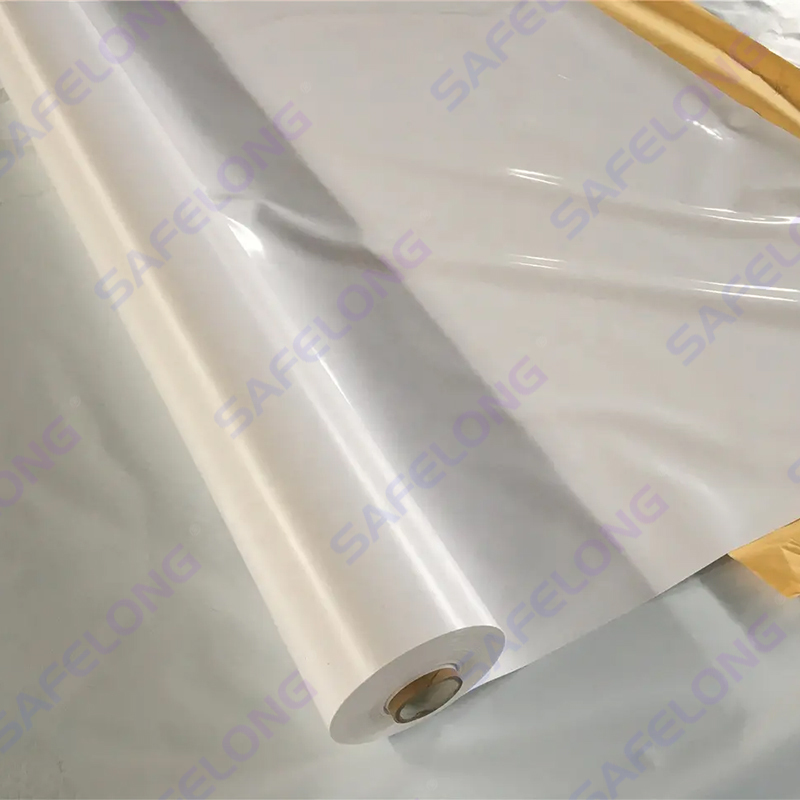 Wholesale PVC Tent Fabric Suppliers, Factory - Jiangsu Sulong Eco-Technologies CJiangsu Sulong Eco-Technologies Co., Ltd is a China PVC Tent Fabric suppliers and factory, We specialize in wholesale PVC Tent Fabric sal...View Product →
No. Three tent families handle waterproofing in different ways, and only one of them relies on a separate rain fly.
There is also a fourth category: quick-pitch tents that fuse the fly to the inner tent permanently. You pitch them as one unit, and the fly cannot be removed. They work well, but you lose the option of sleeping under the open sky on a dry night.
In inflatable tents, the coated fabric does double duty: it holds air pressure and sheds water. Sulong's inflatable tent range uses drop-knitted and coated fabrics engineered for airtightness and weather resistance. An overview of inflatable fabric technology explains how these coated textiles make such designs possible.
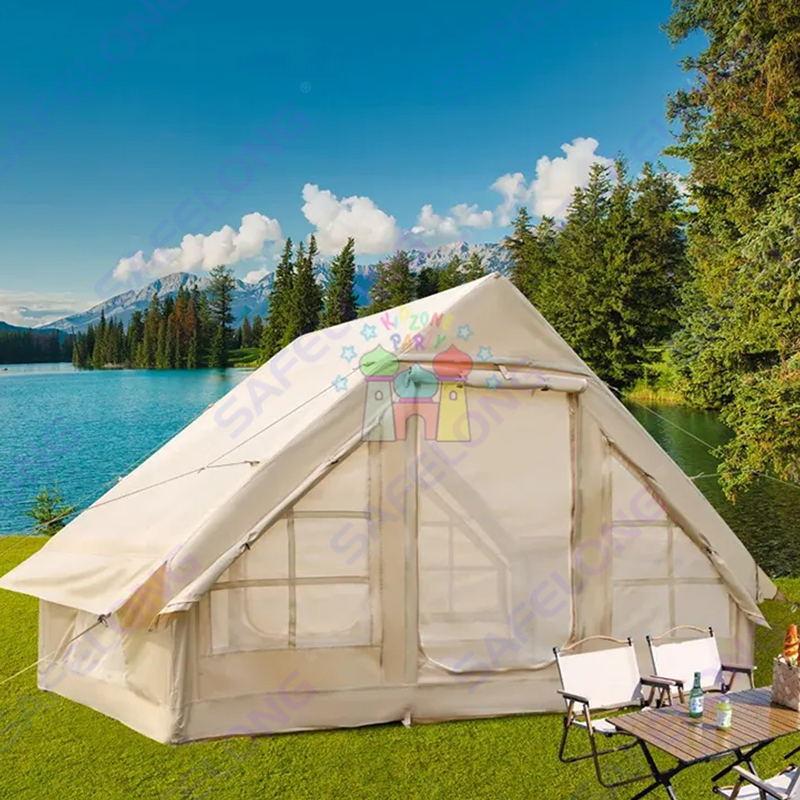 Wholesale Inflatable Tent Suppliers, Factory - Jiangsu Sulong Eco-Technologies CJiangsu Sulong Eco-Technologies Co., Ltd is a China Inflatable Tent suppliers and factory, We specialize in wholesale Inflatable Tent sal...View Product →
No. On clear, dry, low-humidity nights, leaving the fly off improves airflow and gives you a full view of the sky. But the decision should be based on dew point, wind, and forecast, not on optimism.
A practical rule: pack the fly always, pitch it by default, and fold it back only on nights you are confident the weather will stay dry. A rolled fly costs a few extra minutes of setup time and saves you from a soaked sleeping bag at 3 a.m.
Most rain fly failures are setup errors, not fabric failures. A fly that is pitched loosely, clipped at only four corners, or touching the inner mesh will leak, soak through by wicking, or form puddles in the first storm.
Seams are another setup detail. On factory-taped tents, seams are ready to use. On silicone-coated nylon or budget tents, apply seam sealer to all fly seams before the first trip and re-check it once a year, because that is the point where water eventually forces its way in.
Choose a rain fly by matching its coverage, fabric, hydrostatic head, seam construction, and packed weight to the weather you actually camp in. A common mistake is buying the lightest possible fly and discovering that it is also the smallest and thinnest.
| Camping style | Recommended fly spec | Reason |
|---|---|---|
| Fair-weather car camping | Partial fly, 1,500-2,000 mm polyester | Low cost, light enough, and heavy rain is not expected |
| Three-season backpacking | Full coverage, 2,000-3,000 mm silicone nylon or PU polyester | Balanced storm protection and pack size |
| Winter and alpine use | Full coverage, 3,000-5,000 mm, extra guy-outs | Wind-driven snow and long nights expose weak spots |
| Basecamp and glamping | Heavy PVC coated polyester or tarpaulin, 3,000-10,000 mm | Long UV exposure and rough handling demand durability |
For basecamp setups where weight does not matter, a knife-scraped tarpaulin makes a nearly indestructible rain cover, ground sheet, or windbreak. And if you are choosing between film and knife-scraped constructions, our introduction to PVC tarpaulin covers compares the two coating methods in practical terms.
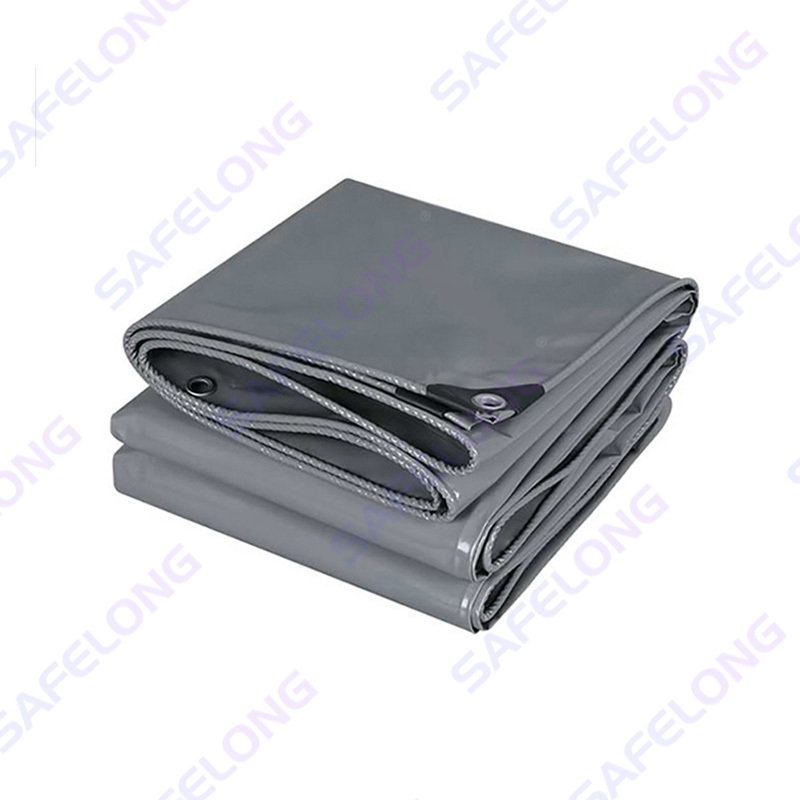 Wholesale Knife-scraped tarpaulin Suppliers, Factory - Jiangsu Sulong Eco-TechnoJiangsu Sulong Eco-Technologies Co., Ltd is a China Knife-scraped tarpaulin suppliers and factory, We specialize in wholesale Knife-scrap...View Product →
Yes, a tarp pitched over the inner tent keeps rain off, but a flat tarp has no shaped vestibule and is harder to tension than a purpose-made fly. Pitch it high enough that it never touches the mesh, and add extra guy lines. It works in a pinch, especially in warm weather, but for stormy conditions a shaped fly is the better tool.
It blocks wind, so it makes the tent feel warmer on breezy nights. The fly also adds a second layer that slows heat loss through the roof. On hot nights it traps heat, so leave it off or pitch it with the vents wide open.
That is condensation from your own breathing and perspiration, not a leak. The fly is colder than the warm, humid air inside, so water vapor condenses on its inner surface. It should run down the fly to the ground; if it drips onto the mesh, increase venting and re-tension the fly so it does not touch the inner tent.
For general three-season camping, 2,000-3,000 mm is the practical range used by most tent suppliers. Fair-weather flies at 1,200-1,500 mm work for dry climates, winter tents start at 3,000 mm, and expedition PVC/TPU shelters reach 5,000 mm or more. After a few seasons, water resistance can drop as the coating wears, so inspect the fly before long trips.
Check what the manufacturer has taped. Factory-taped polyester and PU flies are usually ready to use. Silicone-coated nylon cannot be taped reliably, so most silicone tents require manual seam sealing. Budget tents sometimes arrive with no seam taping at all.
In warm weather without insects, yes. A rain fly pitched in an A-frame or pyramid style gives you overhead cover and a breezy, open shelter. In mosquito season, bring the inner mesh tent, because the fly alone cannot keep bugs out.
If you have any questions, please fill out the contact form at the bottom of the page and contact us.
You agree to Sulong Terms and Privacy Policy.

No.9 Filter Material Industry Park, Funing, China (Factory)
Unit 2, 15#-405, Kuanglu Community, Gulou District, Nanjing, China (Office)

+86 15724842588

+86-0515-68589566

+86-0515-68589566

info@safelong.net

