


 English
 Español
 русский

News
Home / News / Industry News / Outdoor Tarp Canopy Selection Guide: PVC, TPU, Tensile Fabric, and Buying Factors
Content
The short answer for outdoor tarp canopy projects is this: choose the fabric system first, then the coating weight, then the seam and tension method. Color and low price per square meter are the weakest selection criteria. A canopy that spans 3 m and sees occasional rain has little in common with a tensile membrane that spans 20 m and faces constant wind uplift.
For most buyers, the practical decision comes down to four questions. How much wind will the canopy receive? Will it stay installed for years or be folded and moved often? Does the surface need to shed water quickly, or does it need to resist standing water? Will the canopy be inspected and retensioned after storms? Each answer points to a different balance of PVC tarpaulin, PVC tensile fabric, TPU waterproof fabric, or inflatable fabric construction.
This guide uses real procurement factors: base fabric type, coating mass, adhesion, tear strength, seam method, drainage slope, and delivery inspection. It also explains where a lightweight cover is enough and where a structural membrane is necessary. The goal is to help you avoid a cheap canopy that fails in one season and an overbuilt canopy that wastes budget on properties the site never uses.
A canopy is a structural system, not a bedsheet. The same 600 gsm PVC-coated polyester can perform well on a small equipment shelter and fail badly on a 12 m open span if the tension and anchorage are wrong. Before comparing prices, write down the span direction, the maximum wind speed expected at the site, the drainage slope, and whether water can pond. Those four inputs eliminate half of the unsuitable fabrics immediately.
Small canopies with frequent handling usually benefit from a flexible PVC tarpaulin with a tear-resistant scrim. Permanent shade and weather structures usually need a dimensionally stable PVC tensile fabric that can hold prestress. Wet, cold, and repeatedly folded applications may justify TPU waterproof fabric because it resists hydrolysis and remains flexible at low temperatures. The table below gives a practical starting range; final values must be confirmed by the fabric supplier and, for structural work, by an engineer.
| Canopy Use Case | Common Fabric Route | Typical Coating Mass | Primary Watch Point |
|---|---|---|---|
| Temporary equipment cover | PVC tarpaulin, film or knifescraped | 300 to 500 gsm | Tear strength and grommet reinforcement |
| Truck or container cover | PVC tarpaulin with high-frequency weld | 500 to 650 gsm | Abrasion and seam peeling |
| Permanent shade canopy | PVC tensile fabric | 650 to 900 gsm | Prestress retention and UV package |
| Large span membrane roof | Architectural PVC tensile membrane | 850 to 1500 gsm | Engineering design and edge detailing |
| Cold and wet folding cover | TPU waterproof fabric | Varies by composite | Hydrolysis resistance and flex life |
PVC tarpaulin covers are the default for outdoor tarp canopy work when the span is modest, the canopy is handled regularly, and the budget must stay controlled. The two common production routes are film tarpaulin and knifescraped tarpaulin. Film tarpaulin uses a calender or film lamination approach that can deliver a smooth surface and consistent thickness. Knifescraped tarpaulin spreads coating onto the base cloth with a knife, which often produces a heavier, more robust hand feel for covers that face abrasion, dragging, and repeated folding.
For a typical 4 m by 6 m canopy over a work area, a 500 to 650 gsm PVC tarpaulin with a high-tenacity polyester scrim is often enough. Ask for the warp and weft tear strength, not only the total weight. A fabric that reaches 600 gsm by adding coating while reducing scrim density can feel heavy but tear easily at the grommet line. A balanced construction with reinforced hems and heat-welded seams usually lasts longer than a heavier fabric with stitched edges.
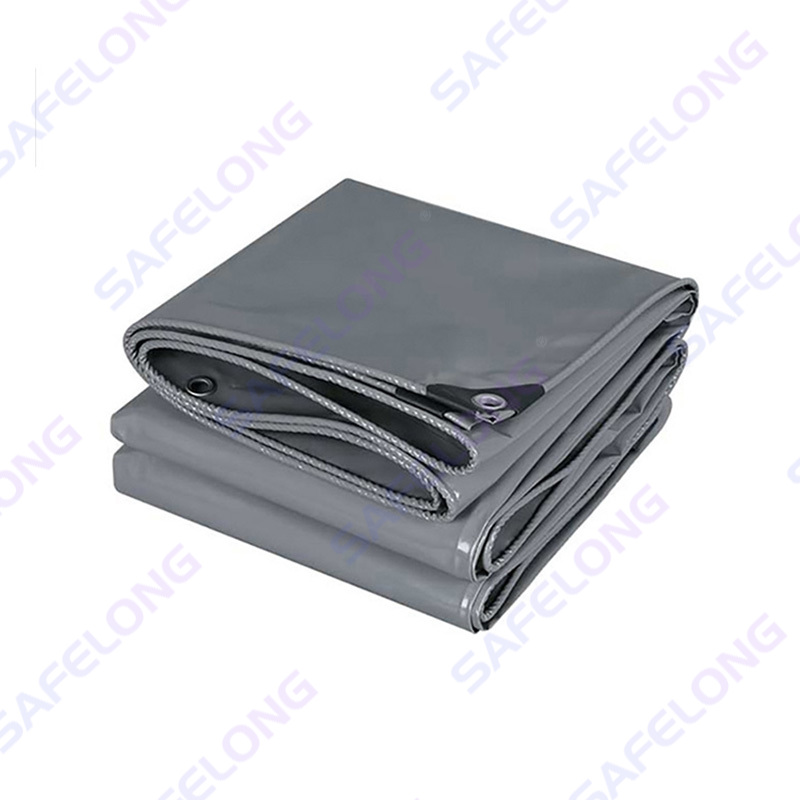 Knife-scraped tarpaulinThe knife-scraped tarpaulin cover adopts a multi-layer scraping process to scrape the PVC paste layer by layer on the surface of the high-strength base fabric, and the...View Product →
If you are comparing cover grades for logistics, agriculture, or construction, this buyer's guide to PVC tarpaulin covers explains the differences in construction and application. The key purchasing point is simple: match the coating route to how the canopy will be used. A canopy that stays tied down for years can use a stiffer, higher-strength fabric. A canopy that is folded weekly should favor flexibility and edge durability over maximum coating mass.
When the outdoor tarp canopy is a permanent structure, PVC tensile fabric becomes the more suitable family. These fabrics are engineered to carry tension across a span, transfer loads to posts or cables, and maintain shape under wind. Two common routes are PVC stretch film and PVC tent fabric. PVC stretch film is often used where a smooth surface and controlled elasticity help form curved membranes. PVC tent fabric is used for large tents, hall structures, and canopies that need a balance of strength, weldability, and weather resistance.
The technical conversation changes with tensile fabric. Coating mass alone does not predict performance. Buyers should request tensile strength at break, elongation at break, tear propagation, adhesion of coating to base cloth, and the UV stabilization package. For a shade canopy that will stay up for five years or more, the fabric must resist creep and maintain prestress. If the fabric relaxes, the membrane flutters, water ponds, and seams take loads they were not designed to carry.
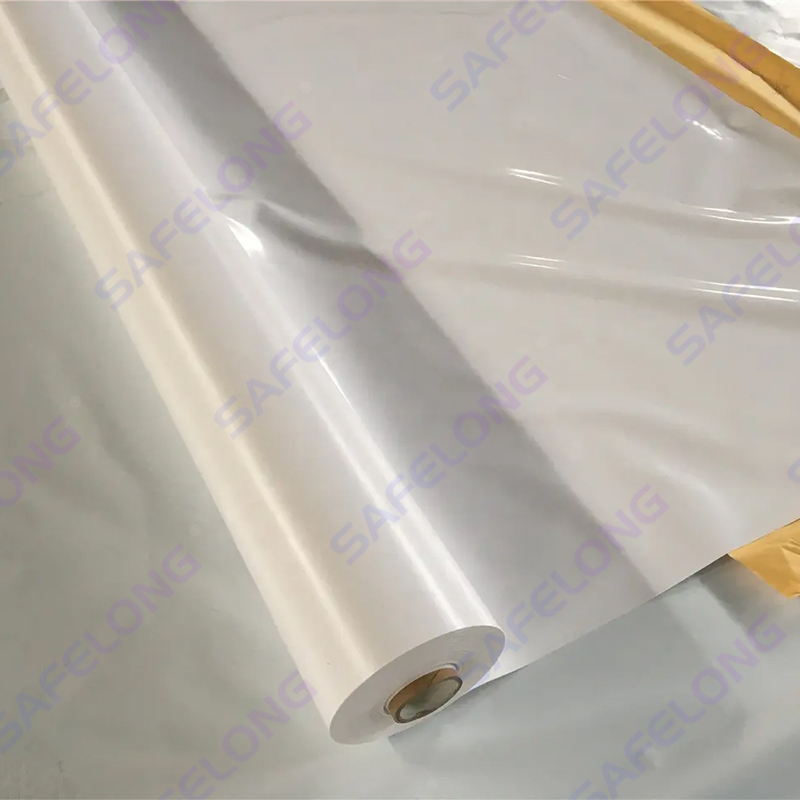 PVC Tent FabricPVC tent fabric uses high-density polyester filament as the base material. The PVC film layer is bonded to the base fabric through a hot melt adhesive composite proces...View Product →
A practical tolerance for large canopy work is to keep fabric width variation within 1 percent and length variation within 0.5 percent for ordered rolls. Panel layout depends on those tolerances. If two rolls differ too much in width, the seam lines pull and the finished membrane can develop wrinkles that collect dirt and water. For projects with fixed steel connections, ask for a panel drawing before production, not after.
TPU waterproof fabric is not the cheapest route, but it solves specific failures that PVC sometimes struggles with: hydrolysis in warm humid storage, stiffness in cold weather, and flex cracking after repeated folding. Polyester TPU and polyether TPU behave differently. Polyester TPU often offers good mechanical strength and cost balance for general outdoor covers. Polyether TPU usually provides better hydrolysis resistance and low-temperature flexibility, which matters for marine covers, cold-climate canopies, and products that are folded wet and stored for months.
For an outdoor tarp canopy that will be rolled and unrolled frequently, ask for flex-fold test data and hydrolysis test conditions. A fabric can pass initial waterproof testing and still fail after 12 months if the coating embrittles. Also confirm the base fabric. A TPU coating on a loose or low-density knit can delaminate under wind flutter. A tight woven polyester or nylon base with proper adhesion usually gives a more reliable finished canopy.
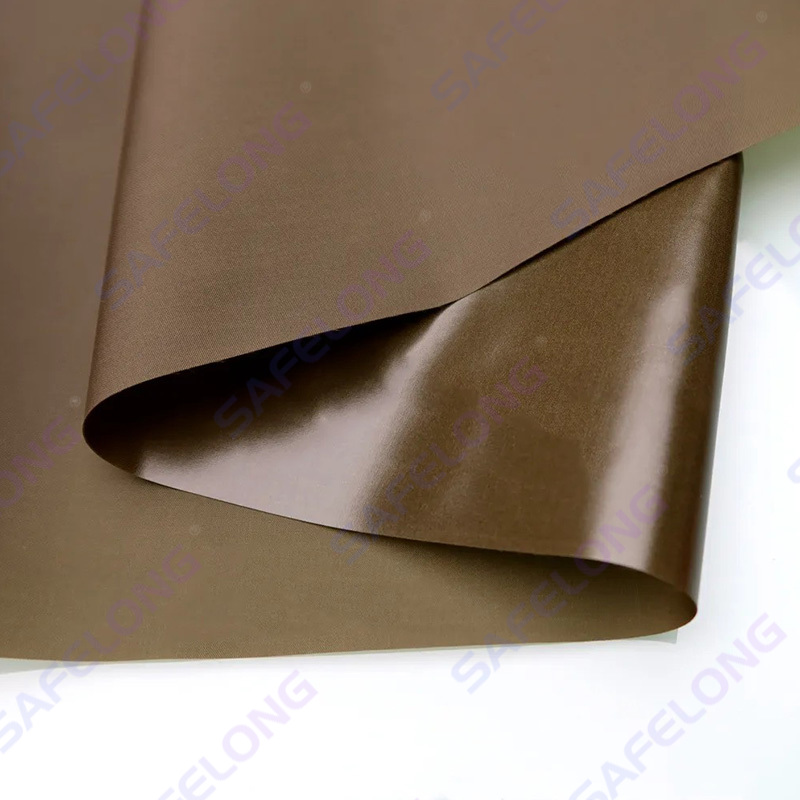 Polyether Thermoplastic PolyurethanePolyether TPU waterproof fabrics are made of polyether polyols such as polytetramethylene ether glycol (PTMEG) or polyethylene glycol (PEG) as soft segments through th...View Product →
TPU can be welded, sewn, or taped depending on the construction. Heat welding usually gives the most watertight seam, but the welding window is narrower than with PVC. If your production team is more familiar with PVC welding, either train on TPU samples first or choose a PVC canopy for the first version. The best material is the one your factory can convert consistently.
A vague inquiry for outdoor tarp canopy fabric invites vague offers. Instead, specify the values that control performance. The list below is a practical starting point for a 600 gsm PVC-coated polyester canopy. Adjust the numbers for your span and wind load, and always ask the supplier to state the test method.
If a supplier cannot provide these values, the risk shifts to your project. For a temporary cover, that risk may be acceptable. For a permanent canopy, missing data makes it impossible to compare offers fairly. A lower price per square meter means little if the fabric must be replaced after one storm season.
Most outdoor tarp canopy failures do not start in the middle of the fabric. They start at seams, hems, grommets, and tie-down points. A well-made canopy uses seam construction that matches the coating system. PVC-coated fabrics usually perform best with high-frequency welding or hot-air welding. TPU fabrics also weld well, but the process window is different. Stitching alone creates needle holes that can wick water unless the seam is taped or sealed.
A sample panel is worth the cost. Ask for a 1 m by 1 m piece with the planned seam, hem, and grommet. Bend it, wet it, freeze it if relevant, and pull it. That small test reveals more than a catalog photo.
Even the best outdoor tarp canopy fabric cannot compensate for bad geometry. Water ponding is a design defect, not a fabric defect. For flat or low-slope canopies, provide a minimum drainage slope of 1:12, and prefer 2:12 where snow or heavy rain is possible. Add intermediate supports or a ridge cable if the span allows the membrane to deflect downward. A canopy that sags under rain will collect water, stretch, and eventually tear at the low point.
Wind uplift is the opposite problem. Wind passing over a canopy creates negative pressure that pulls upward. Edges, corners, and open sides are the highest-risk zones. Use enough anchor points, keep the fabric tight, and avoid long unsupported spans. If the canopy must remain open on one side, add a windbreak or reduce the span. For temporary canopies, check the anchors after every strong wind event. Loose fabric flutters, and flutter wears coatings and seams quickly.
Outdoor exposure breaks down coatings in two main ways: ultraviolet light and biological growth. UV stabilizers slow the first. Mold and mildew need moisture and dirt to grow, so drainage and cleaning address the second. A canopy that stays wet in the same folded area will develop dark stains and a musty smell. Those stains are not only cosmetic; they can indicate that the coating surface is degrading.
Clean with a mild detergent and soft brush, then rinse and dry fully before folding. Avoid solvent cleaners unless the fabric supplier approves them, because solvents can soften coatings and weaken seams. For storage, keep the canopy dry, off the floor, and away from sharp edges. If the canopy is used seasonally, inspect folds and seams before each installation. Small repairs with matching patch material are cheaper than replacing a whole panel.
The most common outdoor tarp canopy procurement risk is buying by weight alone. A 650 gsm fabric made with a weak scrim and high filler content may test lower in tear strength than a well-built 550 gsm fabric. Other risks include inconsistent roll width, coating delamination, color variation between batches, and seams that were not tested before mass production. These problems often appear after delivery, when schedules are tight.
A manufacturer with a controlled coating line and in-house testing can reduce these risks. For a broader view of how coated fabrics are produced and selected, this Sulong's coated fabric manufacturing overview gives useful context on PVC, PE, and TPU systems. The main point is to verify before installation, not after the first rain.
The fastest way to choose an outdoor tarp canopy material is to start from the application. The table below connects common uses to the most practical fabric family and the main reason behind the choice.
| Application | Recommended Fabric Family | Reason |
|---|---|---|
| Construction site cover | PVC tarpaulin, 500 to 650 gsm | Abrasion resistance and repairability |
| Agricultural shade canopy | PVC tensile fabric or heavy tarpaulin | UV exposure and span control |
| Event or warehouse canopy | PVC tent fabric | Weldability and dimensional stability |
| Marine or cold storage cover | TPU waterproof fabric | Hydrolysis resistance and low-temperature flex |
| Temporary emergency shelter | Inflatable fabric or PVC tarpaulin | Fast deployment and packability |
For mixed-use projects, choose the fabric that satisfies the most severe condition, not the average condition. A canopy that is mostly used in dry weather but must survive a rainy season should be specified for the rainy season. The cost difference between a mid-grade and a high-grade fabric is usually small compared with the cost of replacing a failed canopy after a storm.
There is no single best weight. For small temporary covers, 300 to 500 gsm can be enough. For regular outdoor use with wind and handling, 500 to 650 gsm is a practical range. For permanent shade or large-span structures, 650 to 1500 gsm PVC tensile fabric is common. The base fabric, coating adhesion, and seam quality matter as much as the weight.
Service life depends on UV exposure, wind, handling, and installation quality. A lightweight cover used occasionally may last one to three seasons. A well-installed PVC tarpaulin canopy with proper tension and drainage can last several years. A permanent tensile membrane with engineered support and regular inspection can last much longer, but it must be designed for the site.
PVC is often more economical and easier to weld for general canopies. TPU is better when the canopy faces long wet storage, cold folding, or repeated flexing. Polyether TPU usually offers better hydrolysis resistance than polyester TPU. The right choice depends on the environment and the conversion process your factory can control.
Use a minimum slope of 1:12 and prefer 2:12 where possible. Add a ridge line, center support, or intermediate frame member if the span is large. Keep the fabric tight so it does not sag. Check the canopy after rain and adjust tension before a small pond becomes a stretched panel.
Include the application, span, wind exposure, expected service life, coating type, total weight, base fabric, tensile and tear strength, width and length tolerances, UV requirement, seam method, and delivery inspection criteria. If the canopy is structural, include the engineer's design loads and connection details.
Yes. Small holes and seam separations can often be repaired with matching patch material and welding or adhesive approved for the coating. Clean and dry the area first. For large tears or structural membranes, replace the panel or consult the original fabricator. A repair that changes the tension path can create a new failure point.
For an outdoor tarp canopy that must balance cost and durability, start with a 500 to 650 gsm PVC tarpaulin or PVC tent fabric, specify tear strength and adhesion, and demand a welded sample before mass production. For permanent shade or large spans, move to PVC tensile fabric and involve an engineer for loads and connections. For wet, cold, and fold-heavy use, evaluate polyether TPU and test the welding process first.
The most reliable canopy is not the heaviest or the cheapest. It is the one whose fabric, coating, seam, hardware, and installation geometry all match the real site conditions. Put the performance numbers in the inquiry, inspect the first article, and check tension and drainage after installation. Those steps prevent most field failures before they start.
If you have any questions, please fill out the contact form at the bottom of the page and contact us.
You agree to Sulong Terms and Privacy Policy.

No.9 Filter Material Industry Park, Funing, China (Factory)
Unit 2, 15#-405, Kuanglu Community, Gulou District, Nanjing, China (Office)

+86 15724842588

+86-0515-68589566

+86-0515-68589566

info@safelong.net

