


 English
  Español
 русский
News
Content
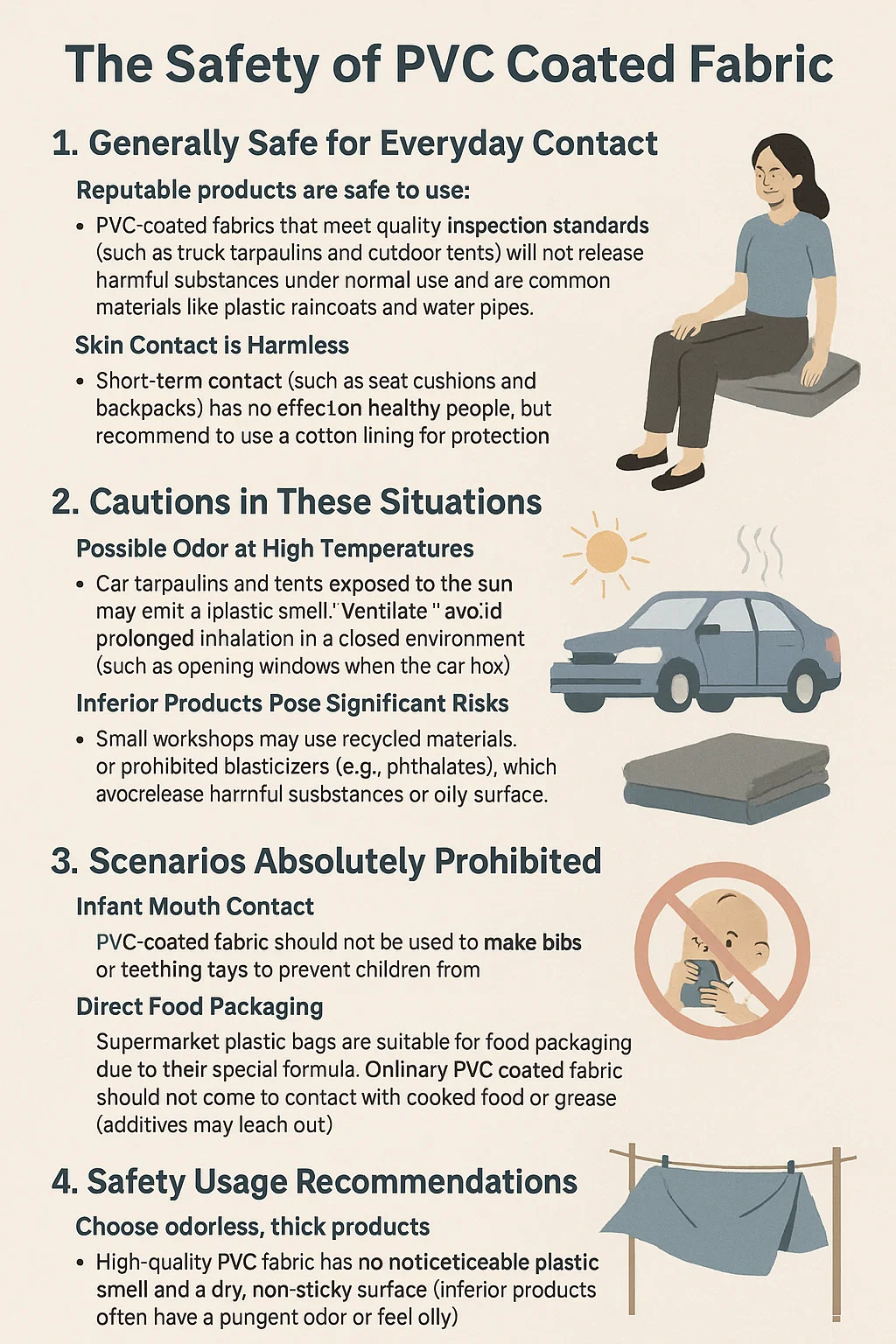
The following is an explanation of the safety of PVC coated fabric:
1. Generally Safe for Everyday Contact
Reputable products are safe to use: PVC coated fabrics that meet quality inspection standards (such as truck tarpaulins and outdoor tents) will not release harmful substances under normal use and are common materials like plastic raincoats and water pipes.
Skin Contact is Harmless: Short-term contact (such as seat cushions and backpacks) has no effect on healthy people, but sensitive skin may experience itching—it is recommended to use a cotton lining for protection.
2. Cautions in These Situations
Possible Odor at High Temperatures: Car tarpaulins and tents exposed to the sun may emit a "plastic smell." Ventilation is sufficient; avoid prolonged inhalation in a closed environment (such as opening windows when the car is hot).
Inferior Products Pose Significant Risks: Small workshops may use recycled materials or prohibited plasticizers (such as phthalates), which may release harmful substances—avoid products with a pungent odor or an oily surface.
3. Scenarios Absolutely Prohibited
Infant Mouth Contact: PVC coated fabric should not be used to make bibs or teething toys to prevent children from biting and ingesting chemical components.
Direct food packaging: Supermarket plastic bags are suitable for food packaging due to their special formula. Ordinary PVC coated fabric should not come into contact with cooked food or grease (additives may leach out).
4. Safety Usage Recommendations:
Choose odorless, thick products: High-quality PVC fabric has no noticeable plastic smell and a dry, non-sticky surface (inferior products often have a pungent odor or feel oily).
Aerate new fabric: Air out newly purchased tarpaulins and tablecloths for a few days to dissipate any odor, especially when used in cars or bedrooms.
Replace damaged fabric promptly: After the surface coating wears through, the underlying layer may shed lint or age and powder; avoid inhaling dust.
 Previous


