


 English
 Español
 русский

News
Home / News / Industry News / Oz To Gsm Conversion: Convert Fabric Weight per Square Yard Accurately
Content
One ounce per square yard (oz/yd²) equals 33.906 grams per square metre (gsm). Read the same relationship backwards and one gsm equals 0.0295 oz/yd². That is the whole conversion. An 18 oz tarpaulin is roughly 610 gsm, a 10 oz denim is roughly 339 gsm, and a 250 gsm coated fabric is about 7.4 oz.
The rest of this page explains where the factor comes from, why quotations built on it sometimes fail a goods-in inspection, and how to turn a datasheet number into something you can verify on a roll with a floor scale and a tape measure.
The factor is not an industry convention; it is pure arithmetic built from two definitions. One international avoirdupois ounce is 28.349523125 grams, and one square yard is 0.83612736 square metres. Divide the first by the second and you get 33.9057, which is normally rounded to 33.906 for conversion tables.
That gives two working formulas:
For quick mental work, multiply by 34 instead. At 20 oz the shortcut returns 680 gsm against an exact 678.1 gsm, an error of 0.28 percent. Since most coated fabric specifications are written with a tolerance band several times wider than that, the shortcut is safe for site conversations but should never replace the exact figure on a purchase order.
| oz/yd² | gsm (exact) | Typical use |
|---|---|---|
| 1 | 33.9 | Light linings, thin laminates |
| 3 | 101.7 | Shirt and lightweight apparel fabric |
| 6 | 203.4 | Medium workwear, light cover cloth |
| 10 | 339.1 | Denim, light PVC tarpaulin |
| 14 | 474.7 | Truck side curtains, tent skins |
| 18 | 610.3 | Heavy flatbed tarpaulin, tunnel duct |
| 24 | 813.7 | Container covers, membrane structures |
| 30 | 1017.2 | Very heavy industrial covers |
Search data on this topic shows a lot of confusion, and most of it comes from the word "ounce" being reused for unrelated quantities. Before you apply the 33.906 factor, confirm which ounce you are holding.
A plain "ounce" is a mass unit of 28.3495 grams. It only becomes an area weight once it is divided by a surface, which is why fabric trade uses the compound unit oz/yd². If a datasheet simply says "18 oz", the square yard is implied by the product category, not written out.
A US fluid ounce is 29.5735 millilitres, and a UK fluid ounce is 28.4131 millilitres. Neither has any dimensional relationship to gsm, so "how many gsm is 16 fl oz" has no answer. If a coating is supplied as a liquid, convert the wet deposit instead: wet coating weight in gsm equals the wet film thickness in micrometres multiplied by the coating density in grams per cubic centimetre. A 200 micron wet film of a 1.2 g/cm³ PVC plastisol deposits 240 gsm of wet coating before drying.
In the leather trade, one ounce equals 1/64 inch of thickness, roughly 0.4 mm. It is a gauge, not a weight per area. Applying the oz to gsm factor to a leather spec of 4 oz will produce a confident, wrong answer.
Buyers working with European or Chinese suppliers usually receive gsm figures and need to compare them with US-style quotations in ounces. Divide by 33.906, or multiply by 0.0295 for a fast estimate.
Worked example: a coated fabric specified at 650 gsm converts to 650 ÷ 33.906 = 19.2 oz/yd². A 300 gsm laminated TPU comes out at 8.85 oz/yd², and a 1,100 gsm architectural membrane is 32.4 oz/yd². Small differences matter at the heavy end, because a 5 percent deviation on a 1,100 gsm membrane is 55 gsm, or roughly 1.6 oz.
| gsm | oz/yd² | gsm | oz/yd² |
|---|---|---|---|
| 150 | 4.42 | 500 | 14.75 |
| 200 | 5.90 | 610 | 17.99 |
| 250 | 7.37 | 750 | 22.12 |
| 340 | 10.03 | 900 | 26.54 |
| 400 | 11.80 | 1100 | 32.44 |
On coated fabric, the reported figure is the total mass per unit area of the finished roll, base fabric plus coating, not the base fabric alone. A 1,000 denier polyester scrim with PVC on both faces typically lands between 500 and 650 gsm, which is 15 to 19 oz. The same scrim with a thin acrylic coating might settle near 300 gsm, or 8.8 oz. These are typical trade values rather than fixed rules, so always confirm the figure on the supplier's actual test report.
When a quotation mixes units, split it into three lines before comparing price: base fabric weight, coating weight, and total. A coated fabric quoted at 18 oz is not automatically heavier than one quoted at 600 gsm, because 600 gsm is only 17.7 oz. The two products are within half a percent of each other, and the price difference is far more likely to come from coating formulation, plasticiser content or base fabric construction than from the weight number itself.
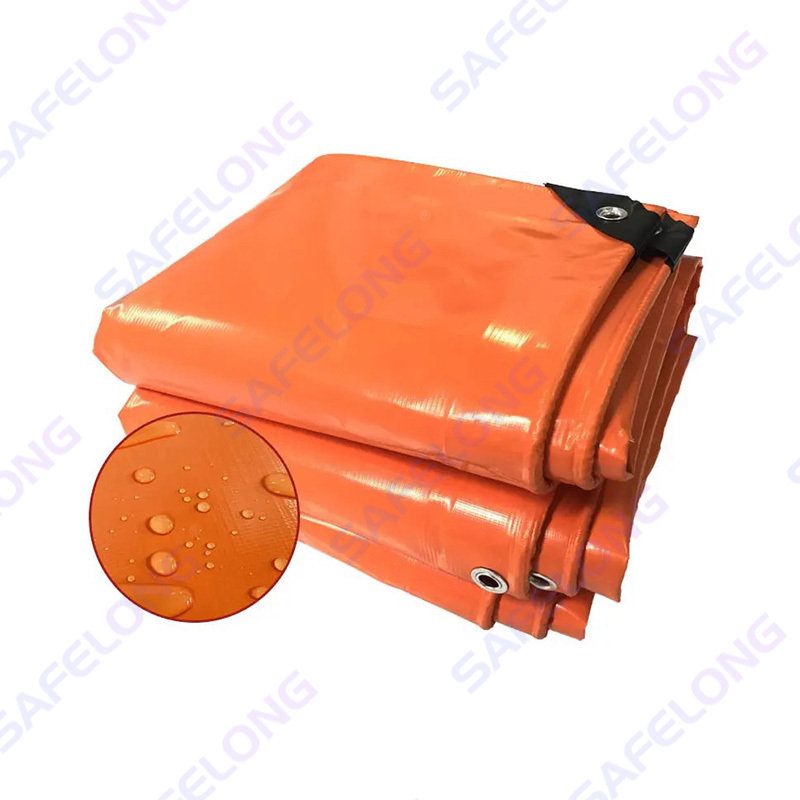 Film TarpaulinThe film tarpaulin cover is made by laminating PVC film to lightweight polyester base fabric through high-temperature calendering process to form a smooth waterproof l...View Product →
Film-based tarpaulins are a useful reference point because the coating dominates the total weight, which makes the gsm figure move noticeably when a buyer changes specification. Moving from a 400 gsm film tarpaulin to a 610 gsm grade increases the mass of a 50 square metre cover from 20 kg to 30.5 kg, a change that affects freight class, handling equipment and anchoring loads on an open trailer.
The arithmetic is easy. The failures happen around it.
Coated fabric specifications commonly allow a tolerance of plus or minus 5 percent on mass per unit area, and some heavy industrial grades allow 10 percent. At 610 gsm that is a legitimate range of 579 to 641 gsm, or 17.1 to 18.9 oz. A roll arriving at 590 gsm is inside a typical specification, even though it looks like a shortfall if you expected exactly 610. Write the tolerance into the order rather than arguing about it at goods-in.
Textile test methods from ISO and ASTM call for samples to be conditioned before weighing, with ISO 139 setting a standard atmosphere of 20 degrees Celsius and 65 percent relative humidity. Hydrophilic polymers such as polyether-based TPU can pick up measurable mass in humid air, so a roll weighed straight off a container after a sea voyage may read slightly heavier than the same roll conditioned in a laboratory.
You can verify a delivered roll with a floor scale and a tape measure, using:
Example: a roll 1.5 metres wide and 50 metres long weighs 45.8 kg net. That is 45,800 g ÷ (1.5 × 50) = 610.7 gsm, which matches an 18 oz specification closely. The same roll in linear-yard terms carries 610.7 × 1.5 × 0.9144 = 838 g per linear yard. Remember to deduct the core and any pallet mass, and to check the width with the fabric relaxed, because a stretched roll measures narrower than it is.
PVC tensile fabric for membrane structures and large tents generally sits between 600 and 1,100 gsm, which converts to 17.7 to 32.4 oz. The choice is driven by span and wind load rather than by habit. A 650 gsm fabric may be adequate for a small exhibition canopy, while a permanently tensioned roof over a grandstand will typically move into the 900 to 1,100 gsm band.
Tent fabric selection follows the same logic with a different trade-off. Higher gsm adds tear resistance and UV durability but also adds mass, which raises the labour required for erection and the size of the transport pack. Buyers who plan seasonal installations often accept a lighter grade and compensate with better anchoring. A detailed comparison of coating types, surface treatments and weight ranges is covered in this buyer's guide to PVC tensile fabric.
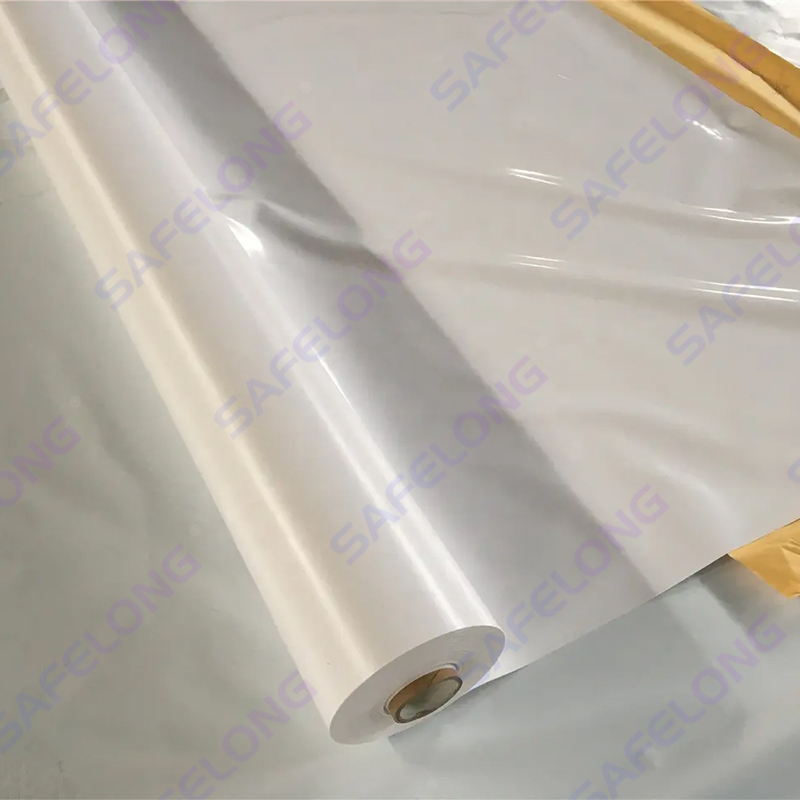 PVC Tent FabricPVC tent fabric uses high-density polyester filament as the base material. The PVC film layer is bonded to the base fabric through a hot melt adhesive composite proces...View Product →
One practical check when comparing a European tender in gsm with a US quotation in ounces: convert both into kilograms per roll of the same dimensions. That single figure settles the argument faster than a debate about 33.906 versus 34.
Thermoplastic polyurethane laminates are usually specified in gsm because the coating is thin. Lightweight outdoor laminates commonly fall between 150 and 300 gsm, or 4.4 to 8.8 oz, while heavier protective grades can reach 400 gsm and above. In this range, a few grams per square metre changes how the finished product feels and hangs, so the conversion should be done to one decimal place rather than rounded to the nearest ounce.
Polymer chemistry matters as much as weight here. Polyester-based TPU offers good mechanical strength and abrasion resistance for general outdoor gear, while polyether-based TPU resists hydrolysis far better and holds up in permanently damp conditions such as marine equipment, medical air cushions and long-term protective covers. Two laminates at an identical 250 gsm can behave very differently after two years in a wet environment, which is why weight alone should never be the deciding specification.
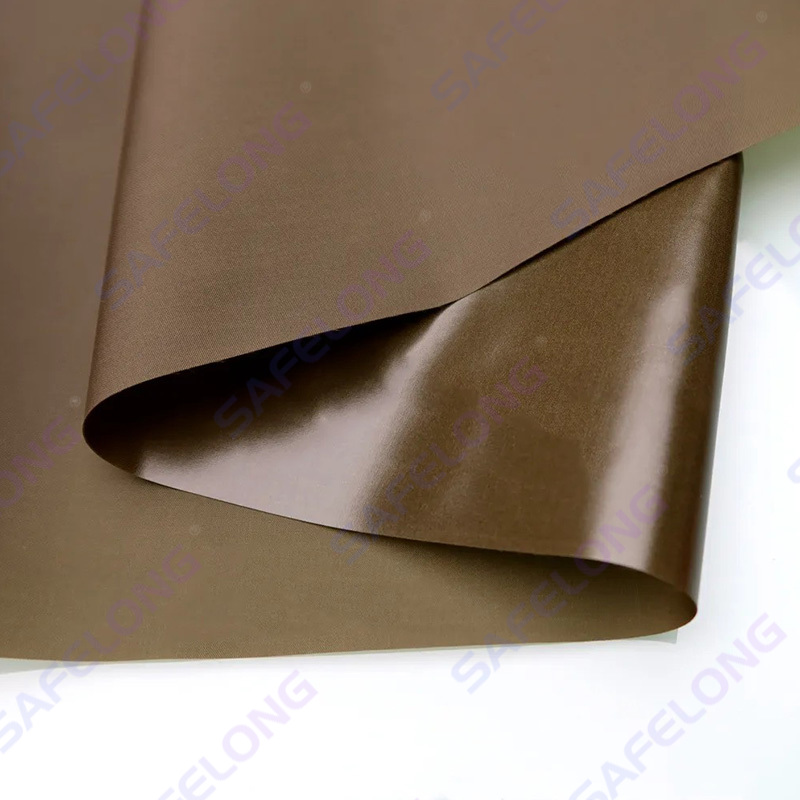 Polyether Thermoplastic PolyurethanePolyether TPU waterproof fabrics are made of polyether polyols such as polytetramethylene ether glycol (PTMEG) or polyethylene glycol (PEG) as soft segments through th...View Product →
A weight clause that survives a dispute contains five elements. Leaving any of them out is the most common source of shortfall claims.
A useful sanity check before ordering: convert the specification into total kilograms for the whole order, then compare it with the freight quote. A 12 percent weight difference on a 5,000 square metre project is not a rounding issue, it is a container and handling issue, and it is much cheaper to resolve at quotation stage than after the rolls arrive.
10 oz/yd² × 33.906 = 339.1 gsm. This is the figure normally quoted for mid-weight denim and for light PVC-coated tarpaulins.
Only when the ounce is being used as ounces per square yard. A plain mass ounce is 28.35 g and has no gsm equivalent until you specify the area it is spread over. The full relationship is 1 oz/yd² = 33.906 gsm.
Divide the gsm figure by 33.9. For example, 500 gsm ÷ 33.9 = 14.75 oz/yd², and 800 gsm ÷ 33.9 = 23.6 oz/yd². Dividing by 34 is accurate enough for conversation but not for contract documents.
On a finished coated fabric datasheet, yes. The total mass per unit area covers base fabric plus coating, and ISO 2286-2 also allows the coating and substrate masses to be reported separately. If the number seems too low for the product you are buying, check whether the supplier has quoted base fabric weight only.
Three usual causes: the roll is slightly narrower than nominal, the length is short by a small margin, or the delivered fabric sits at the lower edge of a legitimate tolerance band rather than at the nominal figure. Weigh the roll net of core, measure width and length under no tension, and run the gsm formula before contacting the supplier.
No. Fluid ounces measure volume and gsm measures mass per area. If you need to work from a liquid coating, convert using wet film thickness and coating density instead.
Round to one decimal place and keep both units in the document, for example "610.3 gsm (18 oz/yd²)". Where a supplier works in gsm and a customer works in ounces, showing both removes the space where a 0.3 percent rounding difference can grow into a rejected shipment.
Multiply ounces per square yard by 33.906 to reach gsm, divide gsm by 33.906 to go back, and confirm which ounce you are dealing with before either step. Everything else is tolerance management: condition the sample, deduct the core, measure the relaxed width, and put a numeric band and a named test method into the order.
Coated fabric, tarpaulin and ventilated duct production at Sulong Environmental Technology runs from a 30,000 square metre facility in the Funing filtration materials park, where base fabric and coating weight are recorded roll by roll so that a gsm figure on a datasheet can be traced to a physical measurement. If you are comparing a quotation written in ounces against one written in gsm, send both figures through and the net kilograms per roll come out the same way whichever unit you started with.
If you have any questions, please fill out the contact form at the bottom of the page and contact us.
You agree to Sulong Terms and Privacy Policy.

No.9 Filter Material Industry Park, Funing, China (Factory)
Unit 2, 15#-405, Kuanglu Community, Gulou District, Nanjing, China (Office)

+86 15724842588

+86-0515-68589566

+86-0515-68589566

info@safelong.net

