


 English
  Español
 русский
News
Content
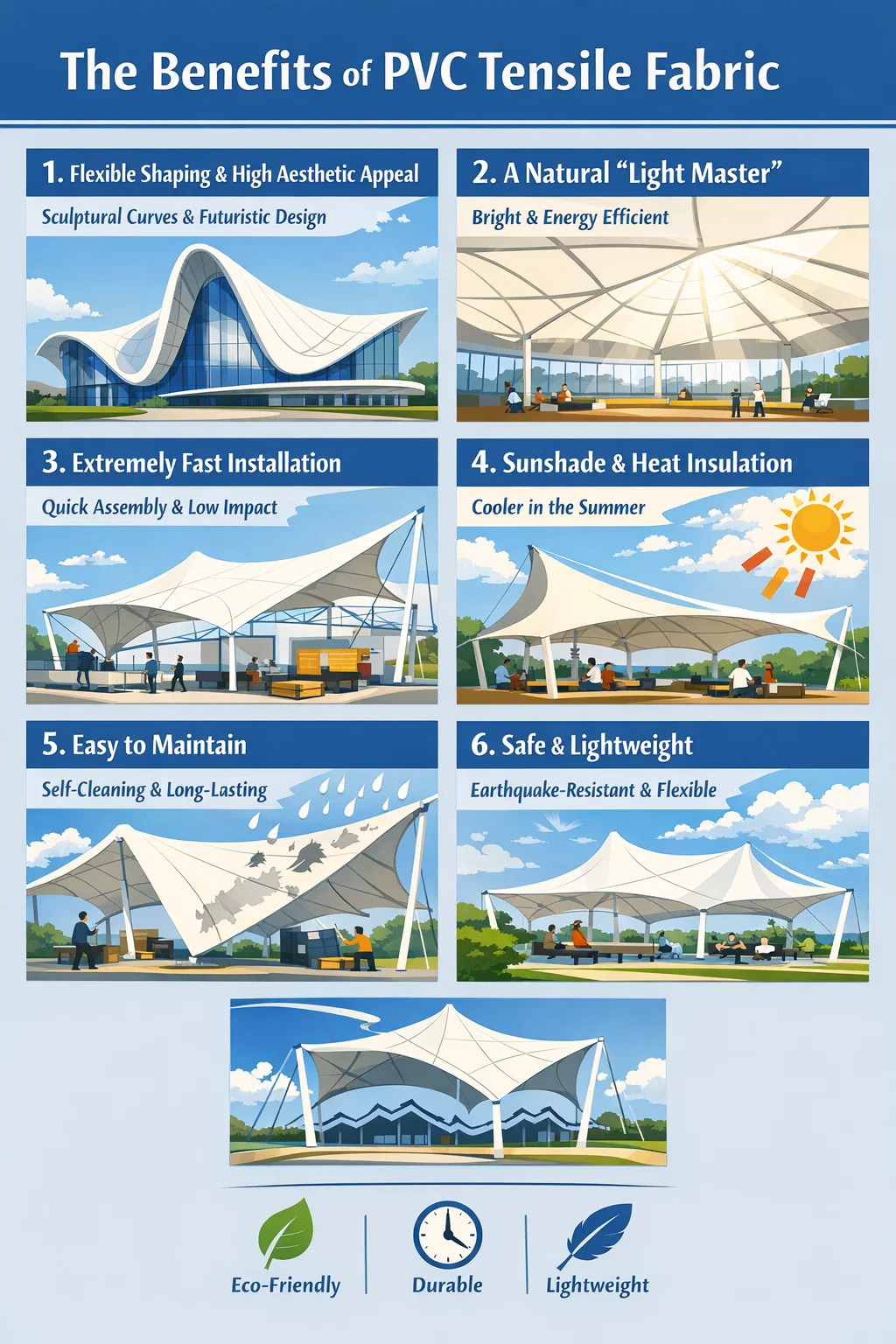
Speaking of the benefits of PVC tensile fabric, its popularity in modern architecture, especially in stadiums, open-air plazas, and landscape shading, stems from its many unique advantages over traditional materials.
Here are some of the main benefits of choosing PVC tensile fabric:
1. Flexible Shaping and High Aesthetic Appeal
The greatest charm of this material lies in its "softness."
Artistic Appeal: Ordinary brick houses are mostly square and rectangular, but PVC tensile fabric can be stretched into beautiful curves, flower-like spires, or wave shapes.
Modern Appeal: Buildings constructed with this material appear very light and futuristic, easily becoming landmarks.
2. A Natural "Light Master"
Many people love this material because it makes interiors very bright.
Light Transmittance without Glare: It allows natural light to pass through without direct sunlight. This creates a soft and comfortable lighting environment for people.
Energy Saving During the Day: Due to its high light transmittance, the membrane structure requires virtually no artificial lighting during the day, resulting in both environmental friendliness and significant electricity savings.
3. Extremely Fast Installation
Constructing a roof using PVC tensile fabric is much faster than building a concrete house.
Factory Prefabrication: Most of the cutting and welding is done in the factory. Once on-site, it's as simple as assembling and securing it like building blocks.
Minimal Environmental Impact: The short construction period minimizes dust and noise pollution, making it ideal for use in existing parks or commercial areas.
4. Sunshade and Heat Insulation, Cooler in Summer
As a superior version of PVC coated fabric, it offers excellent heat insulation.
Heat Reflection: Its surface is typically coated with a special protective layer that reflects most of the solar heat back, rather than absorbing it.
Air Circulation: This type of structure is usually designed to be tall and open, allowing for good airflow. In summer, it's much cooler under it than under a typical corrugated iron shed.
Further Expansion: This type of structure is usually designed to be tall and spacious, with good air circulation, making it much cooler in summer than under a regular tin shed.
5. Easy to Maintain
Don't let its fabric appearance fool you; it's incredibly durable and requires minimal maintenance.
Self-cleaning in Rain: Its smooth surface, like a lotus leaf, makes it difficult for dirt to adhere. A heavy rain washes away the dust, saving you the expense of hiring a professional cleaner.
Durable: Despite its lightweight nature, it's resistant to wind and sun and won't rust or corrode like metal. With proper installation, it can last for over ten or even twenty years.
6. Safe and Lightweight
This material is particularly advantageous in earthquake-prone areas.
Lightweight: Because of its light weight, even in extreme emergencies, the risk to people and property below is far less than that posed by heavy bricks and tiles.
Flexible: It has a degree of elasticity, allowing it to tremble slightly in strong winds to absorb pressure and preventing easy breakage.
 Previous


